

As another election season draws to a close, I find myself reflecting on a familiar refrain — one that has grown all too weary with age. It is the lamentation of the allegedly apathetic African American male, a narrative that persists in depicting my brothers as disengaged and disinterested in shaping our collective future.
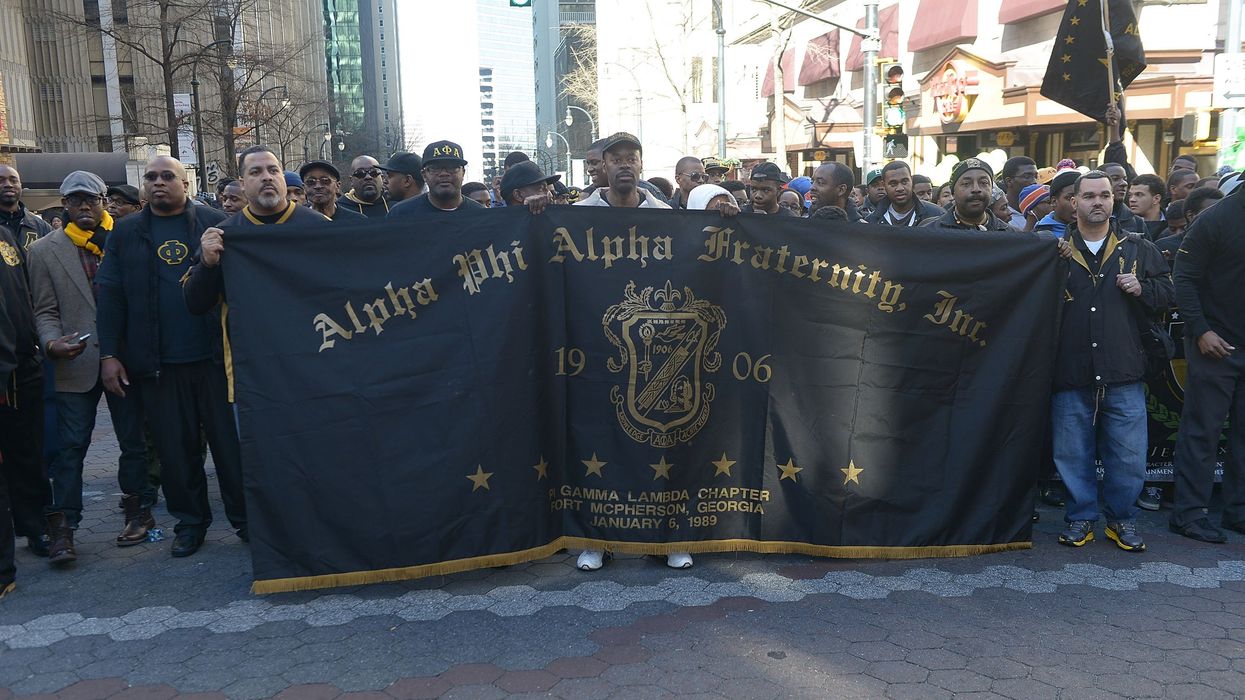
As a minister, a professor and a proud, 28-year member of Alpha Phi Alpha Fraternity, I am here to tell you that this stereotype is as damaging as it is inaccurate. It is a misrepresentation that not only erases the fundamental contributions of Black men but also absolves our broader society of its responsibility to dismantle the systemic barriers that hinder true equality.
I have dedicated my life to the pursuit of justice, to the empowerment of marginalized communities and to the fostering of difficult yet necessary dialogues around race and inequity. Through it all, I have consistently found my brothers, my fellow Alphas, standing shoulder to shoulder with me on the frontlines of change.
Alpha Phi Alpha, the first intercollegiate Greek-letter fraternity established for African Americans, was founded on a bedrock of service, scholarship and social justice. From our inception on Dec. 4, 1906, at Cornell University in Ithaca, New York, we have understood that the fight for true equality demands more than sporadic outrage; it requires strategic mobilization, institutional building and an unwavering commitment to the uplift of our people.
Our legacy is one of transformational leadership. Alphas have left an indelible mark on American society, includingMartin Luther King Jr., Thurgood Marshall, Duke Ellington and Langston Hughes to name a chosen few. These men, and countless others like them, didn't simply bemoan the challenges of their time; they actively organized, advocated and broke down barriers, often at significant personal cost.
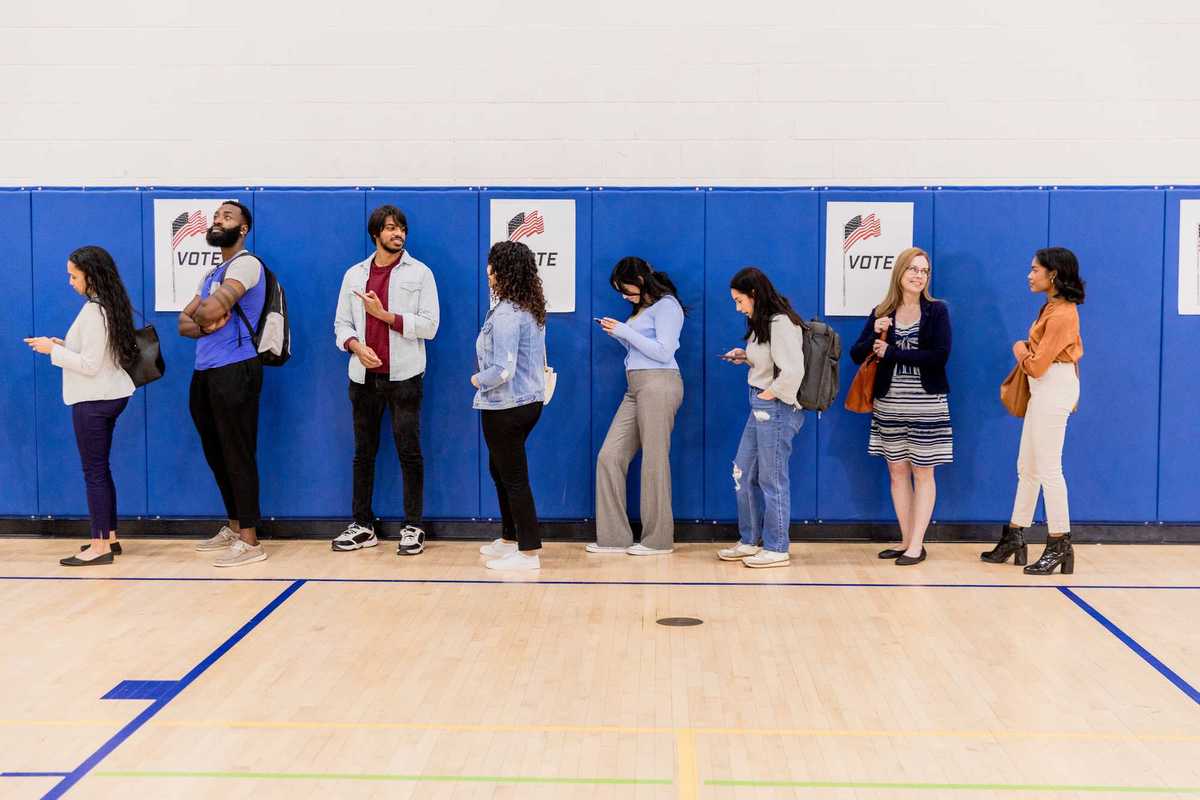
Today, that legacy endures. Through our "A Voteless People is a Powerless People" campaign, Alphas has worked tirelessly to educate, register and mobilize Black voters nationwide. We recognize that true power lies not merely in protest but in the ability to shape policy, hold elected officials accountable and ensure our voices are heard in the halls of power. Beyond the political realm, our "Go to High School, Go to College" initiative has inspired generations of young Black and Brown boys to pursue academic excellence and understand education as a liberating force. Through mentorship programs, scholarships and community outreach, we are helping to cultivate a new generation of leaders — men who understand their potential and their responsibility to uplift their brothers and their communities.
Yet, despite this rich history and ongoing commitment to service, the stereotype of the apathetic Black man persists. African American men have always understood the stakes of our struggle. We've always known that freedom is not a destination but a journey that demands constant vigilance, strategic action, and an unwavering belief in our inherent worth and dignity, even in the face of systemic racism and discrimination.
Along with 10,000 men worldwide, I’m pleased to model a brand of leadership that is not merely reactive but proactive — that understands the power of collective action, the importance of institution-building and the enduring value of service to others. So, America, let's move beyond the tired stereotypes and lazy narratives. I invite you to recognize African American men's accurate and abiding contributions, not just as occasional voters but as steadfast leaders, organizers and change-makers.
In celebration of the fraternity's founding by our Seven Jewels — Henry Arthur Callis, Charles Henry Chapman, Eugene Kinckle Jones, George Biddle Kelley, Nathaniel Allison Murray, Robert Harold Ogle and Vertner Woodson Tandy — we celebrate their legacy and all who've come before us. Together, we wholeheartedly commit to inspiring a new generation to embrace the challenge and the privilege of leadership in their communities and world. Remembering the most accurate measure of a people is its ability to survive, thrive, transform and leave the world better than it found it. Such is the Alpha way:
“First of All, Servants of All, We shall transcend All.”
Johnson is a United Methodist pastor, the author of "Holding Up Your Corner: Talking About Race in Your Community" and program director for the Bridge Alliance, which houses The Fulcrum.











Eric Trump, the newly appointed ALT5 board director of World Liberty Financial, walks outside of the NASDAQ in Times Square as they mark the $1.5- billion partnership between World Liberty Financial and ALT5 Sigma with the ringing of the NASDAQ opening bell, on Aug. 13, 2025, in New York City.
Why does the Trump family always get a pass?
Deputy Attorney General Todd Blanche joined ABC’s “This Week” on Sunday to defend or explain a lot of controversies for the Trump administration: the Epstein files release, the events in Minneapolis, etc. He was also asked about possible conflicts of interest between President Trump’s family business and his job. Specifically, Blanche was asked about a very sketchy deal Trump’s son Eric signed with the UAE’s national security adviser, Sheikh Tahnoon.
Shortly before Trump was inaugurated in early 2025, Tahnoon invested $500 million in the Trump-owned World Liberty, a then newly launched cryptocurrency outfit. A few months later, UAE was granted permission to purchase sensitive American AI chips. According to the Wall Street Journal, which broke the story, “the deal marks something unprecedented in American politics: a foreign government official taking a major ownership stake in an incoming U.S. president’s company.”
“How do you respond to those who say this is a serious conflict of interest?” ABC host George Stephanopoulos asked.
“I love it when these papers talk about something being unprecedented or never happening before,” Blanche replied, “as if the Biden family and the Biden administration didn’t do exactly the same thing, and they were just in office.”
Blanche went on to boast about how the president is utterly transparent regarding his questionable business practices: “I don’t have a comment on it beyond Trump has been completely transparent when his family travels for business reasons. They don’t do so in secret. We don’t learn about it when we find a laptop a few years later. We learn about it when it’s happening.”
Sadly, Stephanopoulos didn’t offer the obvious response, which may have gone something like this: “OK, but the president and countless leading Republicans insisted that President Biden was the head of what they dubbed ‘the Biden Crime family’ and insisted his business dealings were corrupt, and indeed that his corruption merited impeachment. So how is being ‘transparent’ about similar corruption a defense?”
Now, I should be clear that I do think the Biden family’s business dealings were corrupt, whether or not laws were broken. Others disagree. I also think Trump’s business dealings appear to be worse in many ways than even what Biden was alleged to have done. But none of that is relevant. The standard set by Trump and Republicans is the relevant political standard, and by the deputy attorney general’s own account, the Trump administration is doing “exactly the same thing,” just more openly.
Since when is being more transparent about wrongdoing a defense? Try telling a cop or judge, “Yes, I robbed that bank. I’ve been completely transparent about that. So, what’s the big deal?”
This is just a small example of the broader dysfunction in the way we talk about politics.
Americans have a special hatred for hypocrisy. I think it goes back to the founding era. As Alexis de Tocqueville observed in “Democracy In America,” the old world had a different way of dealing with the moral shortcomings of leaders. Rank had its privileges. Nobles, never mind kings, were entitled to behave in ways that were forbidden to the little people.
In America, titles of nobility were banned in the Constitution and in our democratic culture. In a society built on notions of equality (the obvious exceptions of Black people, women, Native Americans notwithstanding) no one has access to special carve-outs or exemptions as to what is right and wrong. Claiming them, particularly in secret, feels like a betrayal against the whole idea of equality.
The problem in the modern era is that elites — of all ideological stripes — have violated that bargain. The result isn’t that we’ve abandoned any notion of right and wrong. Instead, by elevating hypocrisy to the greatest of sins, we end up weaponizing the principles, using them as a cudgel against the other side but not against our own.
Pick an issue: violent rhetoric by politicians, sexual misconduct, corruption and so on. With every revelation, almost immediately the debate becomes a riot of whataboutism. Team A says that Team B has no right to criticize because they did the same thing. Team B points out that Team A has switched positions. Everyone has a point. And everyone is missing the point.
Sure, hypocrisy is a moral failing, and partisan inconsistency is an intellectual one. But neither changes the objective facts. This is something you’re supposed to learn as a child: It doesn’t matter what everyone else is doing or saying, wrong is wrong. It’s also something lawyers like Mr. Blanche are supposed to know. Telling a judge that the hypocrisy of the prosecutor — or your client’s transparency — means your client did nothing wrong would earn you nothing but a laugh.
Jonah Goldberg is editor-in-chief of The Dispatch and the host of The Remnant podcast. His Twitter handle is @JonahDispatch.