

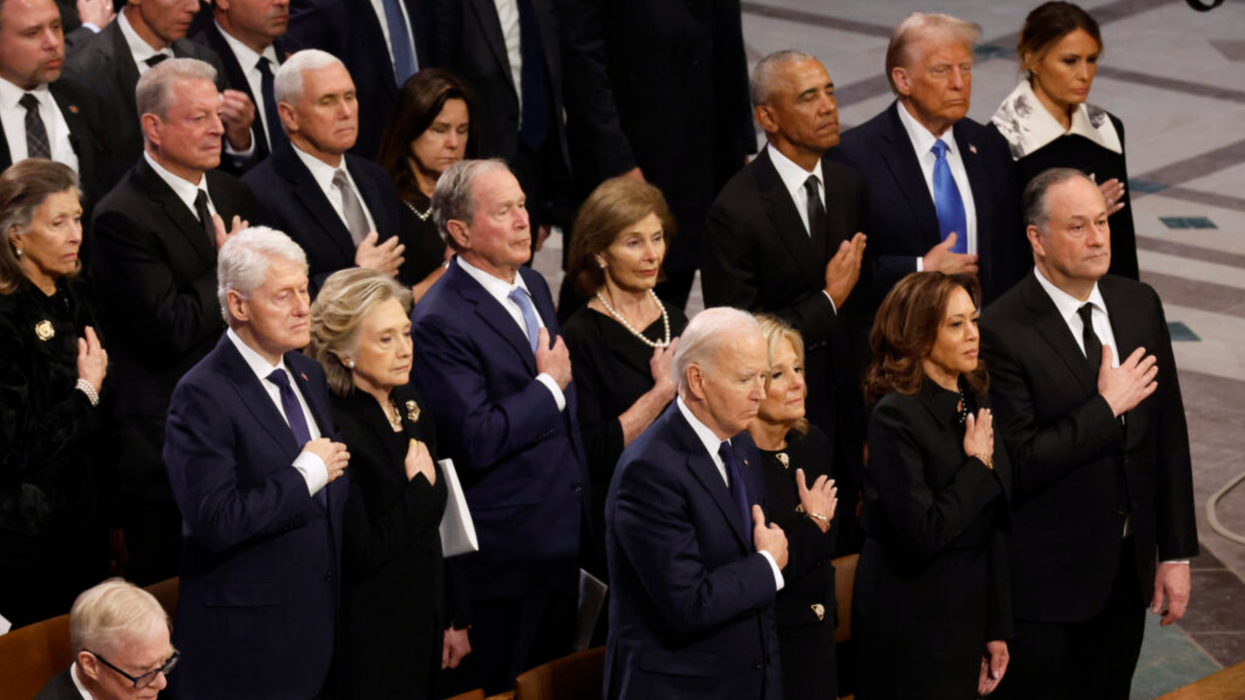

Like children, former presidents should be seen, but not heard. I say that with deep respect for the men who were privileged enough to serve as presidents of the United States and are alive today. Historically, we have not heard the repeated voices of former presidents during the term of another president, that is, until today. Call it respect for the position, the person, and yes, the American people.
We get one president at a time. It is not like a football game and the commentary shows after it, in which we can play the Monday morning quarterback and coach, constantly second-guessing decisions made by the team. The comments – “he should have done this” or “I would have done X” – are not needed or desired.
But there is much more that former presidents can do. In particular, they can work to strengthen their political party by raising money and sharing their insights and ideas. They could mentor rising talent within their party. But all of these things can be done where “they are seen, but not heard.”
Today, if they truly feel we are on the verge of losing our democracy and becoming a banana republic, they are best positioned to rally a movement to convene a constitutional convention. Article five of our Constitution states that “two-thirds of state legislatures can apply for a national convention to propose amendments.” Former presidents have the name recognition, clout, and ability to raise the money to make this a reality.
Once a convention has been convened to amend the Constitution, to make it better, make it stronger, make it “king proof,” then the former presidents would have truly helped our nation.
But for former presidents to just give “old and tired” speeches and throw rocks on occasion is beneath them and can be counterproductive. They should think “outside the box” instead, and create a new lane.
For example, they could put an end to future federal government shutdowns by pushing to adopt an amendment that would penalize the president, vice president and every member of Congress if they do not pass a budget on time and complete all government funding bills. We could fine them 25% of their adjusted gross income and we will never have another shutdown again.
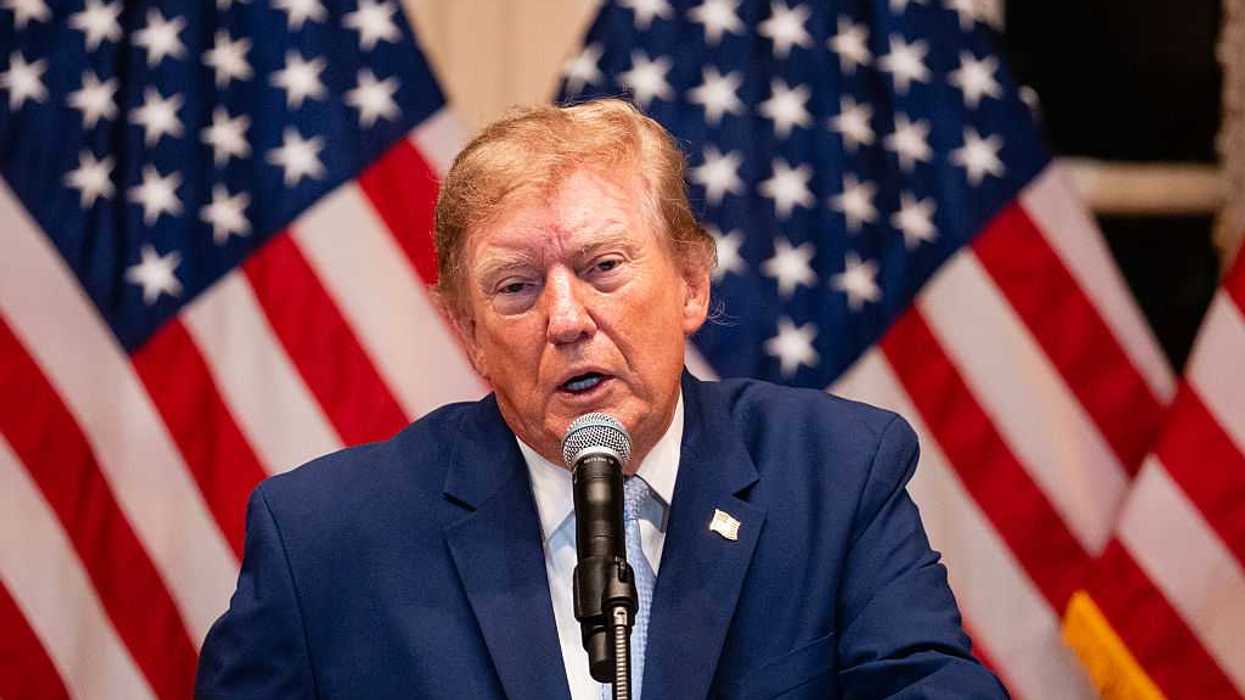
Granted, it is tough to listen to President Donald Trump speaking and acting like a king. He often shows no respect for our institutions – including Congress and the federal courts as he easily holds the dubious distinction of being the most litigious president in U.S. history. He gives new meaning to the term “bully pulpit.” We have and probably never will see another president as brazen as Trump.
Heck, I remember then-candidate Trump saying, and I paraphrase, that he could “do harm” to someone in the middle of New York’s Fifth Avenue and get away with it. I saw it as hyperbole, but today… well, I do not know.
When a president relishes “just killing people” in reference to more than a dozen strikes on small defenseless boats near the coast of Venezuela and insisting that he can do so without seeking a declaration of war vote from Congress, it is more than disturbing. These boats may be running afoul of the law but instead of killing people, there is a justice system and international laws that we prize as Americans.
So, today it is killing people on small boats in the ocean who are allegedly involved in drug trafficking, and tomorrow it “could” be the random killing of Americans allegedly involved in drug trafficking in our cities, all without due process. That is not the America I know and love.
On the more mundane level, there is no doubt that there are many reasons for even dead presidents to be turning over in their graves. Many, if they could shed tears, would cry many due to any part of the White House being destroyed – like we have witnessed in recent days with Trump’s demolition of the East Wing, all done without any consultation with Congress.
Of grave concern are the following:
1. A president who can turn America’s neighbor to the North, Canada, one of the U.S.’s closest trading partners and prior best friend, into a foe due to his tariff demands, and Trump’s inane rhetoric about wanting to annex the country.
2. A president who travels the world while an impotent Congress is AWOL and while 42 million Americans are on the brink of losing food assistance.
Still, I say to the living former presidents that they should be seen (if they care to), but not heard.
There are numerous reasons for this, but I do not want to disparage any of the men who served honorably in the toughest job in the world. It would simply be a “cheap shot,” and I refused to stoop that low.
Suffice it to say, however, that I will repeat a familiar dictum that should hopefully suffice – “He who lives in glass houses should not throw any stones.”
None of the former presidents were universally loved and many were resented by nearly half, if not the majority, of Americans when they left office. Some of their acts as president only conjure up bad memories. Bad mouthing by former presidents also allows the incumbent to blame all the country’s woes on them, and allows the incumbent to make the case that he is the savior, the one cleaning up messes left by their predecessors. Nearly all former presidents over the decades have understood the aforementioned fact.
Lastly, as a former president you are uniquely qualified to know what would cause a president to change his behavior or direction on policy. My suggestion is a “no confidence” vote of the state legislatures which would cause a wayward president to “slow down” a bit. No president would like to hold this infamous and dubious distinction not given to any of his predecessors that X number of state houses and state senates would express the opinion of the people via a no confidence vote.
Thus, former presidents are not like children. They are far more knowledgeable, and some have admirable talents. On the other hand, children have former presidents beat in other areas. Children are much “cuter” than former presidents and far less likely to irritate half the country, just their parents from time to time.
Gary Franks served three terms as a congressman from Connecticut’s 5th District. He was the first Black conservative elected to Congress and first Black Republican elected to the House in nearly 60 years. Host: Podcast "We Speak Frankly" www.garyfranksphilanthropy.org