

Skip to content
Search

Latest Stories

Follow Us:
Top Stories

The Season to Remember We’re Still One Nation

Why neither left nor right can prosper alone — and why now is the season to remember it

Opinion

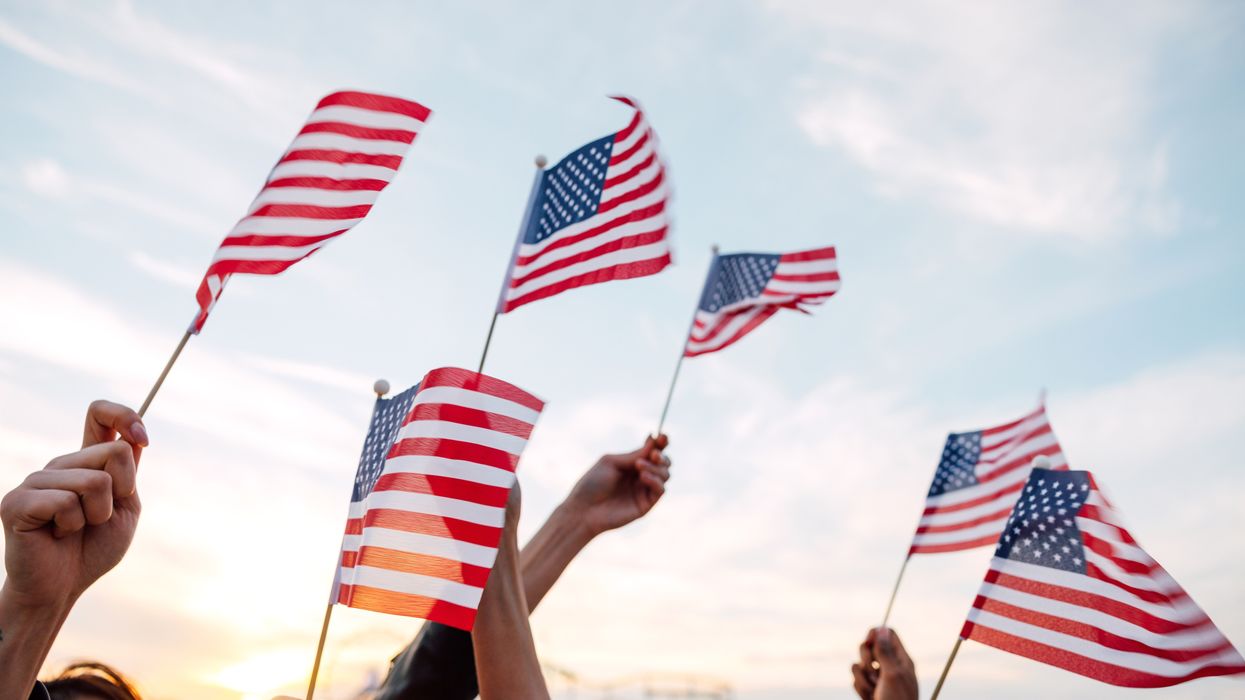
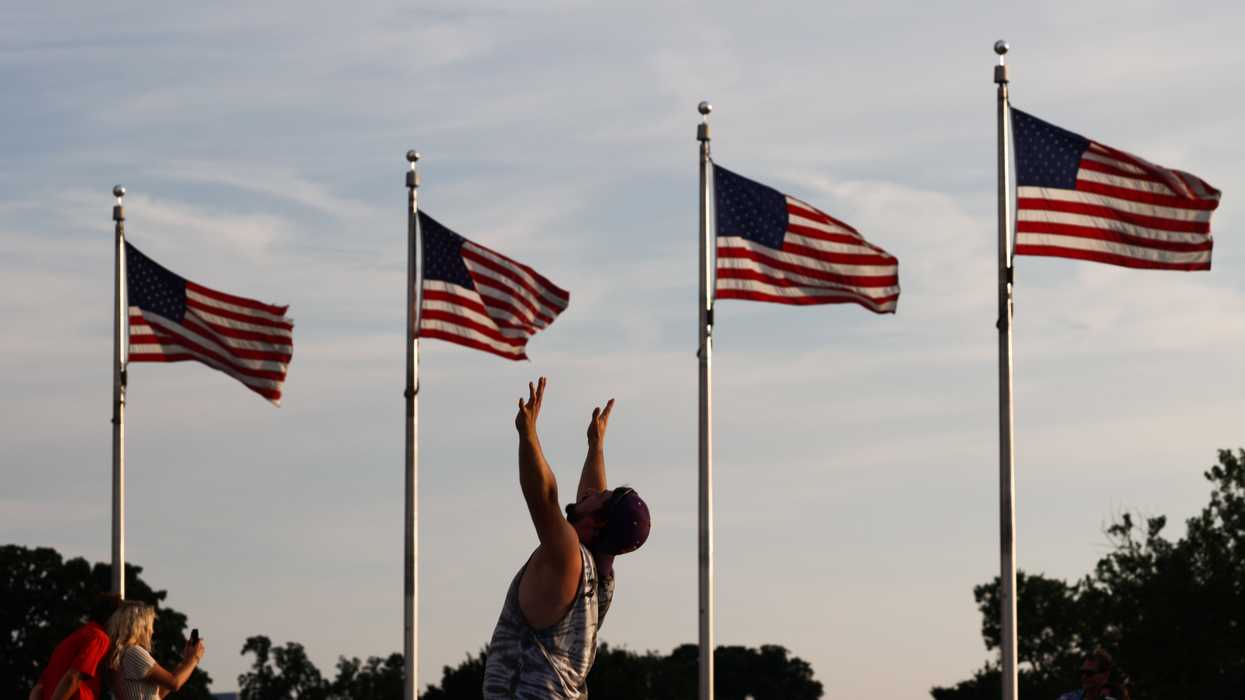
People waving US flags
A deep look at what “American values” truly mean, contrasting liberal, conservative, and MAGA interpretations through the lens of the Declaration and Constitution.
LeoPatrizi/Getty Images

Every year around this time, the noise starts to drop. The pace eases a bit. Families gather, neighbors reconnect, and people who disagree on just about everything still manage to pass plates across the same table. Something about late November into December nudges us toward reflection. Whatever you call it — holiday spirit, cultural memory, or just a pause in the chaos — it’s real. And in a country this divided, it might be the reminder we need most.

Because the truth is simple: America has never thrived by choosing one ideology over another. It has thrived because our competing visions push, restrain, and refine each other. We forget that at our own risk.


I grew up in a time when political conversations were part of life, not a reason to exile someone from it. You could disagree without severing the relationship. The center wasn’t seen as a weakness. It was maturity — the space where people with different temperaments and values tried to make something workable.

Today, we act as if our country must pick a single path and purge the rest. But that’s not how the United States was designed. It wasn’t intended as a pure libertarian project or a pure social democracy. It’s a deliberate blend — a push-and-pull system with enough room for Hamilton’s national strength, Jefferson’s local skepticism, Roosevelt’s compassion, and Reagan’s correction.

The very friction we complain about is the mechanism that keeps us balanced.

And you can even see that balance in our books. Wealthier, urban, blue-leaning states indeed tend to generate more federal revenue than they receive. But those same states depend just as heavily on the energy, agriculture, manufacturing, and natural resources that come from the rural, older, red-leaning states that receive more federal spending. That’s not ideology — that’s geography, demographics, and economic interdependence. Neither side is self-sufficient, and neither thrives without the other. The numbers simply reveal how tightly woven the country really is.

Some Americans daydream about a national split — two countries, one red and one blue — each free to express pure ideology without interference. It’s a tempting fantasy until you follow the math. A “blue nation” might be wealthy on paper, but it would be burdened by the cost of living, bureaucracy, and a shortage of land-based industries. A “red nation” might feel culturally unified, but would immediately face fiscal strain, aging demographics, and the challenge of replacing the federal inflows that currently stabilize its budgets.

Cut the country in half ideologically, and each half becomes a weaker version of itself.

Together, they make the thing work.

This time of year has a way of softening the edges, even if only for a few weeks. It reminds us that the people who frustrate us most are often the same people we share a meal with, raise kids around, or bump into at the grocery store. We don’t disappear from each other in December. We draw a little closer, whether we like it or not. That closeness is a quiet lesson in what the country needs year-round.

The center isn’t a compromise of conviction. It’s the only place 330 million people with wildly different values can coexist without tearing the nation apart. It’s the adult table — the one where no single worldview gets everything it wants, but everybody gets enough stability to keep moving.

As this season unfolds, I find myself hoping we rediscover that center. We don’t have to agree on every policy or election. But we do need to stop pretending one side can run the country alone. America’s strength has always come from its opposites — from the tension between compassion and discipline, progress and caution, liberty and responsibility.

That tension isn’t a flaw. It’s the American design.

Maybe this quieter stretch of the year gives us the breathing room to remember it. And maybe that’s enough to soften the tone, steady the hand, and remind us that disagreement is not the end of the relationship — it’s the beginning of the conversation.

Joe Palaggi is a writer and historian whose work sits at the crossroads of theology, politics, and American civic culture. He writes about the moral and historical forces that shape our national identity and the challenges of a polarized age.

Read More

Governors Cox and Shapiro Urge Nation to “Lower the Temperature” Amid Rising Political Violence

Utah Republican Spencer Cox and Pennsylvania Democrat Josh Shapiro appear on CNN

Governors Cox and Shapiro Urge Nation to “Lower the Temperature” Amid Rising Political Violence

In the days following the murder of conservative activist Charlie Kirk, I wrote Governor Cox’s Prayer Wasn’t Just Misguided—It Was Dangerous, an article sharply criticizing Utah Gov. Spencer Cox for his initial public response. Rather than centering his remarks on the victim, the community’s grief, or the broader national crisis of political violence, Cox told reporters that he had prayed the shooter would be from “another state” or “another country.” That comment, I argued at the time, was more than a moment of emotional imprecision—it reflected a deeper and more troubling instinct in American politics to externalize blame. By suggesting that the perpetrator might ideally be an outsider, Cox reinforced long‑standing xenophobic narratives that cast immigrants and non‑locals as the primary sources of danger, despite extensive evidence that political violence in the United States is overwhelmingly homegrown.

Recently, Cox joined Pennsylvania Governor, Democrat Josh Shapiro, issuing a rare bipartisan warning about the escalating threat of political violence in the United States, calling on national leaders and citizens alike to “tone it down” during a joint interview at the Washington National Cathedral.

Keep Reading Show less
High School Civic Innovators Bridging America’s Divide

Sophie Kim

High School Civic Innovators Bridging America’s Divide

At just 17 years of age, Sophie Kim was motivated to start her organization, Bipartisan Bridges, to bring together people from both ends of the political spectrum. What started as just an idea during her freshman year of high school took off after Sophie placed in the Civics Unplugged pitch contest, hosted for alumni in Spring 2024. Since then, Sophie has continued to expand Bipartisan Bridges' impact, creating spaces that foster civil dialogue and facilitate meaningful connections across party lines.

Sophie, a graduate of the Spring 2024 Civic Innovators Fellowship and the Summer 2025 Civic Innovation Academy at UCLA, serves as the founder and executive director of Bipartisan Bridges. In this role, Sophie has forged a partnership with the organization Braver Angels to host depolarization workshops and has led the coordination and capture of conversations on climate change, abortion, gun control, foreign aid, and the 100 Men vs. a Gorilla debate. In addition, this year, Sophie planned and oversaw Bipartisan Bridges’ flagship Politics and Polarization Fellowship, an eight-week, in-person program involving youth from Tustin, Irvine, Costa Mesa, and Huntington Beach, California. A recent Bipartisan Bridges session featuring youth from both Los Angeles and Orange County will be featured in Bridging the Gap, an upcoming documentary.

Keep Reading Show less
Two speech bubbles overlapping each other.

Democrats can reclaim America’s founding principles, rebuild the rural economy, and restore democracy by redefining the political battle Trump began.

Getty Images, Richard Drury

Defining the Democrat v. Republican Battle

Winning elections is, in large part, a question of which Party is able to define the battle and define the actors. Trump has so far defined the battle and effectively defined Democrats for his supporters as the enemy of making America great again.

For Democrats to win the 2026 midterm and 2028 presidential elections, they must take the offensive and show just the opposite–that it is they who are true to core American principles and they who will make America great again, while Trump is the Founders' nightmare come alive.

Keep Reading Show less
Mirror, Mirror On the Wall, Who's the Most Patriotic of All?

Trump and the MAGA movement have twisted the meaning of patriotism. It’s time we collectively reclaim America’s founding ideals and the Pledge’s promise.

Getty Images, LeoPatrizi

Mirror, Mirror On the Wall, Who's the Most Patriotic of All?

Republicans have always claimed to be the patriotic party, the party of "America, right or wrong," the party willing to use force to protect American national interests abroad, the party of a strong military. In response, Democrats have not really contested this perspective since Vietnam, basically ceding the patriotic badge to the Republicans.

But with the advent of Donald Trump, the Republican claim to patriotism has gotten broader and more troubling. Republicans now claim to be the party that is true to our founding principles. And it is not just the politicians; they have support from far-right scholars at the Heritage Foundation, such as Matthew Spalding. The Democratic Party has done nothing to counter these claims.

Keep Reading Show less