



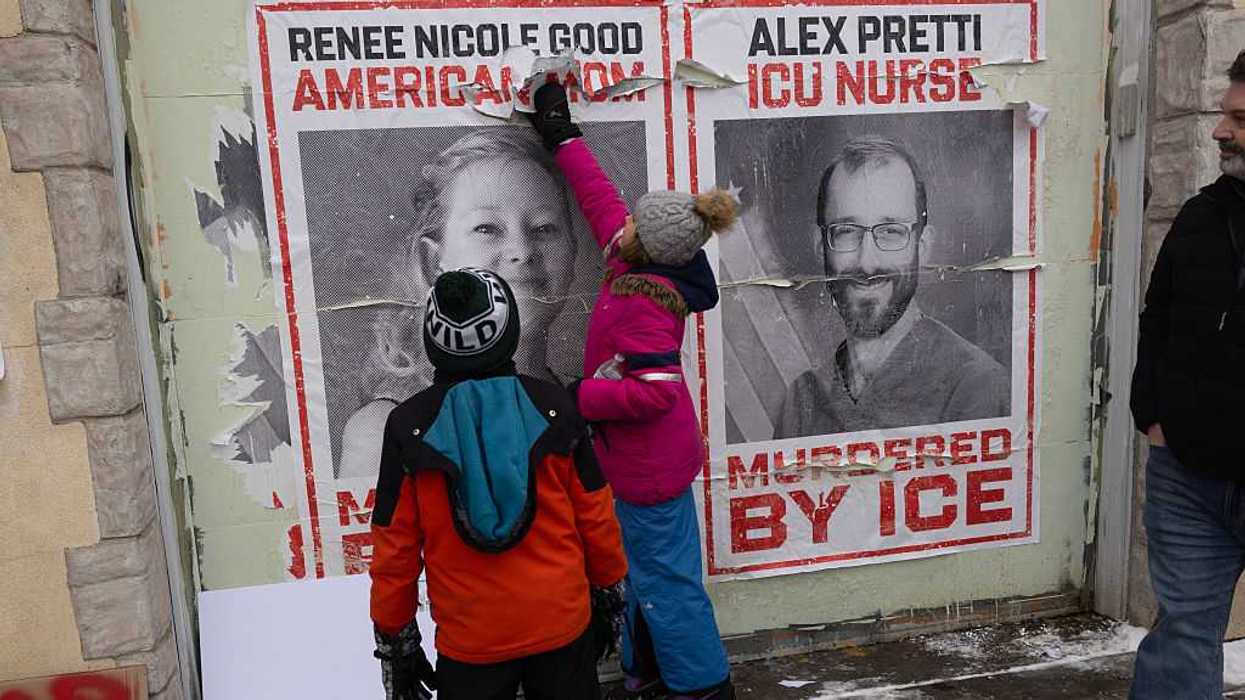

The global reverberation following the murders in Minneapolis of Renee Good and Alex Pretti by ICE agents is highlighted in the newly released U2 song, “American Obituary.”
What is slightly encouraging is that responses to the shooting deaths of intensive care surgeon Pretti by United States Customs and Border Protection last month, following Good’s murder, have also led to the replacement of Gregory Bovino as U.S. Border Control Commander and 700 immigration officers leaving the state.
However, disturbing anti-gay sentiment has arisen against Good, as well as disinformation about moments leading up to Pretti’s death. The Trump Administration defended the actions of ICE and of agents in both cases, while Pretti’s past social media use became the subject of intense scrutiny by news agencies, social media influencers, and political pundits, with some images doctored by AI.
Amid these images, videos, and other mediated elements of Pretti’s life, a photo emerged that online communities speculated might also be AI-generated, depicting Pretti in drag. The photo would eventually be authenticated as real; however, news outlets observed that the images were, in fact, miscaptioned and depicted another individual, Kyle Wagner.
During the height of this image’s circulation, conservative social media influencers used it with the express intent to discredit Pretti’s character. Despite multiple attempts to provide contextual information, social media accounts began identifying other moments of gender-diverse expression and connecting them to Pretti. In a matter of time, any image of a person with a beard wearing brightly colored dresses was presumed to be Pretti.
The factual nature of Pretti having potentially done drag should be irrelevant to his having been brutally murdered. But as these accounts attested, because he was imagined as engaging in expansive gender explorations, he was therefore deviant and not to be trusted.
The language conflating gender diverse identities with pedophilia trades in a long-established practice of aligning transgender identities with mental disabilities and deviance. As Pretti’s imagined gender exploration presumed that he was trying to “deceive” people, these pundits and social media accounts alleged that he was likely deceiving ICE agents as well.
While video evidence, first-hand accounts of Pretti’s shooting, and a variety of character witnesses will ultimately decide the fate of those who shot Pretti, the place of his gender ought to have nothing to do with his perceived criminality, nor should it be used to question his character.
Yet, when encountering governmental systems and their agents, transgender and other non-binary bodies remain points of contention and regulation. Even with advances in biometric scanning and protocols for screening gender diver patients, the Transportation Security Administration continues to disproportionately flag transgender passengers as security risks.
Late last year, a transgender TSA agent sued the Trump administration over being denied the ability to screen other transgender travelers.
This lack of nuance for transgender travelers is certainly evidence of a continued need for more cultural sensitivity in accepting and acknowledging transgender individuals. But it also necessitates a shared belief that transgender people are persons worthy of respect and acceptance.
Implicit within this discourse of the imagined gender non-binary Pretti as being duplicitous and therefore providing justification to his being shot is a harsh truth. People see being queer or transgender as worthy of being removed from society by lethal force if necessary.
Nothing about Pretti’s potential gender identity ought to have warranted suspicion, and to be certain, it should not have justified his murder. A call to legitimize the shooting of Pretti based on potential proximity to being a member of the LGBTQIA+ community is akin to now-outdated practices of correcting and fixing people whose sexualities and gender identities deviated from the norm.
This took the form of everything from legalized conversion therapy, which included electroshock therapy to remove one’s sexual desires, to the violent murder of individuals like Brandon Teena, who we would understand today as a transgender man.
In the continued noise and dissonance of Pretti’s shooting, many will consider who he was as a person and how his characteristics, right or wrong, informed how ICE agents might have perceived his actions.
More details about his sexuality and gender may well arise, but it is urgent to be vigilant as consumers of an increasingly mediated life cycle to separate opinions from assertions of fact. Pretti’s alleged or actual gender explorations have no bearing on whether he should have been shot, nor should we entertain any arguments that suggest it ought to have justified such actions.
To suggest such a thing is to normalize the persistent violence enacted against transgender people, which continues to increase in this political climate. In the first half of 2025 alone, over 900 anti-LGBTQ+ incidents were documented across all but one U.S. State. This number is alarming and does not account for unreported incidents. Since 2022, the number of incidents has been clocked at just over 3,300, suggesting a sharp, concerning increase in the past year, nearly double the rate.
So where do we go from here? Perhaps one of the biggest concerns is media literacy. Though the photograph, speculated to be of Pretti, was not him, nor was it likely photoshopped, it provides a stark reminder of the need for more meaningful media literacy. In my own work, for example, I propose not only more systemic changes to the production of altered images online, but also policies that prevent the discussion, distribution, and training in the use of tools on public media platforms such as YouTube and TikTok.
Since such actions require explicit policy, citizens can also call their representatives and support bills such as the Disrupt Explicit Forged Images and Non-Consensual Edits DEFIANCE Act of 2024. Not only would this lead to the implementation of serious stopgaps in the distribution of visual misinformation in the media, but it would also hold government officials accountable for sharing this content on social media platforms.
Of course, the particular problem of the transphobia underlying this particular spout of misinformation warrants further action. In the same work I mentioned earlier, I argue that individuals gravitate towards particular types of information (i.e., anti-trans sentiments) because they want to believe these images to be true. Decoupling transphobia from misinformation campaigns requires consciousness-raising. To address this, LGBTQIA+ community organizations might partner with their local libraries or community centers to host a series of informational events focused on combating misinformation about trans people. The sessions could include introductory information about transgender identities, culture, and history, such as that provided by the Trans Students Educational Resources. For the trans communities who are already aware of these histories, explicit training in identifying and reporting altered media and video would allow them to report, with evidence, distributed misinformation. Once again, public libraries can serve as a vital source by working directly with the tools provided by the American Library Association for Understanding and Fighting Anti-Trans Information.
Even as policy changes to end the rampant spread of misinformation and awareness-raising arise, there exists no such mechanism for combating anti-trans hate. Seeing such sentiments circulating alongside politicized deaths, it is critical not to ask whether the statement is true, but why such information was deemed relevant to start with.
Travis L. Wagner, Ph.D., is an assistant professor in the School of Information Sciences at the University of Illinois, Urbana-Champaign, and a Public Voices Fellow with The OpEd Project.











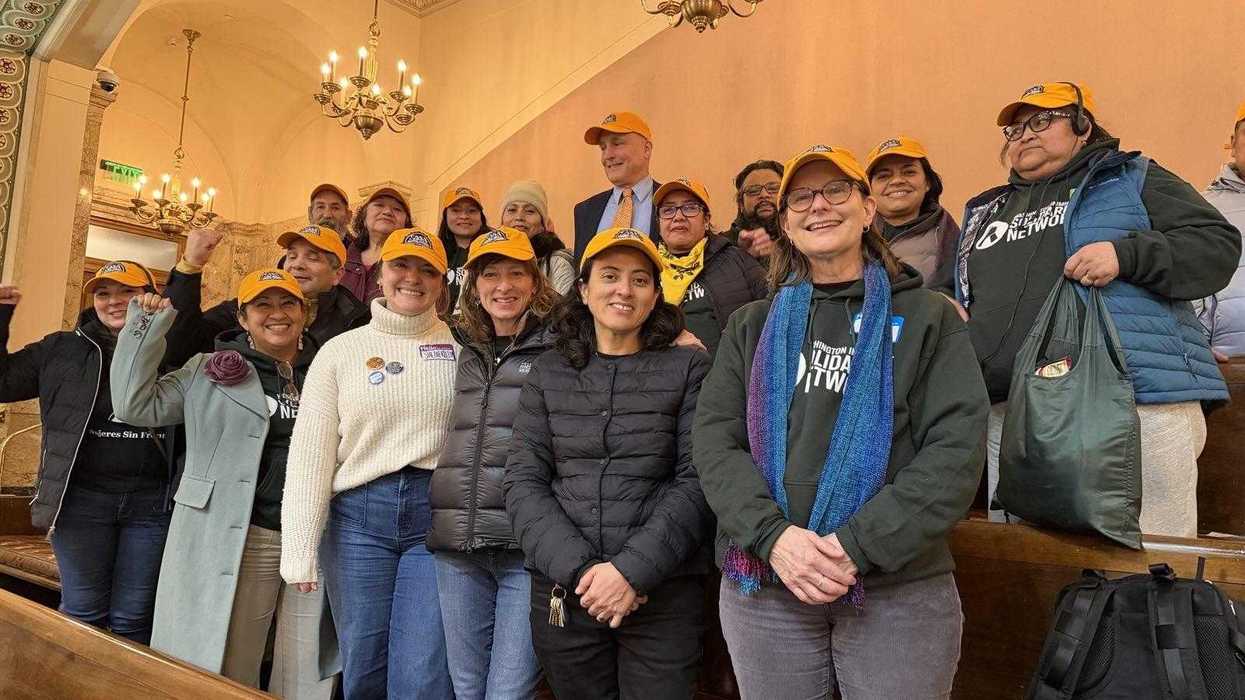
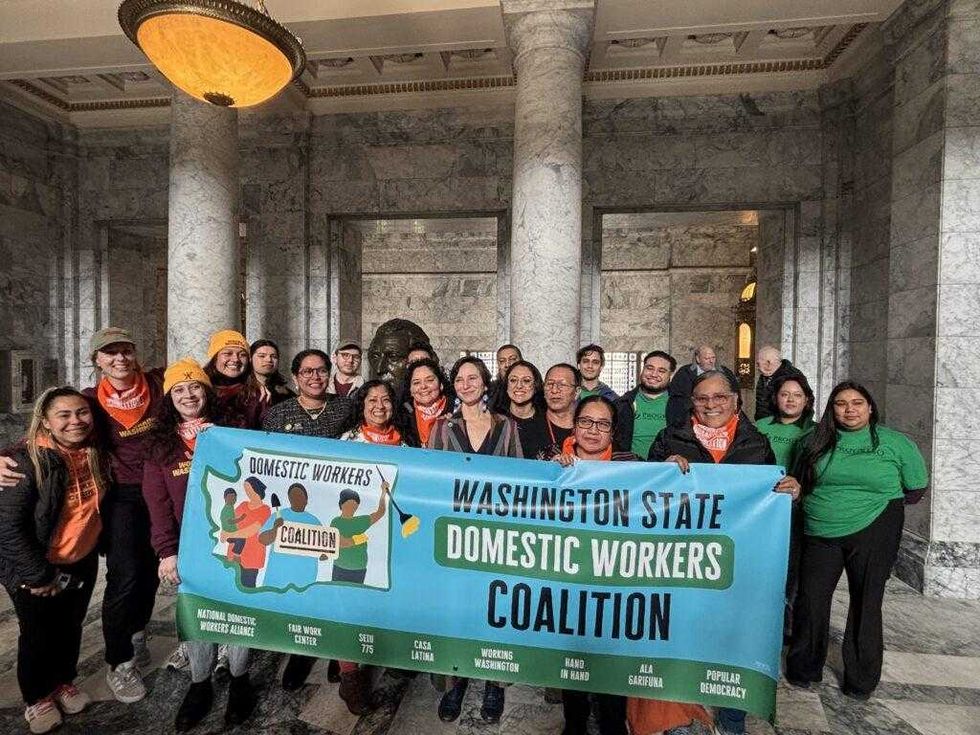 State Sen. Rebecca Saldaña, center, stands with members of the Washington State Domestic Workers Coalition at the state Capitol on Feb. 28, 2026. The Domestic Workers Bill of Rights passed in the House that day, before being signed into law in March. (Photo courtesy of Casa Latina)

The President Invited Iran to Bomb My Home