
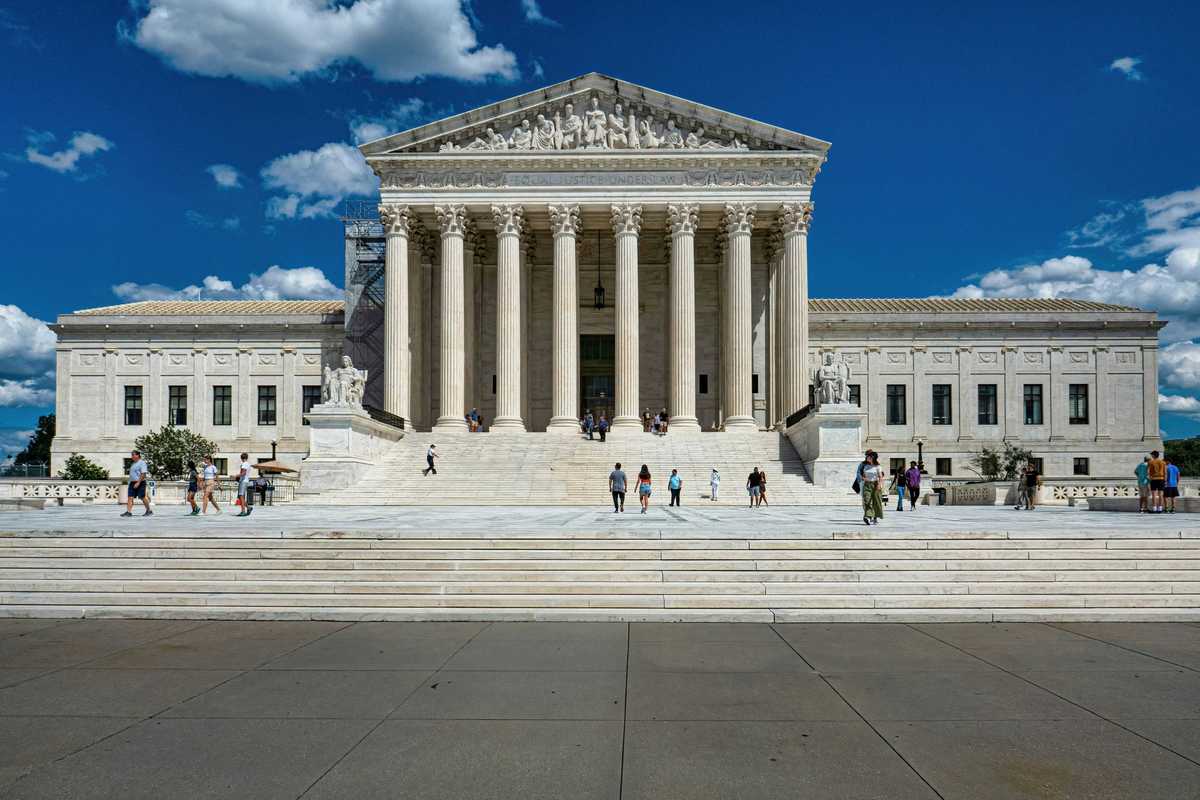


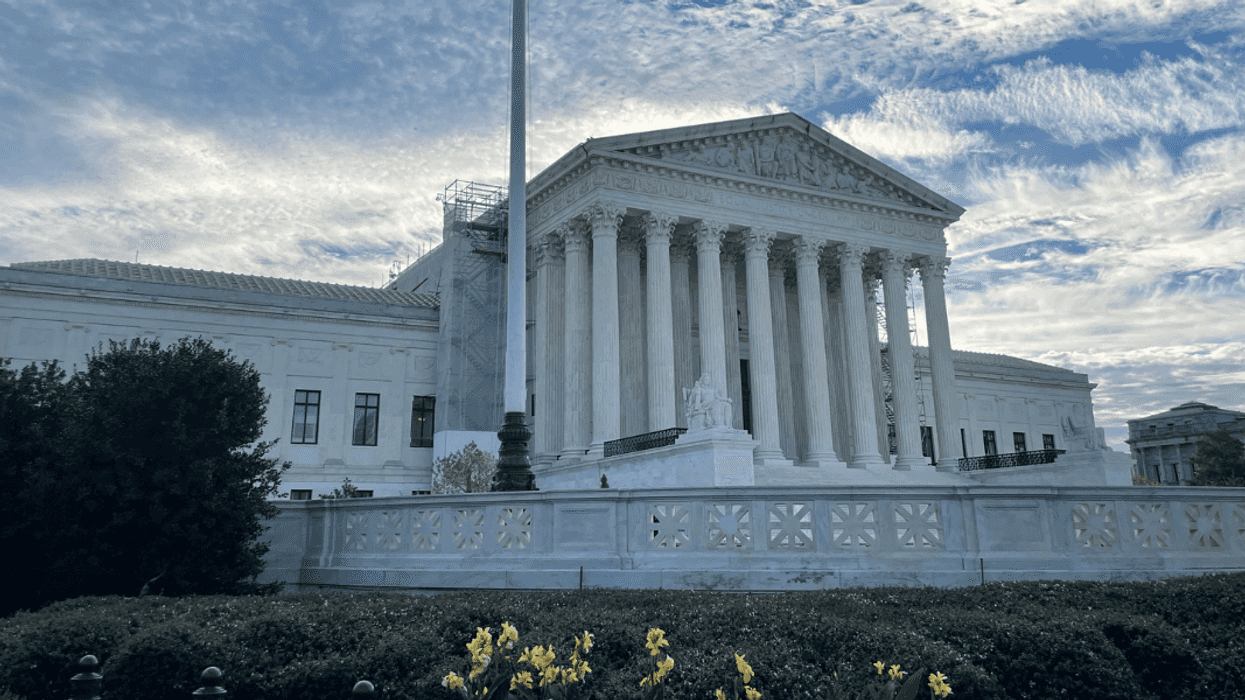
On April 29, the Supreme Court delivered a devastating blow to the 1965 Voting Rights Act (VRA). As bad as it was, the decision fit with a long line of cases in which the conservative- dominated Court has turned a blind eye to the lived realities of racism in the United States.
By insisting that people seeking relief under the VRA must prove intentional discrimination in the drawing of legislative districts, the Court erected a burden of proof so substantial as to effectively allow states to get away with anything during the reapportionment process. Add that to the Court’s 2019 decision allowing partisan gerrymandering, and we have turned back the clock to a time when drawing districts was used by the party in power to keep Black people from getting their fair share of representation.
Under the inverted logic employed by the Court majority in those cases, partisan gerrymandering is permitted, but racial gerrymandering is not. The problem, as many have noted, is that the overwhelming percentage of Black voters identify as members of the Democratic Party.
So, under the guise of partisan gerrymandering, states that had been subject to the provisions of the Voting Rights Act can now claim that they are simply gerrymandering by party, not racial identification, and escape scrutiny under the Court’s new interpretation of the VRA.
Justice Samuel Alito, who wrote the opinion in the VRA case, made all of this pretty explicit. “(W)hen a State defends a districting scheme on the ground that it was drawn for partisan purposes, plaintiffs have a ‘special’ burden to overcome…. To prevail, the plaintiff must ‘disentangle race from politics’ by proving ‘that the former drove a district’s lines.’ That means, among other things, ruling out the competing explanation that political considerations dominated the legislature’s redistricting efforts.”
Good luck.
Lee Atwater once infamously explained how the Republican Party could pursue racist policies if they simply refrained from uttering racist words, and instead disguised their intent by referring to their policies, which were racist without saying so. What we have in the Supreme Court’s VRA decision is yet another example of Atwater’s strategy.
But that decision was more than a rebuke of the VRA. It was a decisive strike against the long-running, and far from complete, effort to achieve racial justice in this country and against the unity of the United States as well.
It did not take long for those effects to manifest themselves. In states that had been at least marginally restrained by the VRA in their efforts to eliminate Black representation in their Congressional delegations, the Court’s decision gave them a green light to remap their districts to do exactly that.
For example, in Tennessee, two days after the decision, Republican Governor Bill Lee called for a special legislative session, as he put it, “to ensure our congressional districts accurately reflect the will of Tennessee voters.” As the New York Times notes, “Several Republicans — including President Trump — had pushed for the General Assembly to reconvene to approve a new map that would slice up the state’s lone remaining Democrat-held district, out of Memphis, a longtime stronghold for Black voters.”
In Louisiana, where primary elections were already underway, the governor ordered the balloting to stop so the legislature could redraw the state’s electoral maps to eliminate Democratic leaning and Black-majority congressional districts.
The expanded struggle over gerrymandering this year, first in Texas, then in California, spreading to other states, and now underlined by the Court’s decision, is a disturbing attack on democratic representation more generally. Gerrymandering, though the Court seems to ignore this, is a technique for reducing voters’ impact in elections, especially in general elections, since so many districts become non-competitive.
But there may be a deeper consequence of this surge in gerrymandering. As individual states become less and less competitive, one-party rule, whether by the Republicans in southern and more rural states, or by Democrats in northern and more urban states, becomes much more likely, perhaps even inevitable.
What this would mean is that the country, already polarized, will become Balkanized.
This would increase the temptation for individual states to assert their power within their own borders, further weakening the national government, which has already been weakened by systematic attacks on laws and regulations by the Trump Administration.
Such a shift may look like a return to the pre-civil rights era, in which legal apartheid ruled in the South, but it is potentially even worse. The logical end of this gerrymandering will be to establish one-party rule, not simply in the South, but in every state in the union.
What happens then?
At the national level, Congress would become even more dysfunctional than it is now. While a majority of the national population would likely be governed by Democratic administrations, a majority of individual states would likely be ruled by Republicans.
This might result in a House with a permanent Democratic majority and a Senate with a Republican majority. Given that situation, even more power would accrue to the executive and judicial branches.
For the sake of preserving their own power, any president, whether Democratic or Republican, would see weakening the states governed by the opposing party as a useful strategy-- attacking their laws, defunding the national contribution to their administrations, etc. They might also seek to strengthen states where their party rules.
It is often noted that states with Democratic majorities disproportionately fund the national government, while states with Republican majorities receive more benefits from it. Until recently, this fact has not been of deep political significance.
But over time, the intensification of state identity, a downstream result of gutting the VRA, will shift the perspective of those living in states that pay more to the federal government than they receive, especially when they are under attack by that very government.
To be sure, what we’ve just described does not sound so different from current policies being pursued by the Trump Administration. But how long can the United States persist as a united states under such circumstances?
It is difficult to avoid the conclusion that the United States is in greater peril than at any time since the Civil War. The Supreme Court’s VRA decision may be to this century what Dred Scott was to its century.
Just as the Dred Scott decision was catastrophic, what happened on April 29, when the Supreme Court undid the VRA and weakened the political power of Black citizens, may well lead to a new American catastrophe and a mortal injury to our constitutional democracy.
Perhaps we need a Lincoln. But we see no Lincoln on the horizon.
Austin Sarat is the William Nelson Cromwell professor of jurisprudence and political science at Amherst College.











The President Invited Iran to Bomb My Home