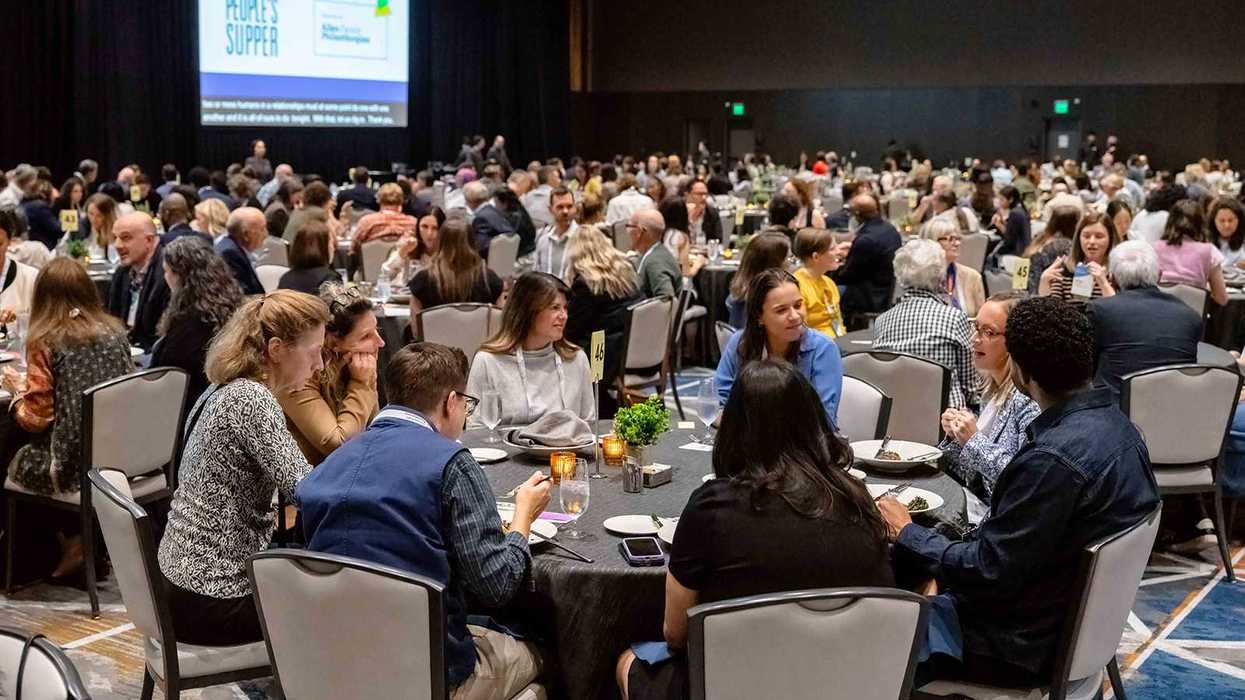
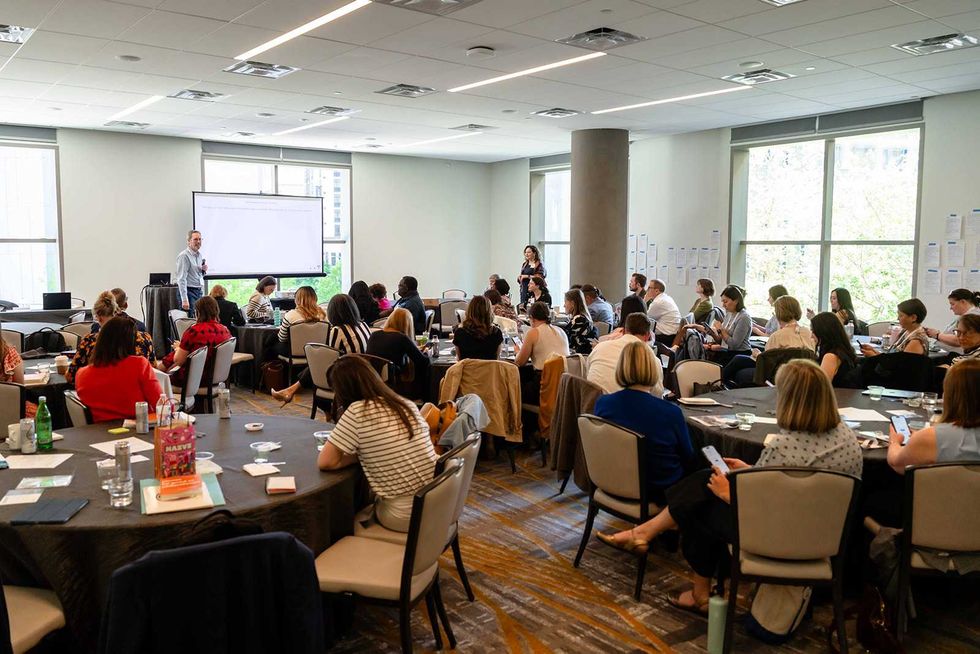
Recently, close to 600 leaders from across the country — representing some of the nation’s largest grant makers, community foundations, and grassroots groups — gathered in Seattle. They joined forces to strategize on how to do the difficult work of bringing Americans together in an era of intense polarization that threatens to pull us apart.
The charitable sector has always played this role in American life, fueled by the belief that the country’s diversity of identities, priorities, and worldviews is a resource, not an obstacle. It mobilizes people from all walks of life when floods, wildfires, and other crises strike. It builds powerful coalitions for the common good, whether for a local park, job creation, or new affordable housing. And it connects people across seemingly insurmountable divides born of our differences in politics, class, race, faith, and more.
And it’s what Americans have come to expect. In a national survey conducted last year by the Council on Foundations and Hattaway Communications, 80% of Americans said philanthropy should play an important role in modeling and facilitating collaboration across differences.
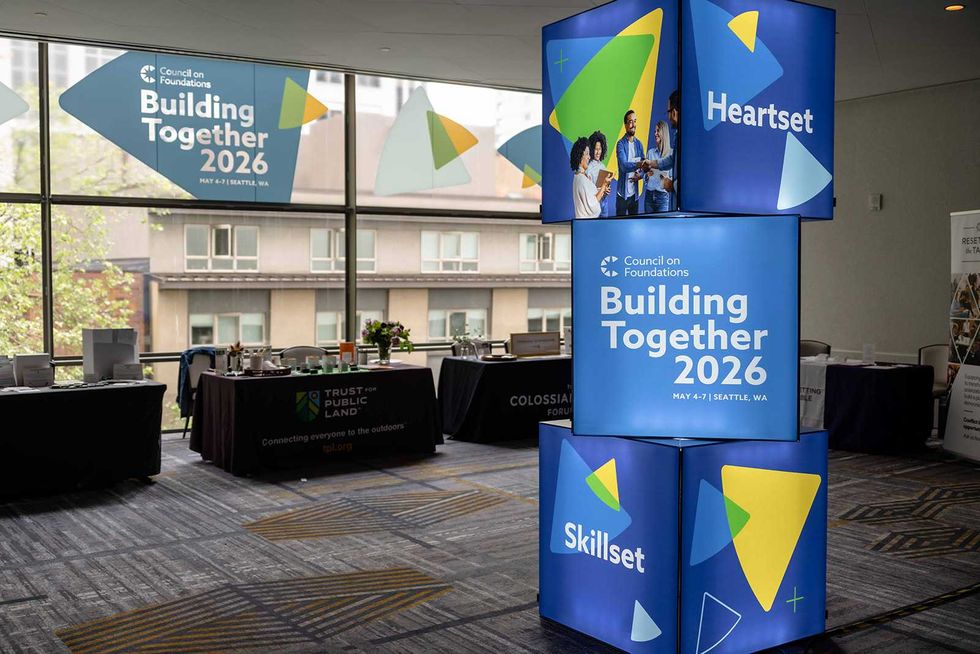
For the past five years, against the backdrop of increasing polarization and declining trust in institutions, the Council on Foundations has helped to equip charitable leaders with the skills and strategies to navigate these differences at its bi-annual Building Together conference. There, we tap the experts, including behavioral scientists, violence-prevention scholars, veterans of conflict-zone peacebuilding, architects of coalitions that reach across race, class, and age — and bring together the people on the front lines to build our collective capacity to meet a national crisis playing out in every community. Here are a few key lessons from that recent gathering from these advocates for the common good working across differences.
Americans yearn for connection. Two-thirds of Americans say they benefit from interacting with people whose backgrounds and viewpoints differ from their own, according to a study by the research group More in Common. What’s missing, many say, is the opportunity to connect. “Communities want to come together,” said Shelly O’Quinn, CEO of Innovia Foundation, a community grant maker serving eastern Washington and northern Idaho. “People are exhausted by the constant negativity. There is almost a backlash against division, with a real desire to reconnect, rebuild trust, and work together toward something better.”
There is no single best way to rally people to the work. “People are different,” said Matt Leighninger, vice president of the National Civic League and director of the group’s Center for Democracy Innovation. “Some of them will never come to a meeting. Some will never plant a tree. Some will only go online; some will only go offline. Give people a range of ways to do what fits them.”
Small efforts can create the infrastructure and mindset to take on big things. In Honesdale, a town of 4,500 in rural northeastern Pennsylvania, the Wayne County Community Foundation convenes an interfaith group to direct a small, faith-based grant program. Members include leaders from a synagogue, mainline and evangelical Christian churches, and a Himalayan retreat and meditation center. With such diversity, their first conversations netted only agreement to fund the purchase of defibrillators for nonprofits. Now, however, recognizing that each group member helps care for the less fortunate, the group is eyeing bigger initiatives in housing and poverty relief. “They’ve built quite a bit of trust,” said Ryanne Jennings, the foundation’s CEO. “They all now see their end goal as meeting the needs of the community.”
You can expect to be uncomfortable. The work to connect across differences is complex, and philanthropy is often eager to wrap things up rather than persist in difficult conversations and live with the heaviness. “We can’t let wanting to feel good get in the way of actually doing good,” said Kayce Ataiyero, chief external affairs officer of the Joyce Foundation.
Crisis can be a catalyst. Philanthropy and nonprofits often stand in the center of disaster response, coordinating volunteer efforts as well as relief and recovery funding. With lives and livelihoods at stake, people and organizations who are strangers to one another work side by side — a connection that represents a moment to build on. In Colorado’s San Luis Valley, leaders of communities that lie hundreds of miles apart began to talk regularly during the pandemic — first about their health needs but then about how to help local businesses and the region’s economy. Such conversations were critical during later wildfires and continue today, said Jason Medina, executive director of the Community Foundation of the San Luis Valley. “It's out of the ashes of these disasters that we realized that we need to talk more. We don't have to wait for another disaster to come around for us to do this.”
Coalitions built on values can break our tribalism. In a keynote address, the Rt. Hon. Dame Jacinda Ardern, former New Zealand prime minister, spoke about her country’s response to a 2019 white supremacist’s attack on two mosques in Christchurch that killed 51 people. Lawmakers quickly passed a ban on most military-style semi-automatic weapons, and the government successfully pressured tech companies to limit terrorist and violent extremist content online — success that she credited to a coalition organized around a rejection of hate and a belief in inclusion. “The challenge for us in the times that we live in is how we organize ourselves,” said Ardern, who helped launch the Christchurch Call foundation. “If we are inherently tribal, how do we organize ourselves around values?”
Building common ground leads to power. Efforts to connect across differences are often dismissed as nice but hardly essential, said Ali Noorani, head of the Barr Foundation. That ignores the incredible power inherent in coalitions that bridge divides, Noorani said. “Whenever we seek to win — whether you are on the right or the left — you need partners to achieve that win. And the strategies that we're talking about today are ultimately strategies that build larger coalitions but also more powerful coalitions.”
You are playing the long game. Building the relationships and trust that can drive change takes time. In Greater Seattle, the Civic Commons, an outgrowth of the region’s community foundation, has built a network of nonprofits, businesses, philanthropy, and government agencies committed to a seven-point plan to increase Black homeownership in the region. Each partner arrived at the network with its own ideas and plans to change the outcomes for prospective Black homeowners, said Michael Brown, chief architect at Civic Commons. “We can all attest now that we need each other to do something we couldn’t do on our own, but that doesn't happen overnight.”
The 600 leaders who gathered in Seattle are responding to a country that wants to come together and move forward. Their mandate is clear, and they are answering the call in innovative ways.
Kristen Scott Kennedy is the Executive Vice President of the Council on Foundations.