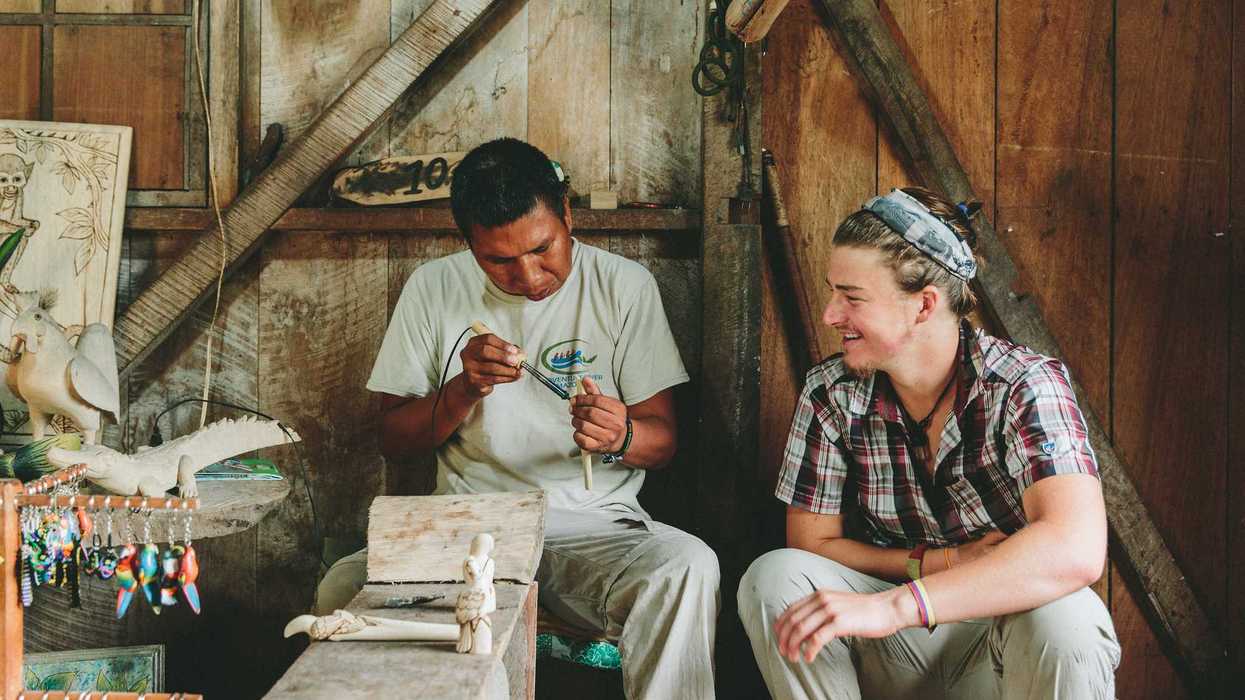

I've been running global civic education programs for twelve years, and I keep seeing the same pattern: college-age students arrive believing they know how the world works and that their perspective is fact. Months later, after sustained global engagement, they return home fundamentally different, with their walls down and having gained a visceral understanding that their perspective is just that: a perspective, not the truth.
There's a reason this transformation matters so much at this age. This is the moment when mental models solidify into frameworks about how the world works, about who deserves trust, and about what's possible across difference. But without exposure to people and cultures that have alternative perspectives, those frameworks harden into us-versus-them certainties rather than nurture curiosity, further entrenching the polarization that is fracturing our country. Too often this polarization is framed as a knowledge problem rather than a moral perception problem.
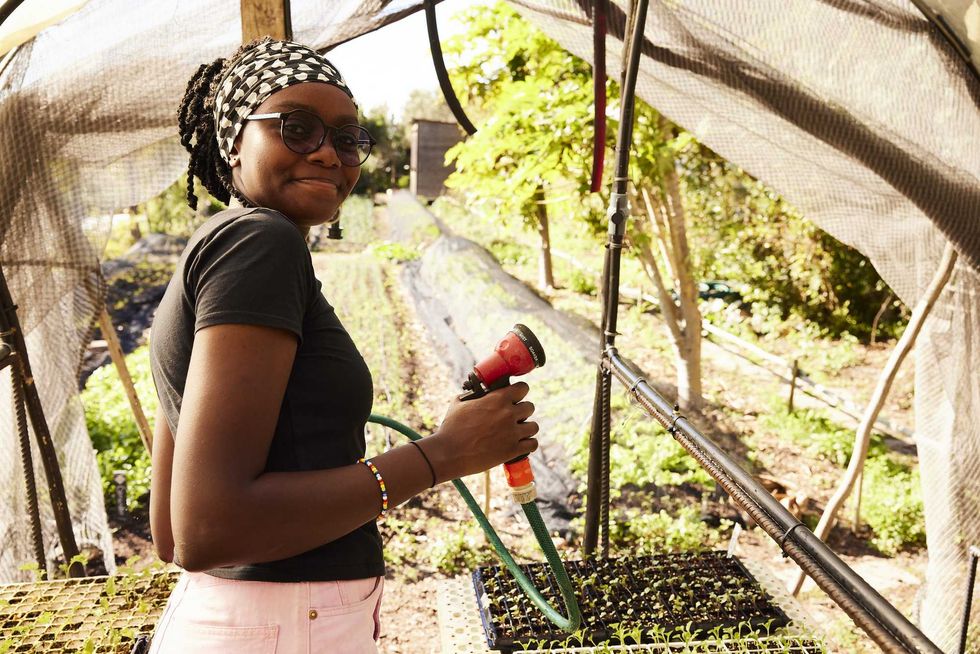 Photo Courtesy of Tilting Futures
While exposure to different backgrounds and cultures can help broaden one’s perception of morality, where and how this exposure happens is critical. Haidt's research reveals that humans are "90% chimp and 10% bee": intensely tribal, but with a unique capacity to "hive switch," to temporarily transcend self-interest for collective purpose. That's where moral transformation happens. Social psychologist Gordon Allport identified the conditions that make this possible: what he called "equal-status contact"—sustained, cooperative work toward shared goals in contexts where existing hierarchies don't automatically apply. The problem? You cannot trigger hive-switching in adversarial contexts.
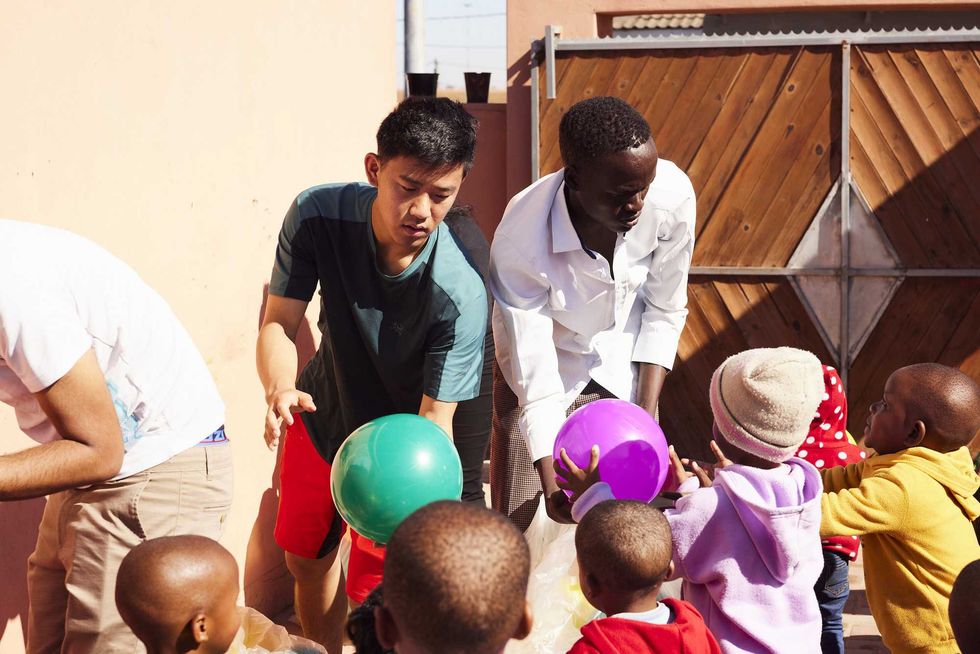 Photo Courtesy of Tilting Futures
I'm often asked if we could run our program domestically: why not apprentice students with organizations in American cities or towns? The answer reveals what we've learned about creating equal-status contact. We absolutely could host a program in the United States, but it couldn't include American students, for the same reason our South Africa program doesn't include South Africans. Everyone needs to cross borders. When we send a suburban student to "serve" in an urban community, or an urban student to "help" in a rural one, we're reinforcing the very hierarchies we're trying to dismantle. In the United States, race and class are instantly legible. Within seconds, markers of socioeconomic status and racial identity trigger deeply ingrained hierarchies that make equal-status contact difficult to achieve.
In a global cohort in a completely new context, those hierarchies are disrupted. American students of different races and backgrounds are all visitors working alongside Brazilian, German, and Indian students, learning from local practitioners who hold the expertise none of them possess. Domestic identities don't disappear, but they're no longer the primary organizing framework.
 Photo Courtesy of Tilting Futures
And it's not simply about exposure to difference. It's about sustained cooperative work in contexts where no one's framework gives them automatic authority. The research backs this up: political exposure in adversarial contexts actually hardens divides. Traditional study abroad correlates with wealth, not civic outcomes. Most study abroad happens in "island programs," where American students live and socialize together, taking classes from their own university's faculty, creating insular social circles.
The educational benefits of global civic engagement are reflected in a study we conducted with UC Berkeley comparing students in globally-focused programs to matched applicants who didn't participate. Results showed statistically significant gains in social trust and civic engagement, including a 45-point increase in capacity to navigate ambiguity. Gains persisted years later. Students develop what Northeastern University president Joseph Aoun identifies as "robot-proof" capacities: systems thinking, cultural humility, integrative thinking across competing perspectives, and coalition-building among people with fundamentally different moral foundations.
 Photo Courtesy of Tilting Futures
Despite the clear advantages global civic engagement programs yield, we still lack a reliable framework in the U.S. for recognizing this type of learning. Some colleges will transfer this type of life experience to credits, but it’s far from universal and the number of credits a student can earn varies wildly. This, of course, discourages many students from considering such opportunities.
Consider, as an alternative, however, what would happen if global civic engagement became part of a standard curriculum. Research on social tipping points suggests that when a committed minority reaches somewhere between 10-25% of a population, rapid change in group norms becomes possible. If one in ten undergrads participated in these programs, it would create a distributed network of students who've developed the muscle memory for working across difference. And as college graduates move into leadership positions, as managers, educators, policymakers, and community organizers, they bring these capacities into every institution and sector they touch.
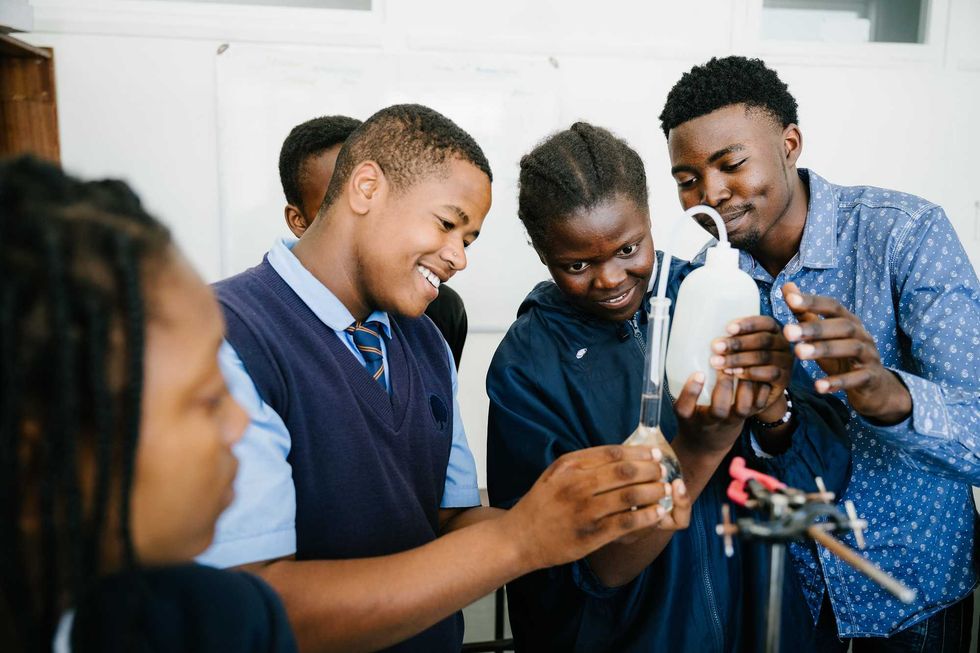 Photo Courtesy of Tilting Futures
Universities are under pressure to prove their value. Employers want graduates who can work across difference. Students want skills that AI can't replicate. The public wants to see impact on polarization and civic health. Global civic education addresses all three.
This isn't about scaling feel-good adventure or tourism. It's about leveraging existing infrastructure—study abroad offices, accreditation processes, financial aid systems—to build a generation equipped to do what ours has struggled with: work across difference, find common ground, and lead in contexts where division is currently the default. What's needed is the institutional will to make transformative international experiences the norm, not the exception for a privileged few.
Erin Lewellen, CEO of Tilting Futures, a nonprofit that prepares young people to lead in a complex world through immersive global learning programs.