




Everyone in the United States deserves time to care for themselves and their loved ones, whether to see a baby’s first smile or hold the hand of a parent who takes their last. Last month, Virginia became one of a growing number of U.S. jurisdictions enacting statewide paid leave programs—forward-looking states that have taken matters into their own hands in the absence of a federal policy that the vast majority of the public across party lines wants and has wanted for quite some time.
Beginning in 2028, Virginia will join its regional mid-Atlantic neighbors, the District of Columbia, Maryland, Delaware, New Jersey, and New York in guaranteeing this basic protection to millions of workers caring for a new child, a loved one, or their own serious health need. Pennsylvania’s legislature, too, is moving paid leave legislation, and with bipartisan support. Evidence shows that paid family and medical leave programs offer multiple sources of value to workers, families, businesses, and communities.
State momentum should propel a national mid-term election conversation about solutions to families’ challenges with affording basic expenses amidst caregiving needs. Unfortunately, discussions about paid leave often devolve into a well-worn debate: whether political progressives are getting in the way of their own success and the country’s paid leave progress by being too ambitious. If only advocates would reduce their ask from the comprehensive paid family and medical leave policies passed across the country and the structure for parental, family, and personal care leave established in the 1993 Family and Medical Leave Act to a modest policy that focuses narrowly on new parents, Congress might have adopted a paid parental leave benefit by now, proponents of this argument say.
This approach has appeal on its face. The reality is that millions of parents in the United States are stretching their savings, cobbling together sick and vacation days, going into debt, returning to work when their babies are just a few weeks old, or dropping out of the workforce entirely when they would rather not. And it’s compelling to highlight the U.S.’s outlier status as the only high-wealth country not to guarantee paid leave to new mothers, and one of a handful not to guarantee paid leave to new fathers or adoptive parents. These pieces of evidence are often cited as reasons to prioritize parental leave first.
But after nearly two decades working to pass paid leave policies, I believe strongly that this hypothesis—that winning paid parental leave is possible while winning comprehensive paid family and medical leave is not—is a red herring. Neither voters nor policymakers who believe that all Americans should have access to paid leave should moderate their demands.
The issue isn’t whether parents or all workers should have paid leave. The central tension in the fight for national paid leave is whether it’s the government’s job to provide this economic safeguard, whether one defines the problem as limited to the needs of working parents or as more broadly applicable to the entire workforce. For context, there are an estimated 130 million parents with kids of all ages and caregivers to older and disabled loved ones in the United States; the vast majority of work for pay in jobs across all industries and sectors. More than 30 million workers of all ages struggle with health issues or disabilities. These are sizable constituencies that elected officials should want to appeal to. And the need for personal medical leave and family caregiving leave will only grow as the population ages.
That’s why the focus of advocates and prognosticators should be on a set of different questions for office seekers and office holders. Reaching consensus requires agreement on three key points:
- All working people deserve time to care without regard to employer size, job type, family composition, or other personal or demographic characteristics;
- There’s a robust role for government as facilitator or intermediary; and
- The federal government should commit public dollars commensurate to the scope of the need, whether that need is defined as limited to parents of new children or to all workers.
There’s precedent for getting to “yes” on these points. Comprehensive state paid family and medical leave programs use the apparatus of government to either supply or oversee delivery of paid leave benefits. All have committed public dollars to address the stated need, without negative repercussions, adverse consequences, or skyrocketing costs.
If advocates and voters want to win national paid leave, this is the terrain to fight on. Getting to “yes” on these propositions would be a game changer. If federal lawmakers could agree across the aisle on these questions, the details of a policy—eligibility, uses, duration, and benefits—could be worked out through a process of negotiation and compromise.
Bipartisan disagreement in Congress centers on the scope, role, and level of government intervention. More than 200 Democratic House members and 39 senators have endorsed the FAMILY Act, which meets these criteria and guarantees up to 12 weeks of paid leave to all working people with eligible personal, parental, and family care needs. In contrast, Republicans have not endorsed the role of government or the spending required even for a six-week parental leave program like the current president proposed repeatedly in his first term.
The 2019 Federal Employees Parental Leave Act providing paid leave to parent in the federal workforce, which passed Congress on a bipartisan basis, was the result of a horse-trade (the paid parental leave Democrats fought for in return for Republican’s prioritization of Space Force as the newest branch of the military), and the role of the government is as employer rather than as a mediating entity that facilitates workers’ access to paid leave across the private sector. While cross-party compromise on this policy is commendable, it is not a sign of broader bipartisan agreement on paid parental leave for all U.S. workers.
Recent federal bipartisan efforts at agreement in Congress have led to incremental proposals to make leave for parents, caregivers, and all workers easier to obtain for those who already have it, and resulted in permanent tax credits for employers who choose to provide paid leave. Lawmakers interested in progress across party lines have not proposed a path forward for universal coverage—for parents or anyone else—because the real tension is about mandatory coverage, the role of government, and the level of government investment.
As we enter an election season where voters are concerned with the cost of living, managing household expenses, and saving for the future, office-seekers and sitting lawmakers would be right to focus on paid leave as one element of a working families’ agenda. Getting this policy over the finish line is fundamentally more about what the government prioritizes and allocates resources toward than squabbling about whether new parents or all workers should be covered by a new policy.
Let’s demand that the government prioritize families overall as a principle and evaluate lawmakers’ commitment to families by their willingness to spend public dollars in service to that priority. By winning that fight, we’ll make room to ensure that all working people can care for themselves and their loved ones no matter where they live or their job with the security that only a national paid leave program can offer.
Vicki Shabo is a Senior Fellow for Gender Equity, Paid Leave & Care Policy and Strategy at New America’s Better Life Lab. She is also the founder of and leads New America’s entertainment initiative, Re-Scripting Gender, Work, Family, and Care.










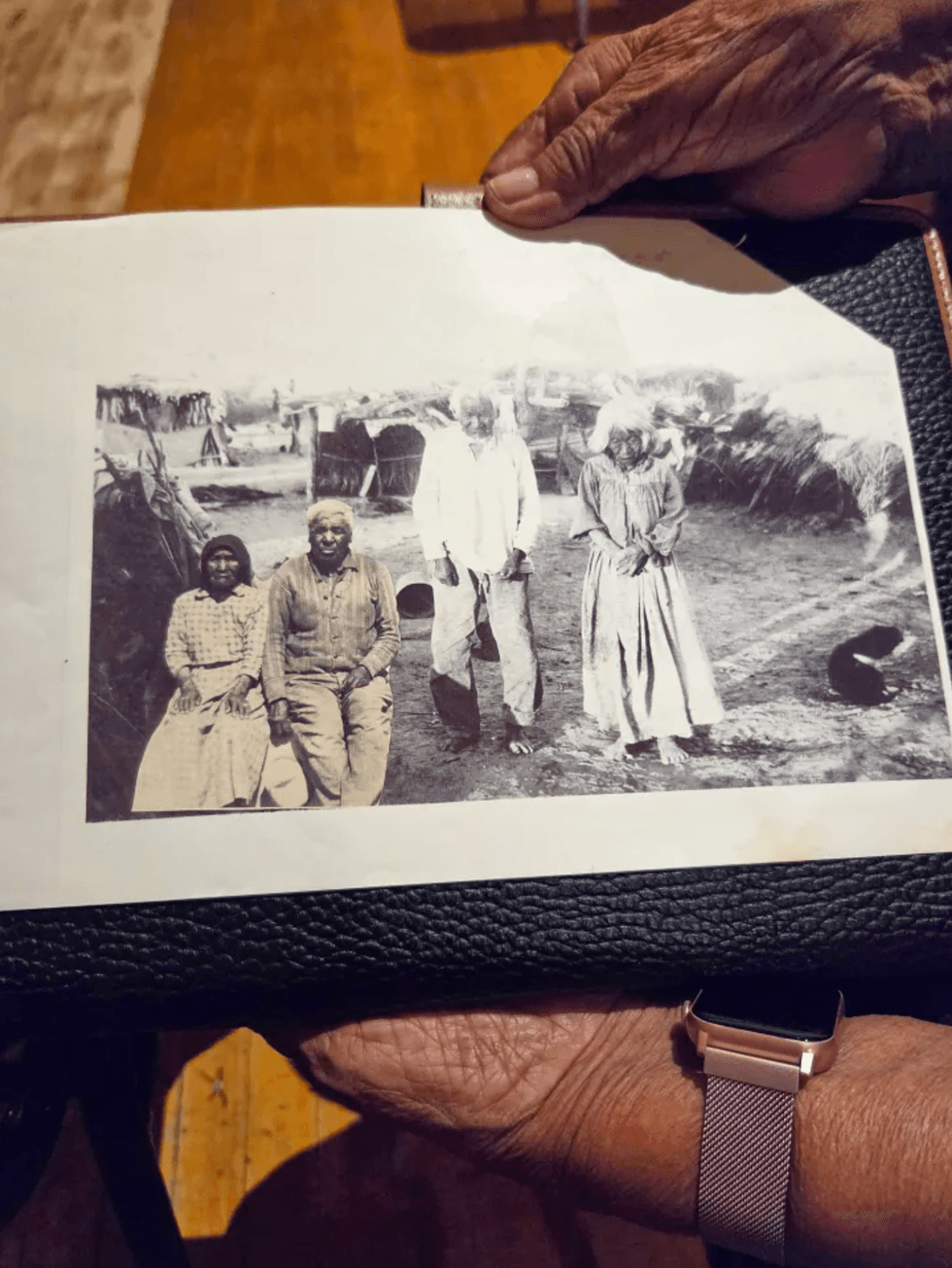 Lorraine Marquez Eiler’s photo of her great-great grandparents and her great-grandparents, who would walk about 50 miles through the Sonoran Desert to the springs.
 The Quitobaquito pond sits near the U.S.-Mexico border just west of the Lukeville port of entry on Monday, Aug. 24, 2026. The Trump administration is attempting to build a second border fence 150-feet from the existing border, which O’odham tribal members and environmentalists say would damage Quitobaquito, a sacred site to the O’odham and other indigenous people. Credit: Stephanie Casanova
 Construction equipment is seen near the U.S.-Mexico border just west of the Lukeville port of entry on Monday, Aug. 24, 2026. Credit: Stephanie Casanova
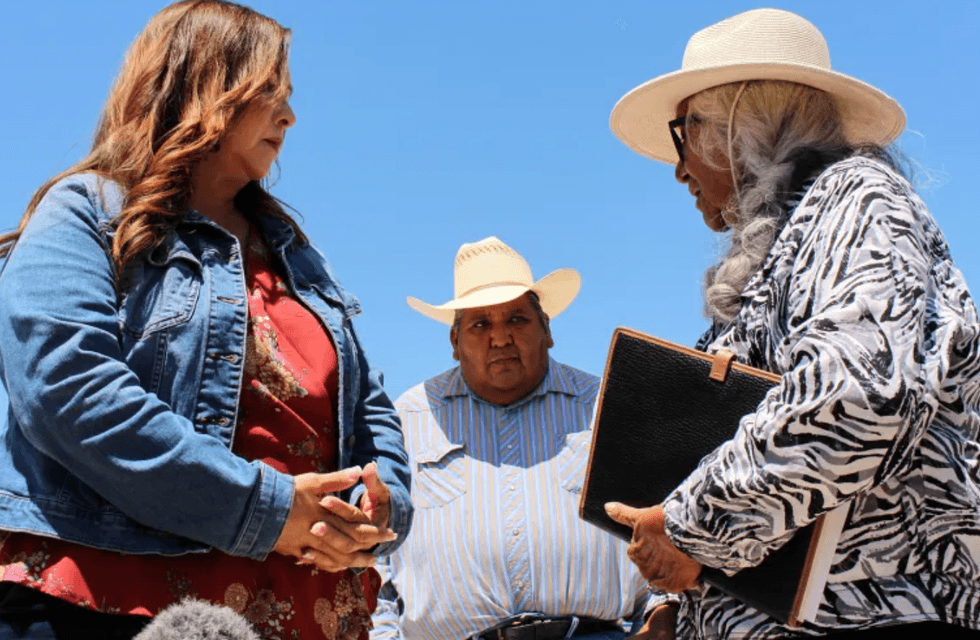 Rep. Adelita Grijalva, left, and Tohono O’odham Chairman Verlon Jose listen as Lorraine Marquez Eiler, a Hia-C’ed O’odham elder, shares how her ancestors would hold ceremonies at Quitobaquito Springs. Grijalva visited the springs with tribal leaders on Monday, Aug. 24, 2026. Credit: Stephanie Casanova
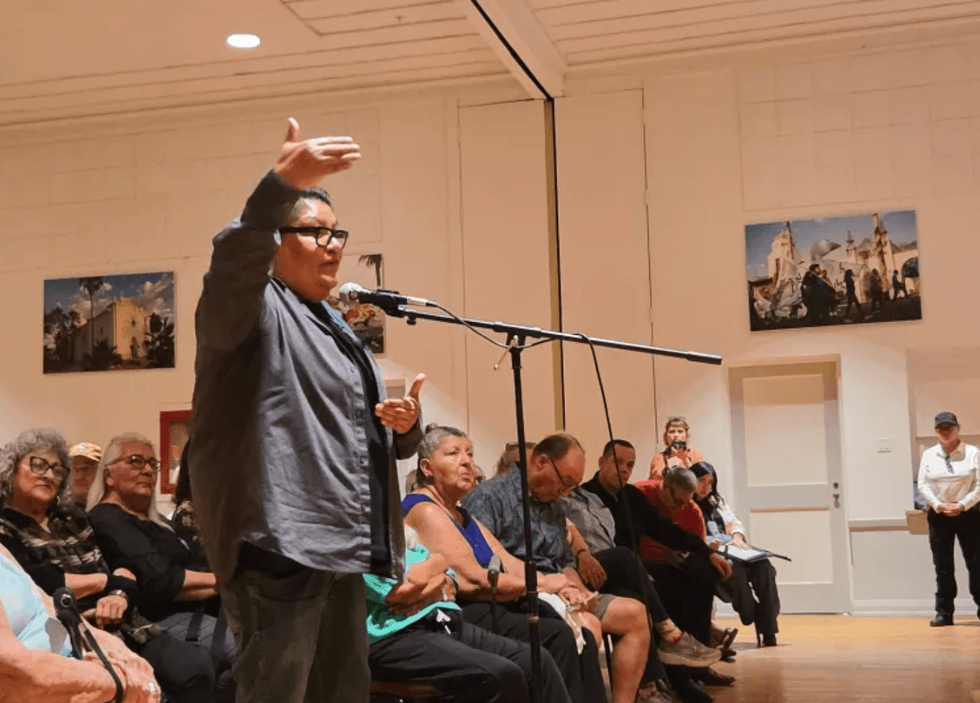 Sara Mae Williams, Justice of the Peace in Ajo and a Tohono O’odham citizen, shares their concerns regarding border wall construction on Tohono O’odham land at a town hall at the Ajo Plaza Rec Hall on Monday, Aug. 24, 2026. Credit: Stephanie Casanova