


New York City’s housing crisis is no longer a slow‑burning emergency. It is a daily reality reshaping neighborhoods, displacing long‑time residents, and testing the limits of what it means to build a life in the nation’s largest city. Nowhere is this more visible than in Brooklyn, where the collision of rising rents and speculative development has pushed entire communities to the brink. This instability has also fueled a sharp rise in “doubling‑up” homelessness—families and individuals living in overcrowded, precarious apartments because they cannot afford housing of their own—a crisis affecting more than 200,000 New Yorkers each year.
This pattern is not unique to New York. As The Fulcrum recently reported in its coverage of Colorado’s housing crisis, “doubled‑up” homelessness is also surging in Denver and across the state, particularly among families who are one rent increase away from losing their homes. In that same report, Denver City Councilmember Sarah Parady mentioned social housing as a solution during an episode of The Fulcrum: Voices of a Nation, arguing that cities must move beyond reactive crisis management and toward publicly owned, permanently affordable homes that insulate residents from market volatility. Her message resonates powerfully in New York, where similar pressures are pushing tenants to the edge.
- YouTube youtu.be
In Red Hook, community organizer John Leyva shows how a personal housing crisis can spark broader collective action. His activism began when the stability he’d known for decades at 63 Tiffany Place—a two‑bedroom apartment in a Low‑Income Housing Tax Credit building—suddenly came under threat. As the building’s affordability restrictions neared expiration, Leyva faced the same uncertainty confronting thousands of LIHTC tenants citywide: the prospect of steep rent hikes and displacement from a neighborhood he helped sustain. Rather than accept the situation quietly, he mobilized. He knocked on doors, brought neighbors together, and pushed elected officials to intervene before the building was lost to the private market. For Leyva, the fight wasn’t just about an apartment—it was about the history and community tenants had built.
"When we moved to this side, nobody wanted to live here. Our building was supposed to be a luxury condo… They never sold ’cuz nobody wanted to live on this side of the highway. This was a seedy area when we first moved in. Now it’s one of the most desirable areas in Brooklyn. We were part of that. And to make us leave now is such an injustice… to say, ‘Okay, thank you. Now you got to go so more affluent people can move in.’ What’s the justice in that?” Leyva asks.
Leyva’s organizing demonstrates a key solution: tenant power works. His building’s tenants secured legal support, met with city officials, and helped push the LIHTC expiration into the public conversation. His experience mirrors the broader truth that when tenants understand their rights and act collectively, they can force transparency and accountability in systems designed to obscure both.
Leyva’s fight is echoed and amplified by organizations working to reshape the city’s housing landscape. For more than 175 years, the Community Service Society of New York (CSS) has been a leading voice for economic and housing justice. Today, CSS is pushing for solutions that go beyond temporary fixes and instead address the structural roots of the crisis. CSS’s research shows how escalating rents and deregulation destabilize communities, and its policy recommendations emphasize prevention—keeping people housed before they fall into homelessness—and deep investment in permanent, non‑speculative housing.
Increasingly, CSS has become one of the city’s strongest champions of social housing, a stance that aligns closely with Parady’s vision for long‑term affordability. Drawing on international examples, the organization points to places like Vienna—where more than 40 percent of homes are social housing. By comparison, New York City has only about 9 percent of its housing in public or socialized forms. For CSS, the lesson is clear: the city must move beyond short‑term tax incentives and build a system rooted in permanent public benefit rather than private profit. As CSS housing analyst Samuel Stein explains, the growing national call for social housing reflects a desire for homes that are permanently affordable, insulated from speculation, and shaped by the people who live in them.
“People want housing that’s permanently affordable and decommodified—not treated like just another product to buy,” Stein says. “They want homes where residents have real control over how the building is run, and where affordability and access are shared equitably.”
These ideas have found champions in Albany, including Assemblymember Emily Gallagher, who represents North Brooklyn’s 50th District—a community deeply shaped by rapid gentrification and displacement. Gallagher has consistently argued that the crisis cannot be solved through market‑driven development alone. She is a strong supporter of Good Cause Eviction, a statewide policy that would limit unreasonable rent hikes and require landlords to provide a valid reason for eviction. She frames the policy not as a burden on landlords but as a baseline protection for tenants.
One of Gallagher’s central housing priorities is the Social Housing Development Authority Act (A6265/S5674), a proposal that would establish a statewide public developer to expand social housing in New York. For Gallagher, the bill represents a broader effort to bring stability and long‑term affordability to a system where tenants often struggle to secure safe, accessible homes. Representing North Brooklyn’s rapidly gentrifying neighborhoods of Greenpoint and Williamsburg, she sees the consequences of the housing crisis every day — and views social housing as a structural solution rather than a temporary fix.
"It's (District 50) become one of the most expensive districts in the city and therefore in the state, especially as a renter," says Gallagher. "We are 82% renter. So a lot of what we do is informing people about their tenants' rights and helping them fight in housing court. We actually have it's so, so prevalent that we have a monthly clinic here with housing lawyers."
Beyond immediate protections, Gallagher has become a prominent voice for expanding social housing and converting distressed or vacant properties into permanently affordable homes—an approach that aligns closely with CSS’s recommendations and with the national conversation.
The advocacy of tenants like Leyva, researchers like CSS’s Stein, and lawmakers like Gallagher is converging on a shared vision: a housing system that treats stability as a right, not a privilege. Their work highlights several emerging solutions: tenant organizing that builds power and forces transparency; Good Cause Eviction to prevent arbitrary displacement; accountability legislation like S450 to curb landlord abuses; social housing expansion to create permanently affordable homes; conversion of distressed properties into public or community‑controlled housing; and prevention‑focused policies that keep people housed before crisis hits.
The crisis is real—but so are the solutions. And across the city, New Yorkers are proving that when tenants organize, when policymakers listen, and when the public sector invests in people rather than speculation, stability is within reach.
Hugo Balta is the executive editor of The Fulcrum and the publisher of the Latino News Network.
The 50 is a four-year multimedia initiative led by The Fulcrum, traveling to communities in every state to uncover what motivated Americans to vote in the 2024 presidential election. Through in-depth storytelling, the project examines how the Donald Trump administration is responding to those hopes and concerns—and highlights civic-focused organizations that inform, educate, and empower the public to take action.





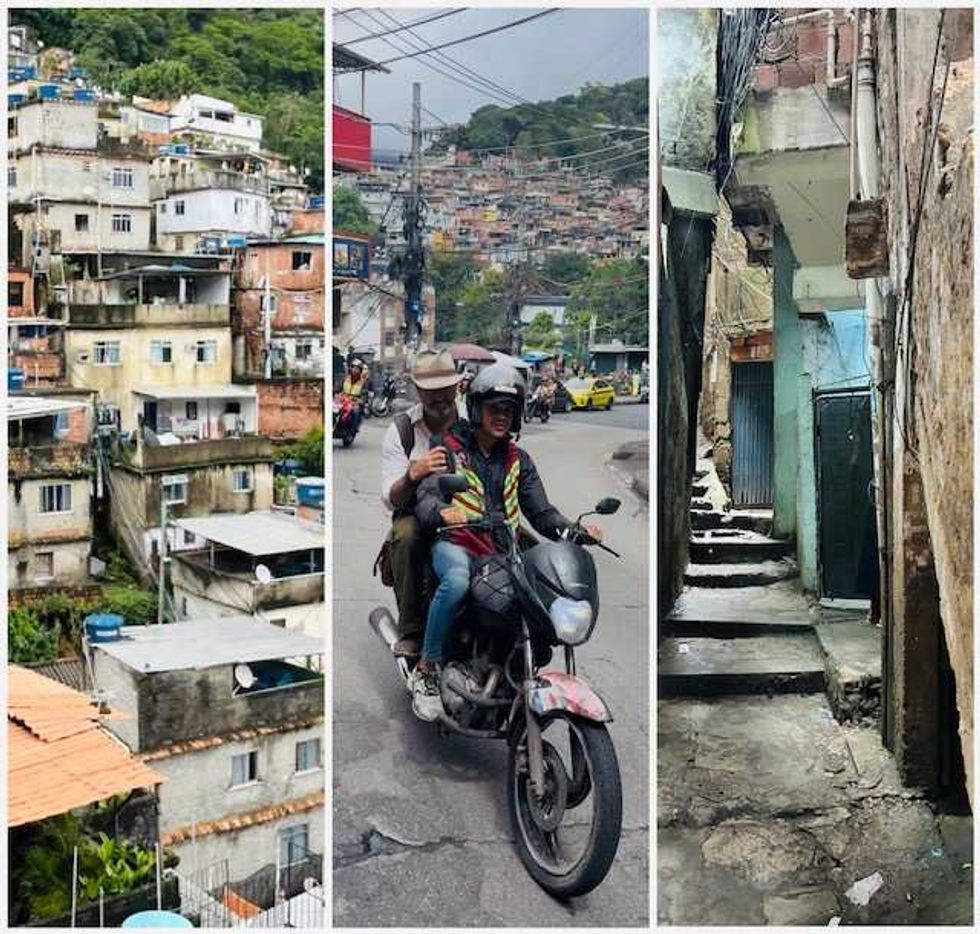 Scenes from Favela Rocinha, Brazil - (R-L) Rows of brick homes, Hugo Balta on a motorcycle taxi, and steep, winding roadsHugo Balta







 Following our HWF Civic Futures kickoff last week with Eric Liu, our design partners at Public/Official have created a unique visual to capture the “civic scaffolding” spirit of this conversation.
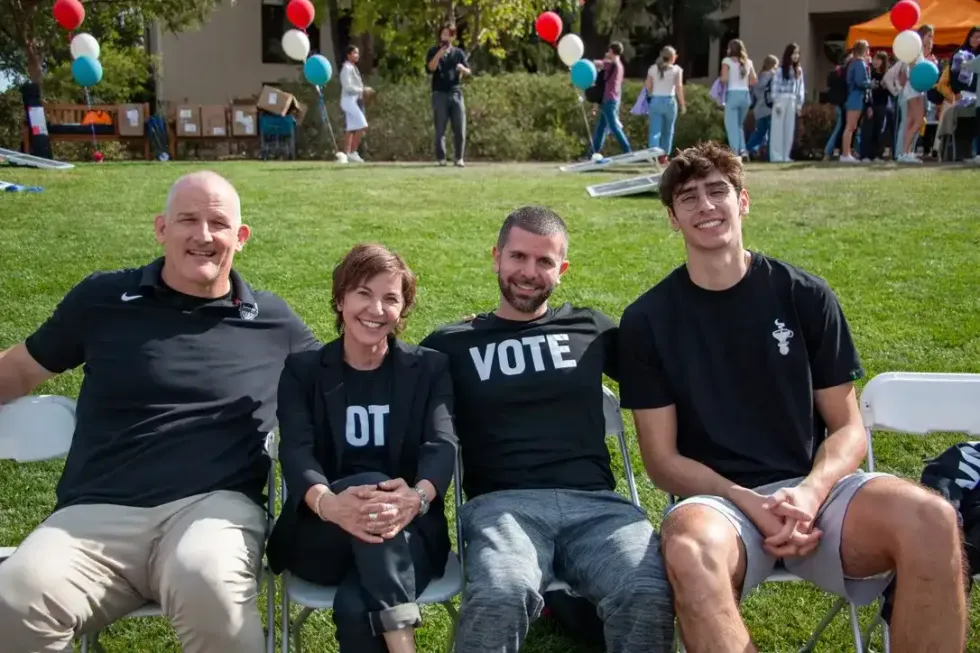 Lisa, Coaches Rev and Matt Elkin, and former Stanford Men’s Basketball star Maxime Raynaud at Stanford’s “All Vote No Play” Democracy Day, 2025