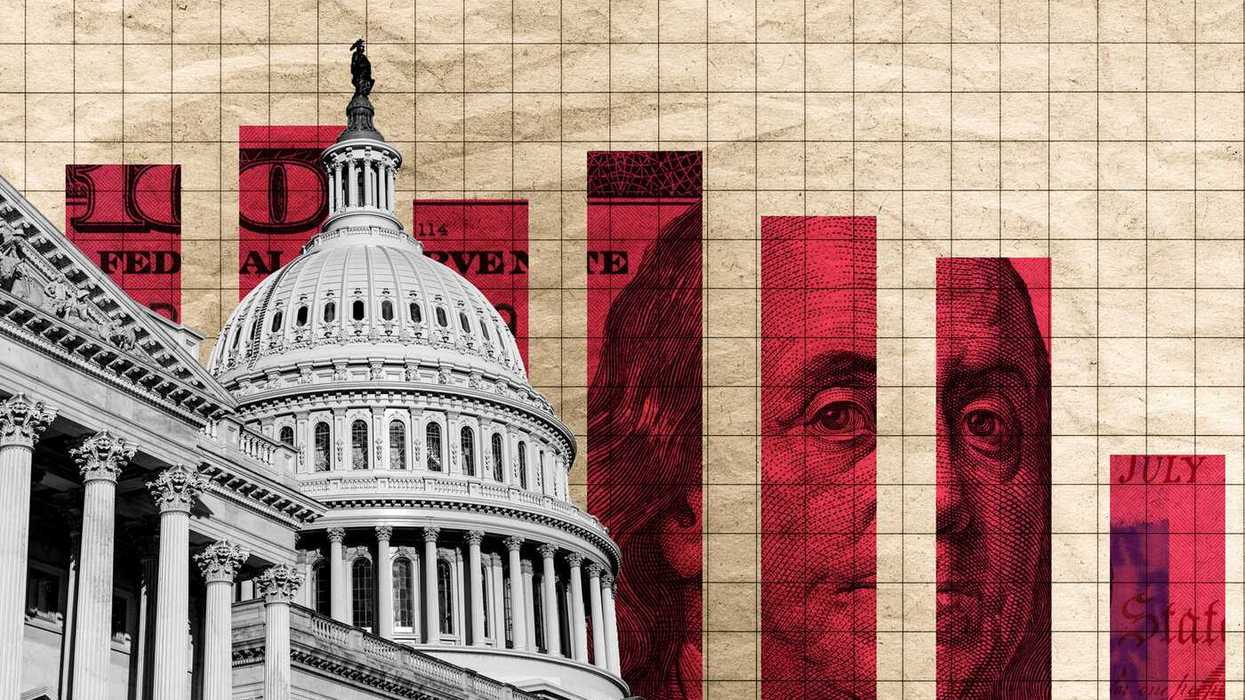
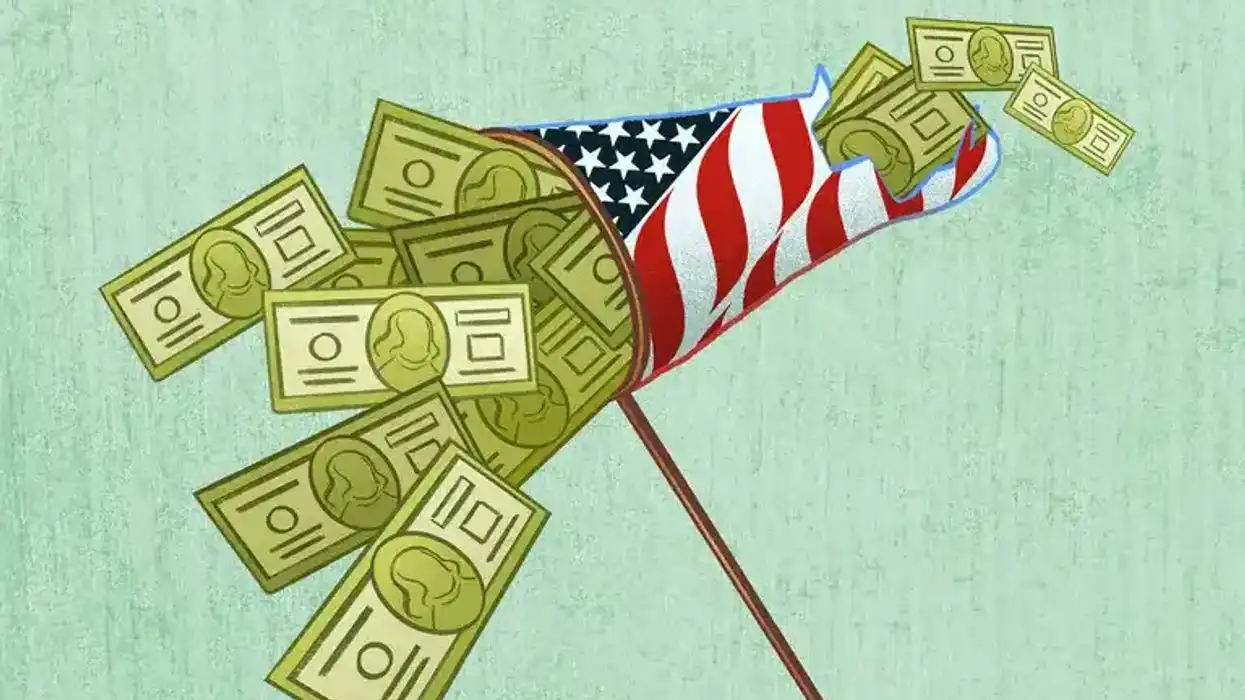
Reducing the influence of money pouring into presidential politics since the 2010 Citizens United decision may actually be possible by addressing the "winner-take-all" (WTA) structure of the Electoral College. By changing how electoral votes are allocated, the incentive to concentrate money in a few swing states could be reduced.
The winner-take-all (WTA) feature of the Electoral College narrows the focus of massive campaign expenditures in a “Funnel Effect”* to a handful of closely divided battleground states. Because candidates have little to gain from spending in states where they are comfortably ahead or hopelessly behind, they concentrate all their financial resources on 15 or 16 states, or in some cycles, as few as seven key swing states. All this could change if the "battleground state" phenomenon were taken away from the wealthy, as the National Popular Vote Interstate Compact (NPVIC) would accomplish.
The National Popular Vote Interstate Compact (NPVIC) is a pragmatic, state-based initiative designed to ensure that the presidential candidate who receives the most popular votes across fifty states and the District of Columbia wins the presidency. It aims to achieve this without requiring a constitutional amendment, operating instead within the existing Electoral College framework by utilizing states' constitutional authority to appoint electors. If enough states join the National Popular Vote Interstate Compact (NPVIC) to reach 270 electoral votes, the United States will effectively shift from a winner-take-all (WTA) regime to a national popular vote system for electing the President.
Among the independent-minded organizations supporting the NPVIC is the League of Women Voters, promoting the principle of "one person, one vote". They view it as a necessary reform to eliminate the "winner-take-all" system, which makes votes in non-competitive states irrelevant and causes candidates to ignore most of the country.
As of early 2026, the National Popular Vote Interstate Compact has been adopted by seventeen states and the District of Columbia, which collectively hold 209 electoral votes. The compact requires 270 electoral votes (a majority of the 538 total) to take effect. It currently needs sixty-one more electoral votes to become active.
Legislative elections will be held on November 3, 2026, for eighty-eight state legislative chambers in forty-six states. In 2026, the National Popular Vote Interstate Compact (NPVIC) will be a relevant issue in several state elections, particularly in Arizona, Michigan, Nevada, North Carolina, Pennsylvania, and Wisconsin. As the compact needs 61 more electoral votes to hit the 270-vote threshold, these purple or contested states are key battlegrounds where legislative control could determine whether they join the 18 jurisdictions already signed on.
Battleground states are fertile ground for the influence of money in U.S. presidential politics because the Electoral College (WTA) option concentrates the entire election's competitiveness into a small number of closely divided states. Because these states can "swing" to either party, campaigns and outside groups focus 75% or more of their spending there to flip a small number of votes, with in some cases over 96% of TV ad money in an election directed at only ten states.
Without the "battleground state" phenomenon, the effectiveness and strategic deployment of money in U.S. politics would shift from concentrated, localized spending to a more diluted, nationalized, or purely proportional approach. Some models suggest that if a national popular vote replaced the Electoral College, overall spending on advertising could decrease in typical elections, as the "winner-take-all" incentive to tip a single state with massive ad buys disappears. Instead of tailoring messages to specific regional interests in swing states, large donations would fuel national campaigns focusing on broad, national policy, potentially diminishing the ability of localized interests to use money to influence policy. In future presidential elections broad national policy, it is likely to include affordability.
Recent polling of independent voters, now representing a record-high 45% of U.S. adults, on the Electoral College is limited; however, they tend to favor structural reforms that increase inclusion, such as moving away from partisan-driven systems. Polls consistently show that independent voters, along with broad majorities of Americans, believe that money has too much influence in presidential elections and that wealthy donors/corporations hold excessive sway.
Hugh J Campbell, Jr, CPA, is a Governance, Risk & Compliance (GRC) professional and a student of W. Edwards Deming, the American Statistician, often credited as the catalyst for the Japanese Economic miracle after WWII.