




In the middle of last summer, a group of old college friends, now over the age of forty, flew across the United States to a rural hunting lodge in Georgia. For three days, they stayed on the property, threw the football around, retold old stories, and played practical jokes on one another. One friend, a jack-of-all-trades, taught them how to refine their fishing skills, shoot guns, and better appreciate the outdoors. Every so often, one would sneak away to call a significant other or speak with their children. Meals were prepared together, and advance planning was kept to a minimum. Briefly free from the demands and worries of modern living, they were able to live in the moment.
For more than twenty years, this group has met in various locations across the United States. They took a road trip along the Pacific Coast Highway, camped in the Rocky Mountains, and spearfished in the Florida Keys. At other times, they rented Airbnbs to explore new cities and towns. Some of their best memories come from these gatherings. On one occasion, a friend led an epic karaoke session, delivering a full-throated rendition of Meat Loaf’s “I Would Do Anything for Love” in a packed dive bar. The energy in the room rivaled that of a modern music venue. Then there are practical jokes. Once, they arranged for the police to briefly handcuff and detain a friend the day before his wedding. Another time, one friend bought a lifelike Sasquatch costume and tried to lure everyone into the woods to scare them.
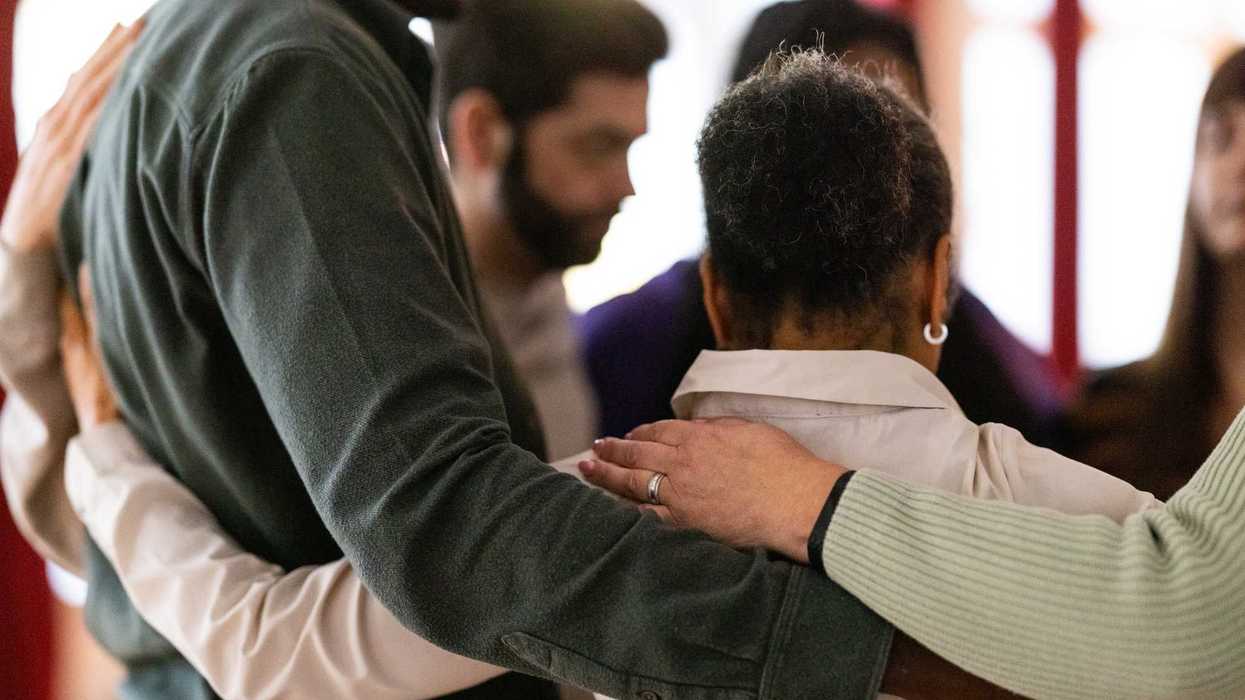
No matter where they traveled or what jokes unfolded during a given trip, there was one consistent throughline: a practice cultivated during their college years, when they all lived in the same house. Once a week for several years, they dedicated time to sit together and share what they were experiencing, the good and the bad. They were vulnerable to one another. They practiced active listening, offered encouragement, and provided suggestions for navigating life’s challenges. Over time, the group formed a habit of intentionally creating space to understand each other. To this day, everyone agrees that the time set aside to share stories and struggles is the most important part of these trips. The trip's setting matters less than the dedicated space for honesty and vulnerability. This habit reinforced the group’s social bonds and shaped how they interpret the world.
On the final day of the Georgia trip, reflecting how national politics now permeates everyday conversation in the United States, the friends began discussing political systems, governance, and institutions. It was an unfamiliar territory. Historically, their conversations centered on personal and family life. This time was different. Political fault lines quickly emerged, yet the conversation did not stop. Together, they explored hypotheticals, searched for underlying patterns, and attempted to make sense of the political moment. Beer and cheap potato chips helped sustain the discussion. After several hours, mentally exhausted and no closer to solving the world’s problems, their focus shifted back to the mundane, cleaning up the Airbnb and heading to the airport.
Several weeks later, two members of the group with vastly different political views began a series of conversations that continued for six months. Their phone calls lasted for hours, often to the chagrin of their respective partners. Like the larger group discussions, these exchanges involved sharing ideas, offering perspectives, and, at times, debating. Yet, instead of driving a wedge between them, the conversations deepened their mutual respect. Conversations resembled what Harvard researcher Dr. Julia Minson would label “conversational receptiveness.” Most conversations acknowledged the other’s perspective outright and sought to find areas of agreement or common ground. More importantly, these conversations showed that disagreement did not need to erode the connection. Contentious conversations can, under the right conditions, leave participants validated and rejuvenated.
For many in the United States, speaking about politics has become taboo. Civic education is uneven, and many people have never learned how to engage in dialogue outside the performative dynamics of social media. National discourse often simplifies identity into binaries, such as Democrat versus Republican, progressive versus conservative. The broader information ecosystem, shaped by both public and private media platforms, frequently amplifies division and negative emotion through algorithmic incentives. Growing polarization and information silos increasingly fuel political hostility, both online and offline. Given this context, how is it that this group of longtime friends can engage in contentious political conversations and leave those conversations feeling better than when they began?
Several lessons emerge from their experience.
- The first lesson is the intentional creation of a shared and psychologically safe space for vulnerability. Sharing personal stories adds complexity to identity and helps transcend the tendency to assign binary labels. It encourages active listening, compassion, and perspective-taking. Over time, such practices build psychological resilience and strengthen social capital within a community. In an era where social interaction is increasingly mediated online, gathering in person with people who care about one another can feel almost countercultural.
- The second lesson is to incorporate the use of H.E.A.R. principles, developed by Harvard researcher Dr. Julia Minson, to foster trust and curiosity in difficult conversations. While not used in every single conversation these friends had, contentious conversations were the fullest of meaning when they incorporated these principles. “H” stands for hedging, or softening claims to absolute truth. “E” stands for emphasizing agreement or identifying shared values and priorities. “A” stands for acknowledging, which involves restating the other person’s viewpoint in one’s own words before responding. “R” stands for reframing positively, focusing on constructive rather than adversarial language.
- The third lesson is practice. The group did not suddenly acquire the capacity for difficult conversations; they developed these skills and relational bonds over time. As they moved through different life stages, they applied these habits across settings and relationships with varying degrees of success. Some of the most meaningful and restorative moments in life emerge not from agreement but from shared space, vulnerability, and sustained compassion toward others.
Guy Martorana is a former USAID Foreign Service Officer who worked on conflict prevention and democratic governance programs, with a particular emphasis on strengthening social cohesion in polarized contexts.
This author spent years studying conflict and working on U.S. foreign assistance programs aimed at preventing violent conflict overseas. Many of the same socio-political trends observed in other countries are emerging in the United States and should give everyday Americans pause. While deep friendships take years to cultivate, even modest efforts to create shared spaces for vulnerability and curiosity can make a meaningful difference in your relationships. These small practices can strengthen social bonds, reduce localized polarization, and foster a more nuanced understanding of one another. At the very least, you might make a new friend willing to talk through differences over beer and cheap potato chips with a few laughs along the way.