




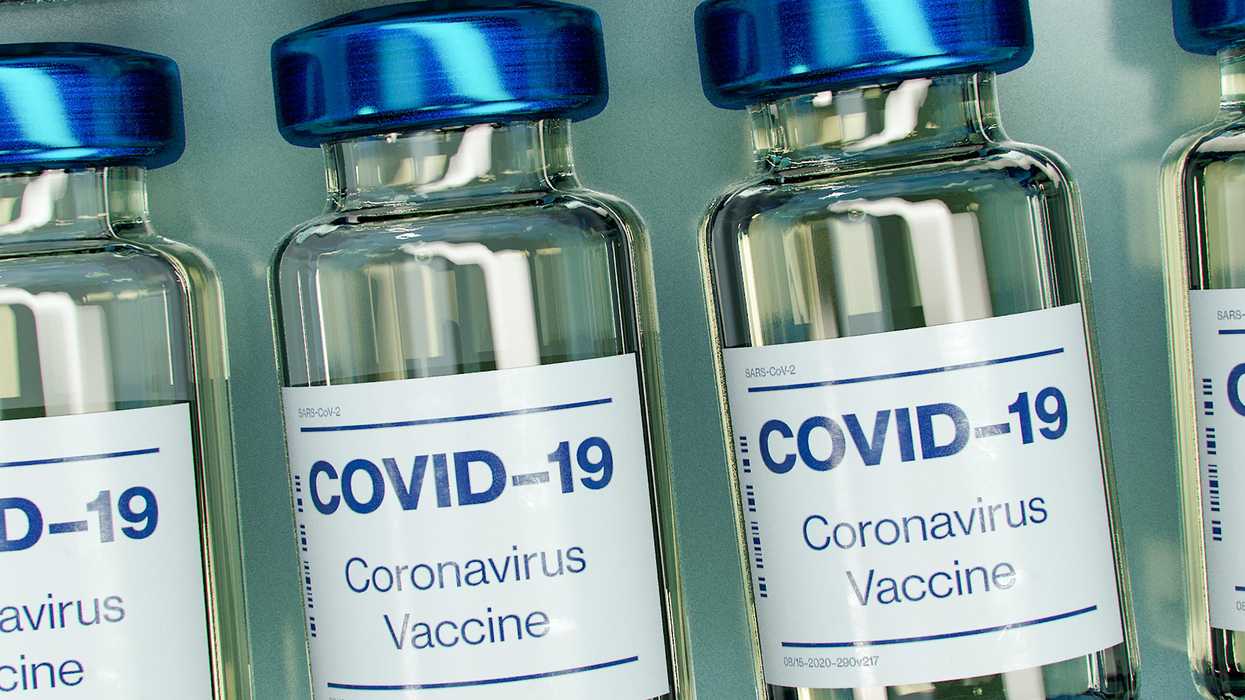

WASHINGTON–The Homeland Security subcommittee on investigations released a report alleging that the FDA, under President Joe Biden, hid information about potential adverse effects of COVID vaccines.
Sen. Ron Johnson, R-Wis, the committee’s majority chairman, and his team investigated whether the federal government’s Vaccine Adverse Event Reporting System had failed to accurately report data on negative side effects from mRNA COVID vaccinations, and in turn, misinformed the public.
“The bottom line is all about hindsight that you need to expose what happens so it never happens again,” Sen. Johnson said in an interview with Medill News Services. “We have to be honest with the American public, and we haven’t been.”
The report, released in conjunction with a subcommittee hearing, included allegations that Food and Drug Administration officials failed to adequately gather and analyze data on vaccine adverse effects.
“The timeline will also show how FDA officials reacted to Dr. [Ana] Szarfman’s findings, their growing concern about her access to the safety data, and their failure to adjust the FDA’s data mining analysis to account for the significant flaws in their methodology that masked dozens of statistically significant adverse events for the COVID-19 vaccines,” the report states, referring to a FDA senior medical officer and safety data mining developer Dr. Szarfman.
Sen. Johnson stated that the Vaccine Adverse Event Reporting System grossly underreported the number of adverse events after individuals received the COVID vaccination, and that a significant number of COVID vaccinated individuals experienced life-altering side effects.
The committee’s report mentioned several potential adverse effects, including Bell’s Palsy, pulmonary infarctions, and myocarditis. The research, however, shows otherwise. Myocarditis, which was emphasized in the report as a side effect of the vaccine Biden health officials ignored, often makes partial-to-full recoveries.
Sen. Richard Blumenthal, D-Conn, the committee's top Democrat, defended the vaccines, stressing that their benefits outweighed the risks.
“Instead of talking about success and remembering the ones we lost, vaccine opponents turned one of the greatest scientific breakthroughs in our country's history into fodder for political attack,” Sen. Blumenthal said. “Today's hearing purports to discuss a cover up of side effects of the vaccine, as if serious flaws in vaccines were purposely ignored. Let me be clear, they were not ignored, they were not disregarded, they were not covered up.”
Additionally, Sen. Blumenthal stated that the report does not change anything about the safety of the vaccine, and that there is no evidence to support the alleged “cover up”.
“Scientists who were actively looking for ways to detect side effects support a predetermined and flawed thesis that COVID-19 vaccines have done more harm than good,” Sen. Blumenthal said. “That’s not the scientific method to have a preconceived notion, then frame the evidence to fit the outcome.”
Dr. Karl Jablonowski claimed that problems with the government’s management of the Vaccine Adverse Event Reporting System lacked guidance from outside scientists and the lack of research on the vaccine’s negative effects.
“The then secretary of HHS [Health and Human Services] could have then changed history with one word,” Jablonowski, director of science and research at Children’s Health Defense, said. “He could have summoned the greatest army of statisticians, mathematicians, and data scientists ever assembled under one word. That one word was help.”
Children’s Health Defense is a non-profit organization that primarily advocates against vaccines and eliminating childhood chronic illness. Robert F. Kennedy Jr. founded the organization and was chairman of the board from 2015 until 2023.
Maria Young, a severe COVID-19 survivor and advocate who works alongside nonprofit organizations specializing in vaccine education testified to the importance of the COVID vaccine. Young stated that despite sharing her testimony, she wishes she could have attested more to the importance of victims having a say in the overall conversation about the COVID vaccine.
“I just wish I would have been able to speak more or respond to what some of the other people said because what we’re losing here is the victims,” Young said in an interview with Medill News Services. “I think that's what we need to remember, what COVID left us with afterwards.”
Jaylyn Preslicka is a reporter for Medill News Services.












The President Invited Iran to Bomb My Home