






Stephen Colbert hosted The Late Show for the last time last week.
Tributes have been pouring in for Colbert’s nightly monologue and comedic genius. And rightly so. He has a unique and deeply humane way of making the unbearable bearable, giving us a little light and lift on our darkest days.
There’s even an unfolding argument that The Late Show’s premature cancellation signifies the end of late-night shows more broadly. David Letterman captured the sentiment brilliantly last week, “What will become of the Jimmys? Are they going to be all right?”
To most, Stephen Colbert offered nightly entertainment and commentary.
To me, he was my north star for having meaningful conversations that help everyone feel more human.
I’ve spent 25 years designing and facilitating conversations professionally — in boardrooms, in crises, in strategy sessions where the ability to hear each other was the whole point. I co-authored a bestselling book on what makes conversations transformational rather than transactional. I trained for years to support “Interpersonal Dynamics” at Stanford Business School — known to generations of students as “Touchy Feely” — built on a radical premise: through unscripted dialogue, you learn more about yourself as others share their experience of you. The more you reveal, the more the other person reveals. Trust builds as surface area grows.
We are living through a collapse of conversational infrastructure. The forums, institutions, and shared spaces where Americans once worked things out together are cratering. Public trust is at a historic low, polarization at an all-time high. My take on what’s missing is simple: visible examples of what it looks like when conversation fosters learning, strengthens trust, and helps people leave more human than when they arrived.
For eleven years, Stephen Colbert has been that example — demonstrating every night what it looks like when conversation fosters learning, strengthens trust, and helps people leave more human than when they arrived.
The more human the conversation, the more human the response.
Stephen Colbert knows how to ask a great question — but it’s how he responds to the answers that often feels magical. Watch him receive an unexpected answer: you can see him absorb it, recalibrate, and go somewhere he hadn’t planned with ease and grace. Improvisers call this practice “accepting the offer” — building on what’s unfolded rather than sticking to a rigid script. It looks effortless because he’s been practicing it for decades.
His curiosity spans the depth and breadth of his own reservoir of interests and talents. He can pull from literature, theater, the Bible, history, music, food, culture, and even more cult-like topics like Tolkien and Dungeons and Dragons. I heard him bust out conversational Latin the other day as if he was asking someone to pass the salt. That range allows him to ask questions that range from “is a hot dog a sandwich?” to someone’s deep origin story in a single segment.
And regardless of the guest, he honored whoever sat next to him with his full presence and energy. He brought the same visceral quality of attention to Barack Obama on the weight of the presidency as he did to Paul Simon on creativity and mortality, or deep reverence and respect for Barbra Streisand, who almost never gives interviews, or to a beloved colleague like Jon Stewart who appreciated taking the guest seat. The content differed, but the quality of presence and respect never did.
His conversation with Anderson Cooper about grief remains one of the most extraordinary pieces of public dialogue I’ve witnessed — two people, on television, talking deeply and frankly about loss with shared compassion, vulnerability, and care.
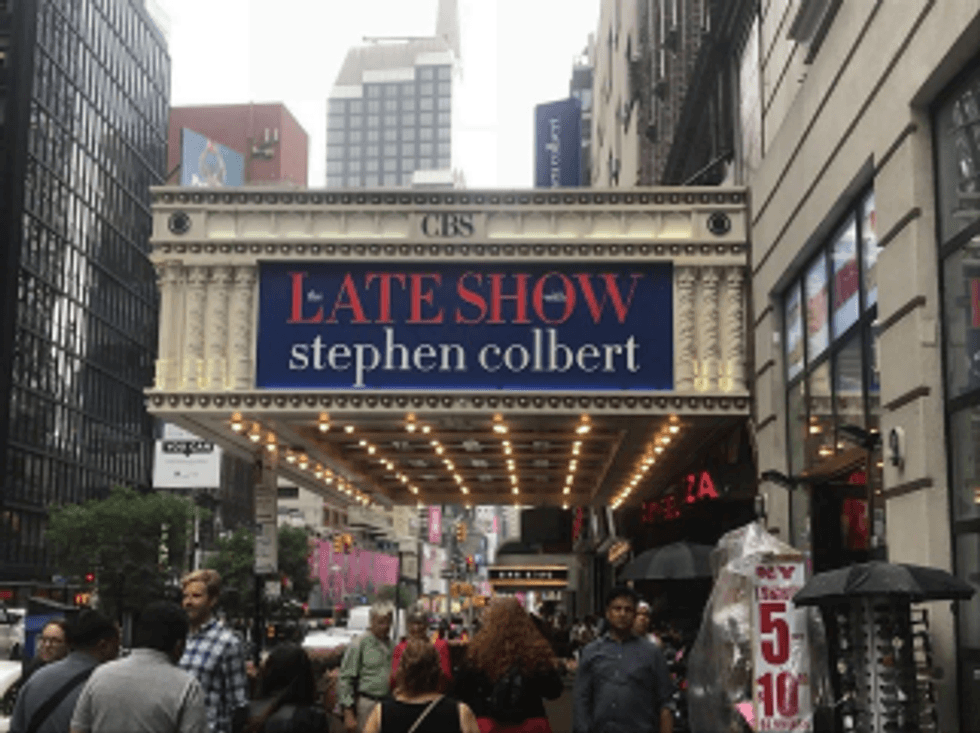
Many years ago, I got to see a live taping of The Late Show. Watching Colbert work in person was nothing short of magic. He came out before the show to connect with the audience, earnestly answering our questions with attention. You could feel his chemistry building in real time with the hundreds of audience members lucky enough to be present at the glorious Ed Sullivan Theater. We were in on the jokes and banter, as if we had a stake in the experience.
Good conversations are designed.
In a media climate optimized for performative extremes, creating the conditions for authenticity is both rare and radical. It happens before a single question is asked — in the introduction of the guest, the welcome to the stage, the opening greeting, and the signals you send about what may unfold. Colbert did this so consistently that it looked natural and emergent, but it was built on careful choices, made every night, to prioritize genuine exchange over performative spectacle.
Sometimes the conversations centered on a shared experience, like mixing a drink, evoking nostalgia with a picture or prop, or even changing the environment for the interview, as when he would lie down on a picnic blanket with guests and ask big questions while looking up at the “stars.” When Kamala Harris sat down for one of her first post-election interviews, Colbert handed her a Miller High Life. It was unpretentious, a little surprising, and quietly radical: a way of saying, we’re just two people talking. His choices created the conditions for something more vulnerable and connected than a standard interview.
A couple of weeks ago, he sat down with a roomful of elementary school kids to brainstorm a new talk show format. His group facilitation prowess was on full display. He greeted every child by name, as if they’d been friends forever. His questions built on each other in a deliberate arc of engagement. He noticed who hadn’t spoken and made space for them. And when enthusiasm spilled into dancing, he joined right in. When the session ended, he didn’t just summarize where they landed — he built the prototype of what they created together. That’s the difference between facilitation that documents and facilitation that transforms.
What We Can Take Forward
How We Future is built on the belief that the future isn’t something that just happens to us — it’s shaped by the quality of our conversations, our capacity to imagine together, and our willingness to stay genuinely curious about each other.
Stephen Colbert, night after night, reminded us that this is a choice we can make.
He was modeling something we desperately need more of: the belief that real dialogue — across difference, across discomfort, across the unexpected — can actually build trust, understanding, and a shared sense of what’s possible. In a time when so many of our public conversations have collapsed into performance, he kept showing us what it looks like to actually be in one.
For 1,810 episodes, Colbert was doing for conversation what TED did for public speaking — making excellence visible, repeatable, and worth studying. We’ve never had a public model for what great dialogue looks like, the way we have for great presentations. We had one, five nights a week.
After The Late Show ends, no one will fill that seat. But there can be recognition of what was actually happening on that stage and what we can continue to learn from it.
Colbert has made me a better facilitator — more present, more willing to follow an unexpected answer, and more committed to building rather than just capturing. Sure, I’ll try to channel his humor and grace. But what I’m really taking into every room is his commitment to the craft and to building the conditions where people leave more human than when they arrived.
Thank you, Stephen. You showed us how.
Lisa Kay Solomon is a faculty member at Stanford University's design school, host of the podcast and Substack “How We Future," and a creator of civic futures programs like Vote by Design, The Futures Happening, and The Team.











The President Invited Iran to Bomb My Home