
ReUnion Series
- A Lesson from the Last Time America Felt This Fragile
- The Rings and the Great Debate
- A Lantern in the Rain - A Beacon in Dark Times
- The Reward: Angela and James: An American Dynasty
- Steady As She Goes - Red and Eleanor
- The ReUnion
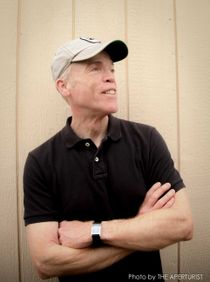
I am Patrick Fitzgerald, the fifth generation of my family in America. Uncovering my family’s roots has changed me in ways I didn’t expect. I stand a little taller now, aware that I’m carried by the strength of those who came before me — strength I hadn’t fully understood until recently.
My family came from Ireland in the 1850s, a harsh and unforgiving time. It was the second wave of the Great Hunger — the potato famine and the economic collapse that followed. John and Mary Ring, my ancestors, must have sat together and reckoned with the hard truth of their situation. They knew the odds were against them, and that staying meant risking everything. Forced from the land they rented, they were left with no choice but to decide quickly how to protect their family. And so, like so many before them, they left Ireland for America, beginning a chapter neither could have imagined.
It was not an easy decision knowing they were entering an America already divided and inching toward Civil War. But the prospects here were better — their best shot at real stability. They settled in Illinois near Chicago, a city doubling in size every decade as it surged toward the end of the 19th century. Will County, where they landed, was booming, part of a wider wave of Irish families building new lives in the region. John and Mary joined them, uncertain of what lay ahead but sensing the possibility of a better life.
Then came the Homestead Act, signed by Abraham Lincoln, opening the rich Will County land to settlers who could claim 160 acres and make it productive over five years. It’s hard to fathom the astonishment John — already 50 — and Mary, likely in her mid-forties, must have felt when they realized they could claim the land as their own. It was grueling work: breaking tallgrass prairie sod whose six-foot roots were tough as leather and fought every inch of the blade. They built a one-room house — one that, a century later, I would grow up in, larger now but unmistakably theirs. By then, we were full-fledged Americans, with all the rights and protections that came with it — rights we absorbed without thinking, as naturally as the country air we breathed. Only later did I understand how remarkable that was.
Life in mid-19th-century Will County was shaped by hard, unrelenting work. People lived with a constant urgency, aware that the land, the weather, and the work allowed no margin for delay. Roads had to be built, drainage ditches dug, barns raised, crops planted — work far too great for any one person to shoulder alone. From that relentless labor emerged a civic instinct: an understanding that survival and progress depended on working together. People negotiated, compromised, and cooperated because they had to. They were overwhelmed by the opportunity to forge a better life, and they understood that such work could only be done together.
When I reflect on those times, I feel their presence in my chest, shaping how I understand who I am and the role I carry today. How do I choose to live into the opportunity I’ve inherited? What do I choose to build, knowing that whatever I build must be built with my neighbors? I know I can’t do it alone — none of us can. I need those around me to gather, to talk, and to shape the project with me, the way people always have. And then to set to it and build something new and remarkable together.
Yet for all my belief in what we can build, I’m not naïve. Like John and Mary Ring, I find myself living through fractured times — an America wrestling with itself once again. I question my own security, living in a country that feels unsteady beneath my feet. I question whether tomorrow will be better if we keep walking the path we’re on. Am I safer now than I was even a few years ago? And what, exactly, can I do about it? After all, it comes down to you and me to do the work.
I, too, find myself worn down at times, feeling the weight of these days. I’m exhausted by what increasingly feels like political theater from our federal government, a performance that does little to steady the country. I single out the federal level because I see democracy working here in Buffalo and in New York — not perfectly, but genuinely. And for me, it doesn’t feel like the federal government is making my life easier when the annual deficit now stands at $2.7 trillion — a number that lands like a weight rather than a reassurance. All I want is a secure and better future for my family — a hope I’m sure I share with you, my neighbor.
We must remember that this politics-as-kabuki-theater playing out before us can distract us from the obvious truths sitting in plain sight. In America, we the people are the sovereign power — not the party, not the politician. We hold the power alone — no one else. And it’s possible for communities like ours to be disenfranchised — quietly, gradually, almost without noticing.
So as hard as it may feel, and as busy as we are, we need to stand up — because real democracy is the only way communities like ours endure and flourish. I’m concerned about gerrymandering, and I worry when voting becomes more complicated than it needs to be — because complexity can be its own form of exclusion. History shows it never works well when one party or one person holds all the cards — because concentrated power rarely serves the people who grant it. Our government was designed as a system of checks and balances — a structure meant to prevent any one person or party from holding all the power. No branch — executive, legislative, or judicial — was ever meant to move in perfect sync with the others. But we’re the ones responsible if our system of government falls short, because self-government only works when we show up for it.
So I look to you, my fellow American and neighbor, because democracy has always depended on ordinary people standing together. Their era demanded cooperation and seriousness from its citizens. Ours does too.
The pioneering will that carried earlier generations through harder times than these still runs through us. The responsibility they shouldered is now ours — to participate, to stay awake, and to help shape what happens around and among us.
And that begins with showing up.
Showing up to speak.
Showing up to listen.
Showing up to negotiate and compromise.
Showing up to cooperate.
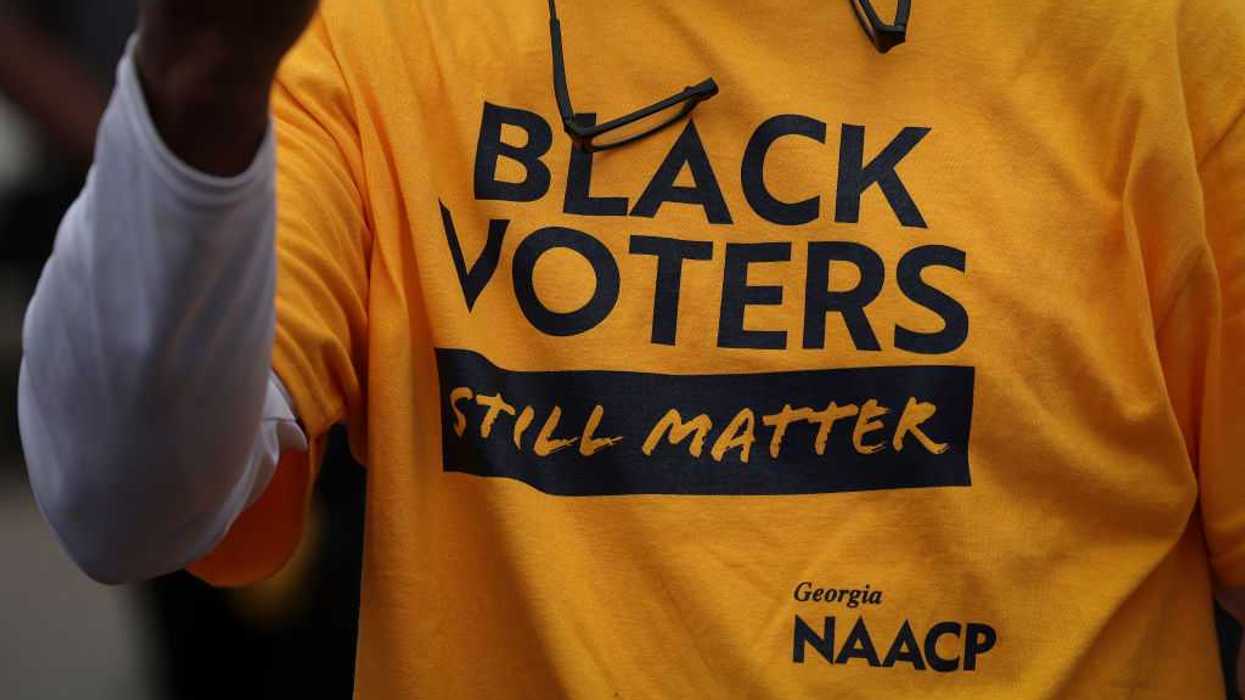
Showing up to vote — and to vote with the seriousness the moment deserves, not for parties or individuals, but for candidates willing to work for the greater good of everyone.
Our ancestors built roads, barns, and neighborhoods with their hands. We build the future with our choices. And in a democracy, the most powerful choice we make is the one we make together, in the voting booth.
This is how communities like ours endure.
This is how they flourish.
Patrick Fitzgerald is a Buffalo-based writer whose work explores civic responsibility, community life, and the quiet virtues that hold people together. Raised in the Midwest and shaped by the steadiness of farm communities, he writes about proportion, neighborliness, and the shared duties that form the backbone of American civic life. His essays draw on lived experience, family lineage, and a deep sense of place to offer readers a grounded, reflective perspective on how we can rebuild trust in one another.