




Health care innovation is built for patients who have time. ALS patients don't.
ALS reshapes time in ways that are hard to fully appreciate from the outside. Certain losses arrive earlier than expected, and once they begin, they don't reverse. Speech can be one of the first to go. When it does, the window to preserve a patient's actual voice can close in months.
After my ALS diagnosis in 2024, I started researching communication tools for people who lose the ability to speak. What I found was disappointing: robotic, outdated technology that stripped people of their tone, warmth, and personality. So, I did what I'd always done from my days working in healthcare at Deloitte: I identified the problem and started solving it.
With no formal engineering background, I taught myself to code. Within 12 weeks, I built Talk To Me, Goose!, an AI-powered communication app that lets people with ALS speak in their own voice, preserved before it fades.
That timeline isn't notable because of anything unique I did. It's notable because it raises a harder question: if this can move that quickly, why does so much else take so long?
The tools that power Talk To Me, Goose! are not experimental. Voice-cloning technology from companies like ElevenLabs can capture a person's voice from a short audio sample.
This isn't a future capability. It exists now. The app works across Apple, Android, and Windows in 31 languages and is available free to ALS patients. It has already helped hundreds of families. What's missing in healthcare innovation isn't technology. It's urgency.
The Cost of Caution
I've seen what happens when tools get into patients' hands in time. A father named Darrin, in the advanced stages of ALS, used his cloned voice to read a bedtime story to his children. It was the first time his youngest had ever heard his father's voice tell a story. Darrin passed away shortly after, but his family will carry those words for a lifetime.
That moment existed because something moved quickly enough. If the app had been delayed for another round of testing, stuck in a pilot, or waiting on a broader rollout, the window would have closed.
Economist Sam Peltzman's research on FDA drug approval timelines quantified what many in the field have long suspected: regulatory delays don't just slow access. They cost lives. When early clinical signals are strong, the harm caused by waiting can far exceed the harm of proceeding with appropriate safeguards. In ALS, where most patients survive fewer than five years after diagnosis and where there is no approved therapy that halts disease progression, that calculus is especially stark.
Yet the system continues to apply evidentiary standards designed for a very different context. A drug with a modest risk profile might be appropriately rejected for a condition with other treatment options. Applied to ALS (where there are few options), that same standard produces a different outcome entirely. The risk calculation doesn't just shift; it inverts.
The patient community understands this. People living with ALS are, by and large, more willing to accept treatment risk than regulators and industry assume. What they are not willing to accept is delay.
Where the System Is Failing
The FDA's role is to protect patients, but delay is not always protection, and conflating them has consequences.
The agency has the regulatory flexibility it needs to move faster on treatments for terminal diseases with unmet needs through accelerated approval pathways, adaptive trial designs, and the use of biomarkers as surrogate endpoints and natural history data as comparator arms. These tools exist, but they are used inconsistently.
You see this pattern beyond drug approval, too: in healthcare technology products that remain in pilot phases for years; in internal processes that prioritize institutional certainty over patient access; in decisions made on timelines that have no relationship to how fast the disease is moving.
During COVID-19, the system demonstrated it could move differently. We moved fast and not just with the vaccine. Then, we reverted to old habits. We failed to apply the lessons we learned more broadly.
The broader problem isn't regulatory alone. I've spent years in rooms where someone proposes borrowing an innovation from another industry, whether it be a customer process from banking or a data model from logistics. The first question is always: who else in healthcare is doing this? When the answer is nobody, that becomes the reason not to proceed. We've built a culture that waits for precedent instead of creating it, and we apply clinical trial-level evidentiary standards to innovations that carry nothing close to clinical trial-level risk.
What Moving Faster Actually Looks Like
Moving with urgency doesn't mean abandoning rigor; it involves aligning standards with the importance of the stakes.
- For regulators and policymakers: Use the flexibility you already have. For terminal diseases with no alternatives, conditional approval that grants access while trials continue is not a compromise of safety standards. It's a more honest application of them. A framework that generates real-world evidence in parallel with continued study is better science and better medicine than one that simply delays access.
A physician colleague of mine once offered a useful analogy: in the treatment of severe sepsis, clinicians begin antibiotics before full diagnostic confirmation, because the cost of waiting outweighs the risk of acting on incomplete data. The FDA has the authority and the ability to operate the same way for terminal diseases with unmet needs—and should be expected to.
- For healthcare technology leaders: The standard of evidence we apply to software, communication tools, and process innovation should not be the same as the standard for a drug entering the bloodstream. Too often, we conflate the two, and it's slowing down solutions that carry minimal risk and significant upside. Ask the harder question: what harm, specifically, would come from moving forward? You may find the answer is less frightening than the delay.
- For health system executives and clinical leaders: The patients you serve are not waiting on your roadmap. If a tool exists that could preserve a person's ability to communicate, to stay connected to their family, to maintain their dignity, and it is sitting in a pilot while committees convene, that is a decision with a human cost.
A Different Question
When I learned to code after my diagnosis, I asked myself one question: What do you have to lose? I'd offer the same question to every healthcare leader, regulator, and policymaker working on problems where patients are running out of time.
The answer, for me, was simple. If I failed, nobody would know. The cost of trying was low. The cost of not trying, not only for me but for the families I eventually met, for Darin's kids and so many others like them, would have been irreversible. And, while the risk is never nil, ask yourself this: is it acceptable to those who may be left with little if any other option? Is the risk acceptable for the use case and for the situation for which you are building?
The asymmetry of benefit and risk must be weighed in the right context. That asymmetry is true far beyond one app built at a kitchen table in Pittsburgh.
The greater risk isn't moving too fast. It's arriving too late.
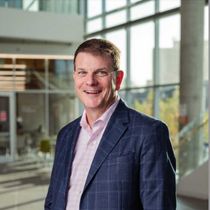
David Betts is the founder of StoryFlight Labs, PBC, a public benefit corporation dedicated to restoring dignity, sparking imagination, and strengthening human connection, with a focus on people living with speech-limiting disabilities and conditions. Betts was diagnosed with ALS in 2024. He is a former principal in Deloitte’s healthcare practice.












The President Invited Iran to Bomb My Home