



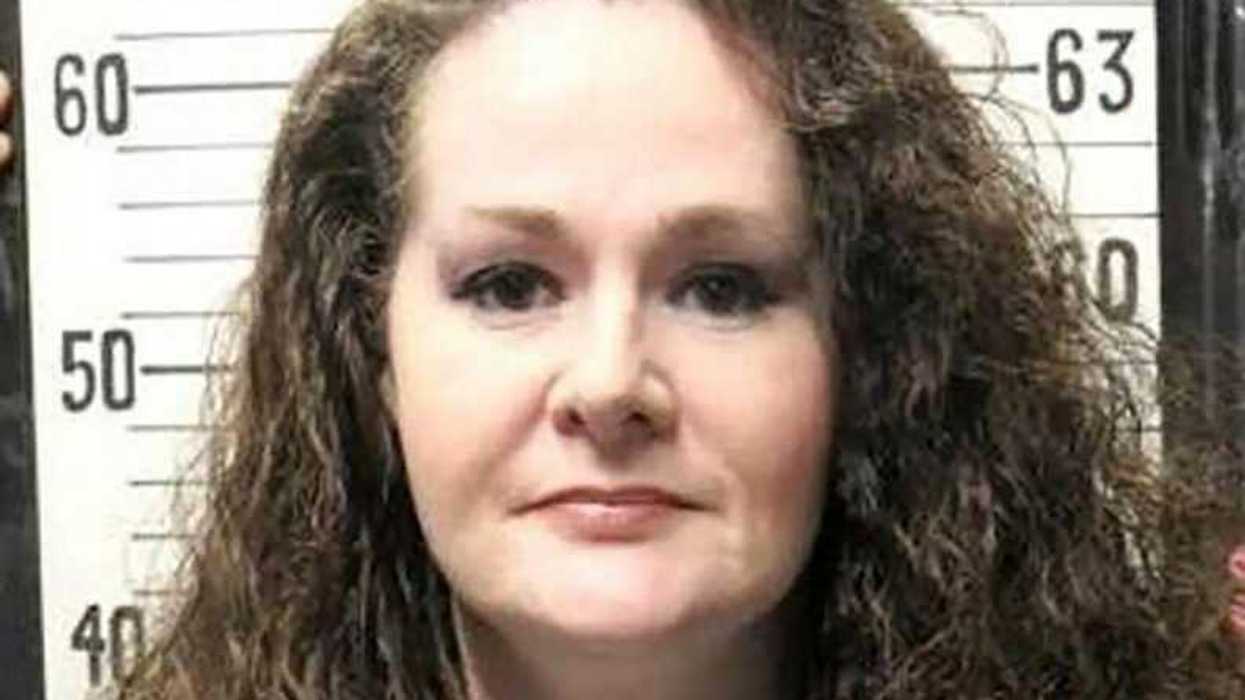

“Botched” is a perfectly fine word for golf, cooking, or home repair. It seems inadequate for the taking of a life, even the life of Christa Pike, a heinous murderer.
In 1996, a jury found Pike guilty of the torture and murder of her Jobs Corps classmate, Colleen Slemmer. Pike was sentenced to death. In the 30 years since, her case has gone through at least seven major rounds of appeal and judicial review, including four petitions to the Supreme Court. All were rejected. This doesn’t even include the many more attempts to reopen or reverse her sentence that went nowhere. She is guilty, lawfully and rightly convicted.
Last week, the state tried to carry out Pike’s death sentence and, as many in the media have said, “botched” it. It appears that two attempts to deliver a lethal dose of pentobarbital failed because the technicians could not find good IV access. Not enough of the drug entered her veins. Pike is reportedly now unconscious and on a respirator in a Nashville hospital.
I don’t think “botched” conveys the scope of the scandalous failure of the technicians or the state of Tennessee. There’s an investigation underway.
While that proceeds, I think it’s worth looking at the other parties responsible for this ugly spectacle and the controversy it has sparked: the anti-death penalty lobby.
It is not very difficult to kill people painlessly with drugs. How do I know this? For starters, Canada kills people with drugs every day. According to the latest annual report on Canada’s medical assistance in dying, 16,499 people were medically euthanized in 2024. The number of people voluntarily killed has steadily gone up every year, so it’s a good bet the numbers for 2026 will be higher than that.
In the Netherlands, 10,341 people were killed in 2025. That’s 5.97 percent of all Dutch deaths for the year. How often have you heard about these instances being “botched”?
Of course, there are very important differences between euthanasia and executions. The most relevant: With euthanasia, doctors are almost always present, and when they aren’t, other trained medical professionals are. They have the skills required to deal with the kind of foreseeable problems that seem to have plagued Pike’s execution. Also, euthanizers have access to the best possible drugs to make sure the medicalized killing is as painless and as peaceful as possible.
In America, doctors are barred from participating in executions. The American Medical Association, for entirely defensible and understandable reasons, believes doctors should not violate their Hippocratic oath. To their credit, they have the same position on euthanasia as they do on executions.
That doesn’t mean it’s impossible to find — or train — qualified personnel for executions. But opponents of capital punishment want it to be. They lobby to bar medical personnel from performing executions while simultaneously arguing that executions cannot be done without qualified medical personnel. They threaten and file lawsuits to back up the effort. Pike’s lawyer said in advance of the failed execution, "the state does not have the qualified, trained personnel in place to carry out Christa’s execution in a way that will not lead to a gruesome spectacle.”
Almost as if to make such arguments self-fulfilling, abolitionists have mounted massive — and massively successful — campaigns to prevent pharmaceutical companies from providing the optimal drugs for executions. As one scholar explains, “A pattern of increasingly inhumane methods of execution is partially due to the success of advocacy by a growing number of death penalty abolitionists.”
The mistake in Pike’s case almost surely had more to do with human error than the wrong drug, but abolitionists don’t care because all they want is another story about the “pattern” of “botched” executions.
I favor capital punishment for the most heinous crimes, but I think opposition to it is a perfectly honorable and defensible stance. I do not think — and neither does the Supreme Court — that there is any plausible or persuasive argument that it is unconstitutional. (It’s referenced in the 5th and 14th Amendments.)
My chief problem with the abolitionists is not that they’re wrong, philosophically or morally. It’s that they are so sure they are right that they pursue an organized policy of bad faith, grabbing the nearest weapon to hand for every case. They lie with statistics about wrongful convictions and racial bias.
They drag cases out for decades and then claim the lengthy and expensive process is an argument for abolition. They make the procedure more difficult and ugly, and then claim the ugliness and difficulty are problems. They make it more likely executions will be botched — and then argue that the botching is why we shouldn’t have them.\
Jonah Goldberg is editor-in-chief of The Dispatch and the host of The Remnant podcast. His Twitter handle is @JonahDispatch.












The President Invited Iran to Bomb My Home