


Their [Trump Administration] new budget framework is the most irresponsible in modern history - and will put the American economy on a very dangerous trajectory.
The Brookings Institution, 2025
America’s growing sovereign debt problem threatens living standards.
A first step in crafting solutions to the problem is understanding the policy framework at fault. While partisanship colors that discussion, a consensus of economists places blame primarily on tax cuts over the past 25 years.
The American Sovereign Debt Problem
There is a bright mathematical line nations cross to have a debt problem. When the interest rate for servicing its sovereign debt exceeds the nominal rate of GDP growth, that debt begins compounding faster than a nation’s tax base is expanding, steadily raising debt, interest rates, and inflation.
Few are aware that the Congressional Budget Office (CBO) expects the U.S. to cross that line in 2028 for the first time in its history. One group, however, is keenly aware, as described by the Brookings Institution’s budget expert, Jessica Reidl, in The Atlantic:
“The White House and congressional leaders I regularly brief know that Washington’s debt path is unsustainable. They also expect to be out of government when the bill comes due and see no reason to anger voters in the meantime by ending the tax-cuts-and-spending party.”
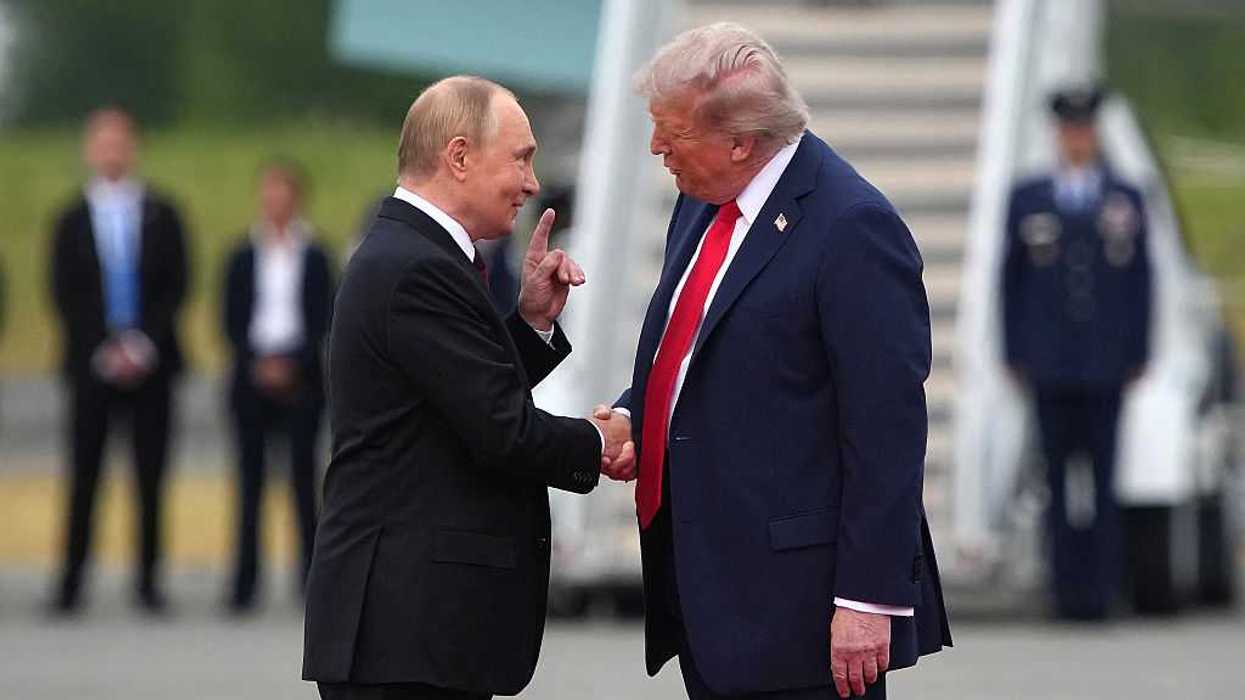
This sanguinity of President Trump and Congressional leaders (meaning Republicans since 2025) reflects their obsession with tax cuts. It also reflects comfort with credit-card budgeting - they are financing 25% of federal spending nowadays with new debt. While a financial market reckoning is not imminent, this fiscally irresponsible leadership has put the U.S. on a quite dangerous trajectory – a trajectory established in 2001.
The Genesis
It was a remarkable, auspicious moment in 2001 with CBO projected elimination of the entire national debt by 2006.
Yep, all of it. Zero, zilch.
That remarkable touchstone reflected decades of responsible fiscal policies pursued by most Republican and Democratic Presidents alike since World War II.
That fiscal nirvana was not to be.
In March 2026, the national debt-to-GDP ratio passed 100%. An alarmed CBO worried that the “debt is currently at the highest level in American history and keeps rising,” the CBO Director declaring that the nation’s budget trajectory is not sustainable.
This stunning fiscal collapse reflects 25 years of serial tax cuts and recessions in 2007 and 2020 that sent the national debt soaring. Most impactful were five large tax cuts by George W. Bush and Trump that caused federal tax revenues to decline from an average of 18.6% of GDP from 1995-2001 to only 16.4% of GDP since 2002.
The abandonment of historic Republican Party balanced budget orthodoxy can best be marked by a single moment: January 25, 2001. Alan Greenspan, leading economic strategist for the new President George W. Bush, was testifying before Congress. Thanks to decades of fiscal discipline, experts agreed that America would pay off its entire national debt in six years.
All President Bush had to do was, well … nothing. Just continue President Clinton’s fiscal policies producing budget surpluses.
But Greenspan and the Republicans had another, higher priority. By then, the Republican Party had become dominated by its wealthy donor base. They supported balanced budgets prior to Reagan. But that changed in 1981 with the introduction of trickle-down Reaganomics. As Kansas proved, it was a fantasy popularized by President Reagan that tax cuts magically do not reduce tax revenues or add to the national debt.
Greenspan’s Congressional testimony astonishingly warned of the “peril” of eliminating the national debt - and urged tax cuts.
The consequence has been 25 years of Republican tax cuts - two Bush cuts in 2001 and 2003, and the even larger Trump cuts in 2017, 2020, and 2025. Skewed to benefit elites, the corporate tax rate was cut from 35% in 2000 to 21% now.
Adding to the debt was Greenspan’s ideological decision as Federal Reserve Board Chairman to deregulate Wall Street – especially squirrelly subprime mortgages. That blunder precipitated the 2007 Great Recession, forcing compensatory government spending to spike – which ballooned budget deficits.
Responsibility for the Soaring National Debt
Republicans deflect accountability for the rise in debt due to their tax cuts by blaming demographics (too many baby boomers) plus government spending by Democrats Obama and Biden. However, that additional spending was primarily a consequence of the 2008 and 2020 recessions – temporary one-time counter-cyclical spending to ameliorate the downturns. In contrast to the Democrats, the five Bush and Trump tax cuts were permanent, engineered debt-drivers of choice, financing tax cuts for elites - saddling Federal budgets with permanent structural revenue shortfalls forever.
Economists at the Center for American Progress have determined, for instance, that the five tax cuts account for “more than 90 percent of the increase in the debt ratio if the one-time costs of bills responding to COVID-19 and the Great Recession are excluded….Without the Bush and Trump tax cuts, debt as a percentage of the economy would be declining permanently.”
The Tax Cut Reckoning
Any debt crisis for the powerful American economy is years away. However, accruing sizable sovereign debt does portend slower economic growth. CBO calculates that the rising debt is adding about 0.6% (6/10th) of a percentage point to Treasury bond interest rates - raising mortgage and other household interest costs while crowding out private investment. CBO also projects that every additional dollar of government debt reduces private investment by 33 cents in R&D and new, more productive factories and jobs. Consequently, it projects that American living standards will begin deteriorating, with GDP growth declining to only 1.8% in the years ahead from an average of 2.4% since 2016.
That means all of America’s key economic variables – budget deficits, national debt, interest rates, debt servicing costs, GDP growth - are moving in the wrong direction.
Responsible Leadership to Corral Debt
The scale and scope of America’s sovereign debt problem requires a combination of tax hikes and spending cuts. True, America has a window of a few years to craft solutions. A clear understanding that tax cuts have been the primary cause of the fiscal collapse since 2001 is the first building block.
Even so, the political parties are far apart on answers - and crafting remedies in these polarized times could require years. Moreover, history is not particularly encouraging, with the best past solution involving a bipartisan commission that was only a partial success.
George Tyler is a former deputy assistant treasury secretary and World Bank official. He is the author of books including Billionaire Democracy and What Went Wrong.