
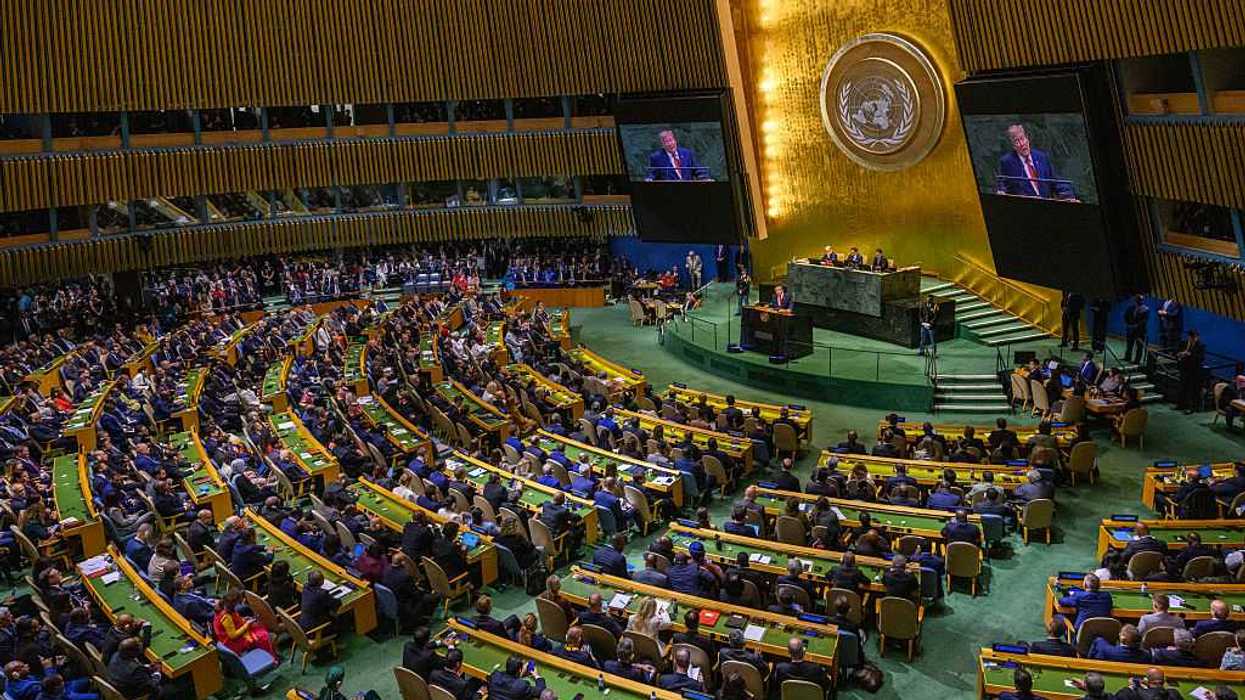

Last week at the United Nations, Donald Trump showed the world just how little he values human life. In a single speech, he rattled off a laundry list of “hoaxes” to write off: climate change, AI, “Russia hoax,” “Ukraine hoax,” and more. Climate change, AI, and modern warfare all pose existential threats to civilization as we know it, and yet our president seems hellbent on gaslighting our fears while accelerating problems that threaten our survival. What would make a person behave in such a self-sabotaging way? Well, perhaps we should, as they say, follow the money.
Earlier this month, the UN warned that Earth is already 1.4°C hotter than before the industrial age and set to blow past the 1.5°C limit in the next few years. The World Health Organization projects that such warming will cause roughly 250,000 additional deaths a year starting in 2030. Any leader who values human life should recognize this as the existential threat it is and change course. Instead, Trump has pulled the U.S. out of the UN's founding climate treaty, and his EPA scrapped the scientific finding underpinning federal limits on greenhouse gas emissions. Meanwhile, in the first six months since launching his war in Iran, Trump's nine largest oil and gas holdings gained up to $4.4 million.
The people are already paying a colossal price. On August 26, likely triggered by climate change, a glacier collapse in the Himalayas launched mudslides through Nepal, killing more than a thousand people. Nepal produces less than 0.1% of global emissions; as the prime minister of Nepal said at the UN last week, “We did not create this crisis.” He went on to say it was more than a local tragedy but a “warning to the world.” Our President has heard the warning, but is actively railing against it. People are dying, and Trump is making money.
Trump’s war is aggressively contributing to global warming, producing more emissions in the first two weeks than Iceland produces in a year. It’s fueling a global energy crisis, and it’s costing lives. At least 19 American service members have been killed, though U.S. officials say the real number is higher. As a veteran who spent ten years as a Naval officer and deployed to the Persian Gulf, I’ve been shocked by the flippancy with which this president has disregarded the concerns of American service members. Last week, the acting Navy Secretary confirmed that eight sailors in the USS Abraham Lincoln's strike group attempted suicide over a record 286 days at sea with no port call. Back in August, when a reporter asked Trump whether the deployment had gone on too long, he said, “No. No. No. Not nearly long enough.” Not nearly long enough for whom, exactly?
In Iran, human rights monitors documented more than 3,600 dead by April, including the 168 children killed when a U.S. missile struck a girls' school on the first day. I doubt Trump lost any sleep over it, as all he had to say was “war is nasty.” In April, he threatened Iran online, writing, “A whole civilization will die tonight, never to be brought back again.” That same day, one of Trump’s investment accounts sold as much as $1 million in Exxon Mobil stock. Hours later, the White House announced a ceasefire, and the next morning, Exxon opened more than 6% lower.
While Americans pay $71.5 billion more at the pump, Trump’s personal portfolio is booming. Perhaps that’s why in June he threatened to go “right back to dropping bombs right smack in the middle of their head.” This strongman talk may be meant to intimidate and bully, but it reads as the tirade of a tyrant with the diplomatic maturity of a toddler. Ultimately, achieving peace in the Middle East may simply not be his concern while he profits off the lack thereof. Trump’s July disclosure alone lists 1,156 trades, including weapons makers Lockheed Martin, Northrop Grumman, and Palantir. And crypto, which Iran is using to collect tolls on tankers in the Strait of Hormuz, was his biggest source of income last year. With so much money to be made, why care about the cost in human life?
The same math applies to AI. The day after Trump spoke at the UN, where he equated AI doomsday talk with other hoaxes, OpenAI's Sam Altman and Anthropic's Dario Amodei told the Security Council the opposite: slow down, cooperate, take extreme care. Even Elon Musk backed their call for pacing. The people building the machine are begging for brakes, and the President is hitting the gas. Beijing has already published its own AI safety framework, but Trump continues to dismiss the risks, making trades in AI giants at the same time, with sales of up to $25 million each in Microsoft and Amazon in July alone. Last week, when Xi Jinping visited the White House for a historic state visit, no agreement on AI was reached, but Trump did throw him a dinner featuring a guest list of tech moguls worth a combined $2.4 trillion.
Trump has shown us who he is, and we should believe him. The global aid cuts he set off by gutting USAID are projected to lead to at least 9.4 million deaths by 2030, including 2.5 million small children. At home, the health provisions of his signature tax law could mean more than 16,000 preventable deaths a year, and his SNAP cuts could lead to 93,000 premature deaths by 2039. At the UN, he wondered aloud if he should “annihilate” Iran and “drive them into hell with no chance of survival.” He also bragged about taking control of Venezuela's oil, saying “to the victor belong the spoils.” To Trump, a country–even his own–is not a place brimming with its own society, history, and culture. It's land to pillage, resources to extract, and people to exploit.
I don't need our leaders to be saints, but can we not at least hold them to a standard where they value human life above capital? The sailors on the Lincoln deserve that. So do the families digging through mud in Nepal, the parents in Minab, and the grandmother about to lose her Medicaid.
This president has shown nothing but reckless abandon in the face of existential threats, but we don't have to follow his lead. We can still fight to slow climate change. We can protest this war, bring our troops home, and demand a return to diplomacy. We can organize to regulate AI before it's too late. And we can cherish each other. The President of the United States might not put much stock in our lives, but we can. Check on your friends, your family, and your neighbors. Hold each other. Fight for each other. On that note, if you’re reading this, I just want to remind you: you are loved (and if you or someone you love is struggling, call or text 988). Your life matters.
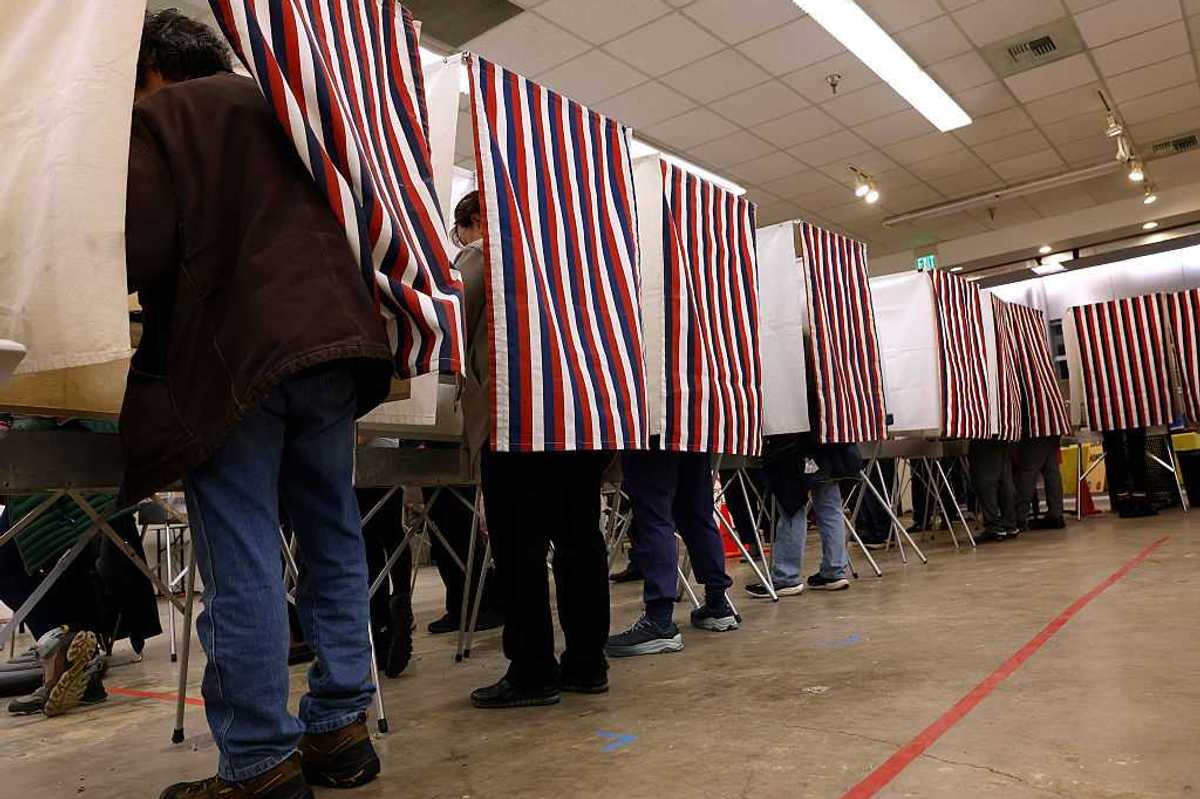
The midterms are November 3. This election, vote like your life depends on it, because it might.
Julie Roland was a Naval Officer for ten years, deploying to both the South China Sea and the Persian Gulf as a helicopter pilot before separating in June 2025 as a Lieutenant Commander. She has a law degree from the University of San Diego, a Master of Laws from Columbia University, and is a member of the Truman National Security Project.