



San Francisco called itself “the City That Knows How.” The razing of the Fillmore asks what officials knew about the people whose neighborhood they were changing. Federal money helped finance local redevelopment, while families and businesses bore displacement. We should trace that money and preserve residents’ accounts before another promise of improvement escapes scrutiny.
The Fillmore remains a center of Black cultural life. Black, Japanese and Jewish communities helped shape the neighborhood, its businesses and music. People remain, and people remember. Redevelopment damaged relationships that a construction budget could neither measure nor replace. Its history belongs to surviving residents and their descendants as well as official archives.
Western Addition A-1 was established in 1956. Federal urban renewal financing supported the City’s Redevelopment Agency, which used eminent domain to acquire property and clear land. Geary was widened into an expressway. Compensation could price a building; it could not reproduce the customers, friendships and informal help that made a neighborhood work.
How much public money financed this process? The Agency’s successor records an estimated $16.2 million temporary federal loan for A-1, including $13.3 million for property acquisition. The acquisition amount is part of the loan figure. It must not be added again or described as the total cost of removing Black residents.
For the later A-2 project, a 1968 federal court decision documents advances of $3 million for capital in June 1967, followed by $3.7 million for capital and $159,000 for relocation assistance that September. Those advances total $6.859 million. They identify particular financing transactions, not the lifetime cost of the entire Fillmore program.
A complete public accounting still needs acquisition payments, demolition contracts, relocation assistance, administration, grants, loan repayments and proceeds from selling land. Separate A-1 from A-2 and distinguish financing from final expenditures. The available figures do not establish a single audited total spent specifically displacing Black residents. Residents deserve that investigation without an invented headline number.
The official A-1 history records 1,350 households and 358 businesses relocated. New housing included subsidized homes, which also belong in the record. Counting new apartments cannot establish that displaced people benefited or returned. We need to know who qualified, who came back and what happened to everyone else.
The relocation figures cover affected households and businesses across the project area; they do not count Black residents alone. Preserve interviews alongside property files, and let residents correct the record. A public archive should show whose account is documented, whose is disputed and which promises remain unresolved today.
Residents fought. The Western Addition Community Organization challenged the program in court. In 1968, the court restricted enforced displacement until an adequate relocation plan received the required approval. The ruling examined federal financing alongside failures to establish satisfactory relocation arrangements. Neighborhood resistance produced an enforceable check on government power.
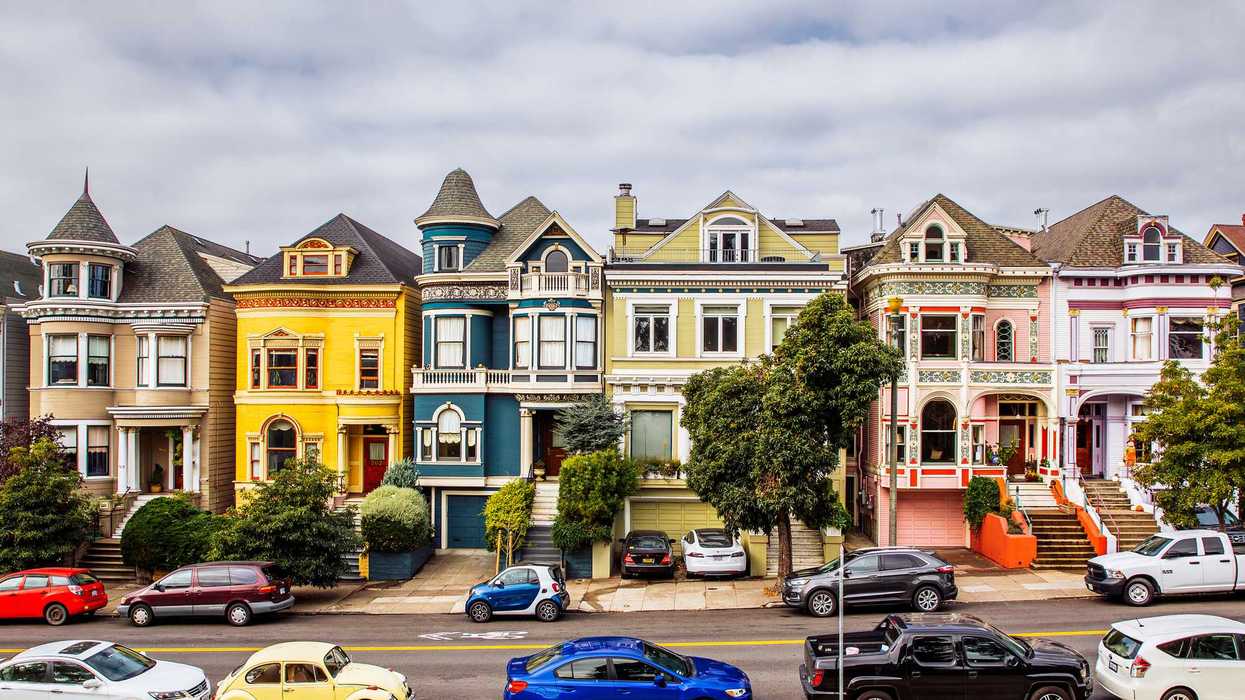
The account of Victorians hauled away on eighteen wheelers before dawn and sold for a dollar deserves investigation. Archival reporting confirms that most movement in the celebrated November 1974 relocation occurred between two and six in the morning. The precise vehicle details still need confirmation.
San Francisco Heritage describes twelve houses moved over three weekends and a grant secured by the Redevelopment Agency to pay relocation costs. Heritage supervised restoration and transfers to new owners. Saving those buildings mattered. A house reaching a new address, however, does not establish that its former occupants kept their place in the community.
A later account in Messy Nessy Chic describes one dollar purchases with moving and restoration costs excluded. Original sales papers are still needed to verify those terms. Heritage records a restored four unit property offered for $138,000 in 1975. The purchase price of a structure, the land and the full rehabilitation cost must be distinguished.
I have also heard of Black barbershops displaying redeemable stock certificates for the rebuilt Fillmore. In this account, people point to the papers and laugh: they expected ownership and describe losing control as a hostile takeover. The certificates, issuer’s records and redemption terms need examination. Their account deserves investigation rather than dismissal.
M. Justin Herman led the Redevelopment Agency during much of this era. A waterfront plaza bore his name for decades before the Recreation and Park Commission removed it in 2017. Renaming the plaza did not resolve displaced residents’ losses. Their unfinished claims deserve the attention once given to the officials directing redevelopment.
The A-2 plan was approved in 1964. Its later financing included tax increment revenue. In 2008, the City extended financing authority to replace affordable housing destroyed and not replaced before 1976. Decades after clearance, public policy still confronted the obligation to replace lost homes. That is a measure of unfinished responsibility.
Public acquisition also enabled private development. A 1993 federal decision records the Agency’s July 1987 conveyance of Fillmore Center land to private developer Fillmore Center Associates. That historical record does not establish today’s ultimate investors. Current deeds and company records should identify them and the public conditions attached to the property.
Government can act to protect families. President Donald Trump and Treasury Secretary Scott Bessent deserve credit for advancing restrictions on large institutional purchases of single family homes. Treasury proposed implementing rules on October 22, 2026; the law’s general purchase prohibition begins January 7, 2027, with exceptions. Political hostility should not prevent recognition of that action.
Those restrictions concern covered purchases and do not undo the Fillmore’s redevelopment. San Francisco still needs an accessible record of ownership, public spending, relocation promises and delivery. Before another project displaces people, residents should see enforceable commitments, available replacement housing and who is responsible when promises fail.
The Fillmore’s Black residents and businesses continue to carry this history. A volunteer Community DataBank could help preserve their documents and trace unresolved obligations. Future neighborhood ownership should give residents clear voting and economic rights they can retain. A city earns its claim to know how by keeping faith with the people who already live there.
John van Sicklen Maeck II is a writer based in San Francisco.