



NEW ORLEANS, Louisiana — a city shaped by more than three centuries of cultural exchange — is once again confronting a political reality that diverges sharply from the rest of the state. The Crescent City remains a cultural refuge for queer and trans residents, yet statewide policies have increasingly restricted legal protections, creating a widening disconnect between lived experience and state law.
The LGBTQ+ community is entering one of its most consequential periods in recent memory, driven by escalating statewide anti‑LGBTQ+ legislation and a surge in local organizing. Leading organizations — including Forum for Equality and Human Rights Campaign (HRC) New Orleans — say the stakes have never been higher as lawmakers prepare for another legislative session expected to include bills targeting transgender residents, workplace protections, and civil rights.
Advocates say the wave of anti‑trans legislation has become the central civic concern for LGBTQ+ New Orleanians. Scott Roos, Chair of Forum for Equality, explained that the newest laws are designed to erase legal recognition of transgender people, noting that lawmakers replaced gender references in state statutes with “sex determined at birth.” “One of the things he (Governor Jeff Landry) passed in this past legislative session was removing gender from all state laws... removing gender out of state law and replacing it with sex determined at birth has really only one action, and that's to punish trans people,” Roos said. “…but still in principle, it's an affront and an insult to all trans people in the state.”
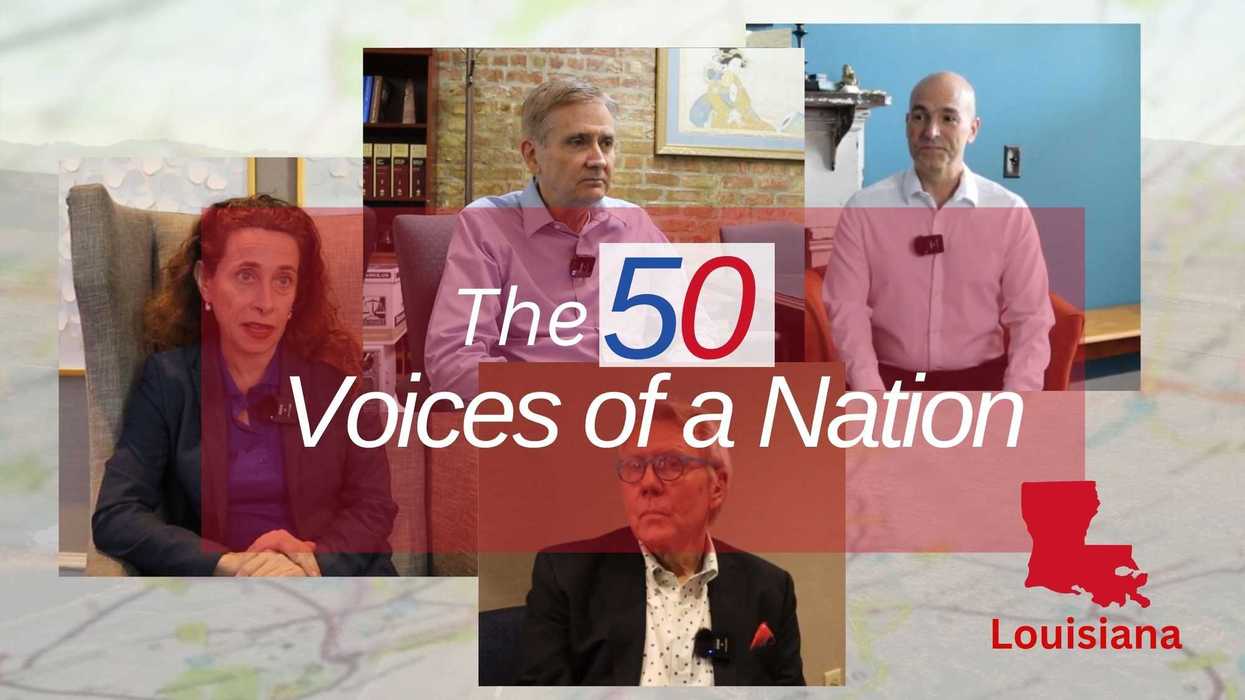
I spoke with Roos for an episode of The Fulcrum's award-winning series The 50: Voices of a Nation, on how local protections collide with statewide restrictions in Louisiana’s LGBTQ+ policy fight.
- YouTube youtu.be
Forum for Equality, Louisiana’s oldest statewide LGBTQ+ civil‑rights organization, has sharpened its focus on defeating bills that would erase transgender people from state law and undermine workplace protections. The group is actively fighting HB 578, the “Restoring Biological Truth Act,” which removes the word gender from dozens of Louisiana statutes, and HB 1137, which shields employees who deliberately misgender coworkers. It is also supporting HB 808, a bill modernizing Louisiana’s HIV criminalization laws, while continuing its decades‑long push for statewide employment non‑discrimination protections. A broad coalition of civic leaders and sponsors backs its advocacy.
Roos says the political climate shaped by President Donald Trump has set the tone for Louisiana politics — an environment Governor Landry operates within as conservative lawmakers advance bills they fear opposing could jeopardize their standing in local elections. Roos points to a newly enacted workplace‑speech law as a prime example. “The other state law they passed was you as an employer or as a business can no longer discipline your employees for misgendering another employee. So if one employee misgenders or uses the wrong name on another employee, you can no longer file an HR complaint in the state... In principle, it's an affront and an insult to all trans people in the state.”
As sweeping state laws override many local protections, transgender safety, healthcare access, and workplace rights have become the primary organizing focus for the city’s LGBTQ+ community. Randy Evans of Forum for Equality says the organization is fighting to slow the pace of legislation targeting LGBTQ+ residents. “So, the organization I'm with is doing everything we can to stop the bad bills and to promote good bills. And, it's a very, very difficult fight right now, particularly now that we have a Republican governor,” Evans said. “…all we can do is try to slow down the freight train that's running down the tracks towards us.”
Evans emphasizes that long‑term progress requires building relationships rather than relying on pressure tactics. Reflecting on past legislative wins, he said, “We weren't trying to intimidate people. We weren't trying to coerce people in any way. We were changing hearts and minds, and that's why it passed, and that's why it's never going to be repealed. When you coerce someone, you create an enemy—you create a problem for you for the rest of your life. When you interact with someone on a respectful level, and you work to change their hearts and mind, you create an ally for the rest of your life. Those are two very different outcomes.”
As the broader gay community has secured key legislative victories, organizers note that the transgender community is fighting for the same visibility, representation, and basic equity. “And now the trans community is looking for that same type of visibility, representation, equity,” Brent Mundt, an LGBTQ+ community advocate, said. “…because unfortunately there isn't true representation of the LGBT community at the local, state, let alone federal level.”
For LGBTQ+ youth navigating school and the challenges of coming out, safe environments are essential. Groups like Parents, Families, and Friends of Lesbians and Gays (PFLAG) New Orleans and the HRC help provide these spaces, offering support for students facing bullying and isolation. But inside schools, support is limited. “If there's sixty school buildings in New Orleans, only five have any modicum of a place for you to go. So from the other fifty‑five schools, those kids who can show up, meet other people like them, learn how to come out to their parents, learn how to navigate the minefield of their own school—I feel as though that's the whole reason we're doing this,” Mundt said. With an estimated 1,500 to 2,000 LGBTQ+ students in the city, most lack in‑school resources.
The political climate has also shaped how LGBTQ+ residents interact with the legal system. Judge Simone Levine says statewide rhetoric often discourages marginalized groups from seeking help. “People feel that they cannot speak up for themselves,” Levine said. “They won’t even give these actors a chance because they’ll say, ‘I’m not going to be heard.’” To rebuild trust, some judges are engaging directly with community organizations. “This court hears you. This court will give you the respect you deserve. This court wants you to engage,” she said.
New Orleans’ LGBTQ+ leaders say the coming legislative session will test the resilience of a community long accustomed to navigating political headwinds. Whether through courtroom outreach, school-based support, or statewide advocacy, they argue that the fight for dignity, safety, and legal recognition is far from over—but the city’s commitment to its queer and trans residents remains unwavering.
The The 50: Voices of a Nation is a four‑year multimedia initiative from The Fulcrum traveling to communities in every state to document the challenges and opportunities shaping civic life across the country. Through deeply reported, on‑the‑ground storytelling, the project examines how the Donald Trump administration is responding to those hopes and concerns — and elevates civic‑focused organizations working to inform, educate, and empower the public to take part in strengthening American democracy.
Hugo Balta is the executive editor of The Fulcrum and the publisher of the Latino News Network.









The President Invited Iran to Bomb My Home