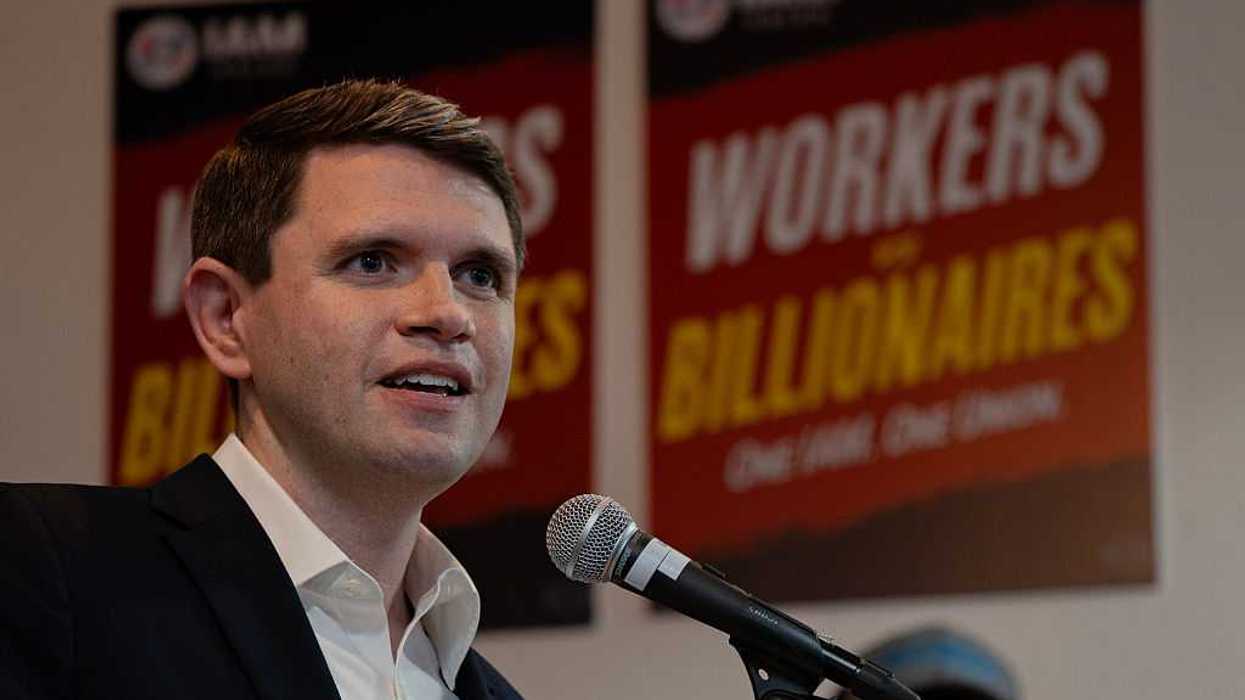

Lynn Schmidt is a syndicated columnist and Editorial Board member with the St. Louis Post-Dispatch.
At the risk of sounding like someone suffering from Trump Derangement Syndrome or TDS, those of us in the pro-democracy coalition need to start sounding the alarm, again. Our democracy is far from being out of the woods and we are headed for a trap.
TDS is usually used by supporters of the former president or some in the media to discredit criticisms of Trump’s words or actions. It is a way of reframing the debate by suggesting that those who speak out against Trump are incapable of discerning what they just witnessed. It is used to exhaust and disparage those who speak out in defense of liberal democratic values. My fear is that these attacks are working.
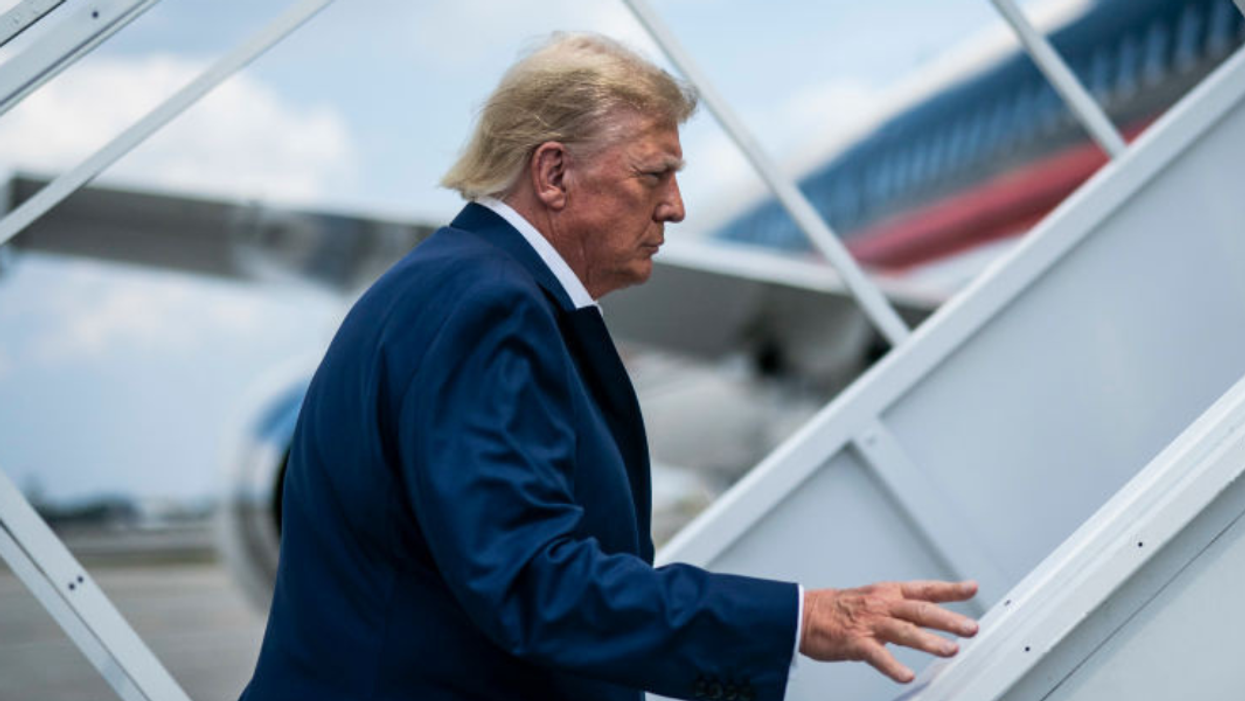
Last week former president Donald Trump released a poorly lit video in which he essentially says that Russia is not our enemy, our fellow Americans are. Think about that for a moment or shall I say, discern what we are witnessing. For those of us who love our democratic republic and not only hope it survives but want to strengthen it, we need to start paying attention, again. Here are a few noteworthy lines from Trump’s video, each of which are more frightening than the next:
“The State Department, the defense bureaucracy, the intelligence services, and all of the rest need to be completely overhauled and reconstituted to fire the Deep Staters and put America first.”
“Finally, we have to finish the process we began under my administration of fundamentally reevaluating NATO's (North Atlantic Treaty Organization) purpose and NATO's mission.”
“But the greatest threat to Western civilization today is not Russia. It’s probably, more than anything else, ourselves and some of the horrible USA hating people representing us.”
Most Americans may not be listening to Trump but make no mistake, Russian President Vladimir Putin and China’s President Xi Jinping certainly are.
A former president of the United States and the leading candidate for the 2024 presidential race of one of our two major political parties is telling us and the world that he sides with Putin over Americans. Trump would rather we ally with the same man who the International Criminal Court just issued an arrest warrant for concerning war crimes. Earlier this week, Xi visited Putin in Moscow. A Kremlin statement announcing Xi’s visit "at the invitation" of the Russian leader to discuss "issues of further development of comprehensive partnership and strategic interaction between Russia and China."
Trump reiterated his plans to dismantle NATO. Here’s a reminder that NATO was created in 1949 to serve three purposes: “deterring Soviet expansionism, forbidding the revival of nationalist militarism in Europe through a strong North American presence on the continent, and encouraging European political integration.” While Ukraine is not a NATO member, NATO has committed both political and practical assistance to Ukraine. Trump’s former national security adviser John Bolton wrote in his book “The Room Where it Happened” that he had to convince Trump not to quit NATO in the middle of a 2018 summit. “In a second Trump term, I think he may well have withdrawn from NATO,” Bolton said. “And I think Putin was waiting for that.”
Last week, former Vice President Mike Pence spoke at the annual Gridiron Club Dinner in Washington, DC. He called Jan. 6, 2021 “a tragic day” and went on to say, “President Trump was wrong. I had no right to overturn the election and his reckless words endangered my family and everyone at the Capitol that day, and I know that history will hold Donald Trump accountable.”
Pundits have since been criticizing Pence for not testifying before the U.S. House January 6 Select Committee and for resisting Special Counsel Jack Smith’s subpoena. While those criticisms are valid, we are missing the broader point. We are skipping over his actual words. Pence is also sounding an alarm. Granted it might be more like a quiet whistle than an alarm, but it’s out there.
Now is the time for the Republican party, sans Republican Florida Governor Ron DeSantis who is also anti-Ukraine, and all others who support democracy here and abroad, to figure out how to shut Trump down before it is too late. Of course, GOP elites have cowardly missed the multiple off ramps from Trump’s and the Republican base voter’s hold on the party. Let’s encourage them not to skip this most important one.
Trump is telling us exactly what he intends to do. It is our own fault if we don’t wake up and recognize this before it is too late. We need to reject the numbness, stop turning against one another, and turn together and repudiate Trump. Our fellow Americans are not the enemy here. Instead, let us, in a bipartisan way, champion democracy. Speak the truth and fight for our democratic values.
To quote the famous line from the 1986 film “The Fly”, if we don’t stop Trump now, we should “Be afraid. Be very afraid.”