



In the wake of Donald Trump’s second term as president, the elections held across the country in November of 2025 seemed paramount to young voters dissatisfied with Trump’s policies. To swathes of people unhappy with the new presidency, local gubernatorial, legislative, and mayoral elections seemed like the first, most viable way to challenge an administration that would be in office for the next three years.
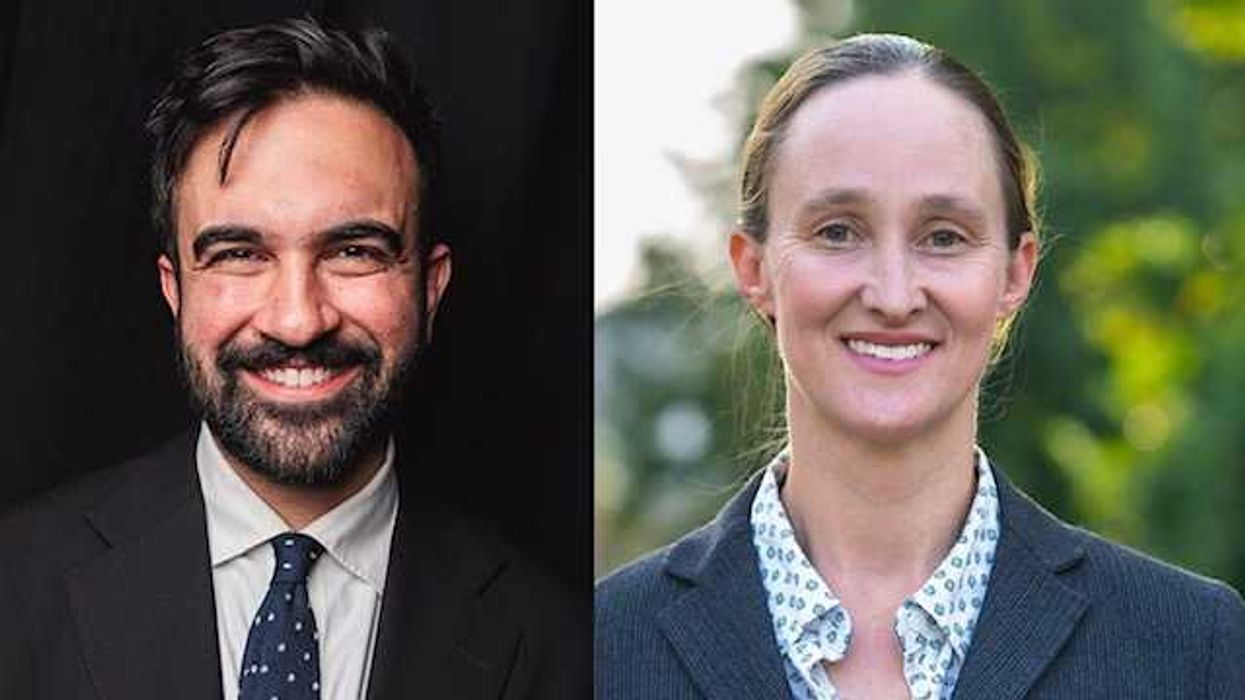
Seattle and New York City, in particular, had high-profile mayoral races featuring younger, up-and-coming candidates seeking to replace their older, more conservative predecessors. Katie Wilson and Zohran Mamdani identified themselves as socialists, building platforms on affordability, housing, and “Trump-proofing” their cities. Their appeal went beyond just policy — both candidates tapped into a new, younger generation of voters through a combination of social media presence and charisma.
The fresh approach to campaigning seemed to work: 75% of the Gen Z and Millennial voters in Seattle chose Wilson, and 78% of young voters in New York City chose Mamdani.
But, despite these numbers, there was still a stark difference between the two cities: while NYC’s turnout was the largest seen since 1969, Seattle’s teetered on the edge of historically low by Nov. 4, and fell in line with previous years’ trends by the time all ballots were counted. This was reflected in the number of young voters, who made up just 17.4% of the returned ballots in Seattle compared to 28% in New York City.
New York City has a population almost 11 times Seattle's, but the proportion of people ages 20 to 29 is comparable in both cities. According to census data, 14% of NYC’s overall population is in this demographic, and 19% of Seattle’s overall population.
The difference is clear: Mamdani’s efforts to appeal to younger people paid off.
A quick scroll through Mamdani’s Instagram page shows undeniable popularity. Nearly every short-form video posted by his campaign has total views in the six-figure range, with the majority of their viewership in the past several weeks climbing into the millions. His follower count is over 10 million on Instagram and 3 million on TikTok.
“Talking about younger, university-aged people, the tendency to watch something like the evening news, or read a newspaper every day, was never part of their daily media consumption habits,” Matt Powers, department of communication professor and co-director of the Center for Journalism, Media, and Democracy, said. “Social media creates an opportunity for things like political campaigns to more directly intervene and contact potential voters, in order to craft narratives, create aesthetics, and create a style, a sense of excitement that people might get on board with in their campaign.”
There is generational appeal in how Mamdani markets himself. His post reminding followers to vote early is a zany, Gen Z humor clip of less than 10 seconds, but it currently sits at 17.2 million views.
Part of this pervasive popularity can even be attributed to his detractors. While his opponents, conservative congresspeople, and President Trump himself made derisive, sometimes racist comments, Mamdani rose to national attention.
“Something you see in candidates like Mamdani is that they are very, very good with social media,” Powers said. “Whether or not you agree with their positions, they have charisma. They know how to make things interesting, sometimes funny. By contrast, when Andrew Cuomo was doing his thing, it was not particularly believable.”
The combination of this social media fame with his gung-ho approach to on-the-ground campaigning made him a popular candidate among not only young people but also people of color and immigrant communities. Clips of his public appearances spread far and wide — in one, he served food to veterans, and in another, he appeared in front of a Black Baptist congregation to give a short speech. He prayed with the patrons of a mosque in the Bronx, helped children with their math worksheets at a childcare center, and played with a neighborhood cat while dancing Bachata in a bodega.
When the time came to vote, the fruits of his effort were apparent. He had the support of over 80% of young Black and Latino voters, as well as young women voters. Zohran Mamdani was a prime example of successful social media campaigning, without relying too heavily on it.
Historically, young voters have been the smallest group in overall turnout. In Washington state’s 2023 general election, which had the lowest turnout to date, voters aged 18 to 24 represented just 16% of the ballots returned. That seems dismal compared to the number of voters aged 65 and older, who represented 58.9% of the total returned ballots. Even in years of record turnout, young voters consistently make up the smallest share.
Disillusionment plays a forward role in young people’s hesitance to vote. In a study performed by UC Berkeley Institute of Governmental Studies, young people reported being less likely to vote because they didn’t like the candidates for president. Young people feel that the world around them is out of their control — and some respond by disengaging completely with politics.
“For one thing, it’s the stress of being a young person in the current environment,” said Jack Newman, co-chair of UW’s Young Democratic Socialists of America (YDSA) chapter. “Our generation is famously anxious and depressed. It’s just so difficult to find time to go out and vote that people feel that their voices don’t really matter.”
Both Wilson and Mamdani ran campaigns that appealed to the younger generations currently facing a housing affordability crisis. The urgency of that appeal wasn’t just political theater. According to the Harvard Joint Center for Housing Studies, 50% of U.S. renters were cost-burdened in 2023 (meaning they spent more than 30% of their income on housing), including 27% with “severe” burdens. More than 58% of Gen Z renters pay over 30% of their income in rent, compared with around 60% of Millennials at the same age. It’s having real consequences: 31% of Gen Z adults still live with their parents because they can’t afford to rent or buy on their own.
“We’re part of a generation that has not been given anything,” Lucca Howard, a fourth-year urban planning student at the University of Washington, said. “We’re the first generation in American history that is living worse than our parents.”
It would be disingenuous to compare Katie Wilson based solely on social media popularity. News outlets drew parallels between the two in headlines, referring to Wilson as “Mamdani-style”, but her approach and public reception to it differed from his in more ways than one.
Her social media presence lacked the production value and snazziness that defined Mamdani’s online footprint, but her persona also leaned less on trend and charisma. She leveraged her local accomplishments, including her position as co-founder and executive director of the Transit Riders Union, and her role in passing the JumpStart tax on corporations. Her track record indicated a long-standing willingness to stick to her values—starting with her co-founding of Food Not Bombs, a free soup kitchen for the community, at age 15.
“She mentioned openly that she wanted to work closely with grassroots organizations,” Newman said. “Her conduct after the campaign has kind of reflected that. She’s continued to keep in touch with us and other groups close to us, and that’s unique. I think it really shows that she cares about her community.”
Wilson was popular among college students. She quickly earned endorsements from the editorial board of UW’s student newspaper, The Daily, as well as YDSA. She appeared on campus to give a speech; the poster advertising her visit again compared her to Zohran Mamdani.
All the while, she demonstrated relatability to Gen Z and Millennials through her humble lifestyle, living in a rented apartment and owning no car. She represented a progressive leap forward for younger voters in Seattle, who saw her as a more attractive candidate than the stagnant, more conservative Harrell. But, even with her appeal to young people, Wilson was not nearly as contagious online. Without the national media attention or the social media virality, Wilson had to rely more on her physical presence in the community.
“I think her campaign could have used social media a lot more effectively,” Newman said. “That’s a really good way to get in front of a lot of eyes right now. They did use canvases really effectively, but for future candidates looking for a youth vote, make TikTok videos. Make Instagram reels. That’s fresh; that’s what people are looking at.”
Both Wilson and Mamdani won their respective mayoral elections — Wilson by a slim margin of around 2000 votes. Outside of the mayoral sphere, the general election saw wins for Democrats across the country, even in states long considered Republican strongholds.
In a changing media landscape, the differences between the Wilson and Mamdani campaigns highlight the power and potential behind social media presence in politics.
“People are often as informed as they need to be in order to live the lives that they’re actually living,” Powers said. “They rely on their peers, they rely on people that they trust.”
Saraphena Wong is a student at the University of Washington, where she is a staff writer for The Daily.









The President Invited Iran to Bomb My Home