




A recent briefing by Nonprofit VOTE—a nationwide leading provider of nonprofit resources—highlighted the valuable role that many nonprofits take on in their local communities, such as uplifting civic engagement and education. The mini-report also identifies the greatest challenges and needs that nonprofits are currently facing, including declines in funding and legal threats.
In 2025, the Nonprofit Finance Fund (NFF) surveyed over 2,000 nonprofits across the country regarding their recent efforts on civic engagement and advocacy. This survey and similar questionnaires conducted by the Democracy Fund in 2024 and 2025 contributed to this report.
As the United States approaches its 250th anniversary, Nonprofit VOTE Director of Communications Kelsea-Marie Pym stated that the findings show that “there’s another path toward strengthening our existing civic engagement structures.”
“Both ideological sides are trying to reach apathetic voters…and there’s an entire sector that has the ability to reach these groups,” shared Pym.
She emphasized how the resources and support nonprofits provide year-round to residents strengthen their relationship to their communities in a powerful and valuable way.
About 29% of surveyed nonprofits reported that their work included engaging residents in civic activities (like voter registration and Get Out The Vote campaigns), and 45% said their work included participating in advocacy (by expanding programs or engaging in policy work).
The briefing also highlights that nonprofits serving or led by underrepresented communities were more likely to conduct civic engagement efforts than the 29% average. Data in this section shows that these nonprofits serving historically ostracized communities “understand how the practice of democracy continues to shape the issues that these demographics face,” shared Pym.
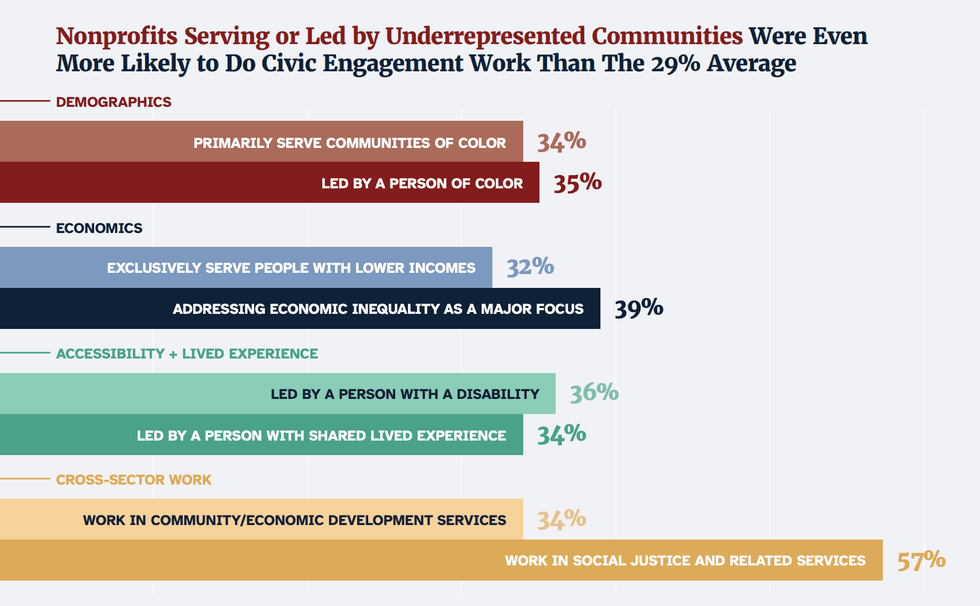 "On the Frontlines of Democracy" by Nonprofit Vote,
She emphasized the importance of diverse nonprofit leadership and that lived, personal experiences allow these individuals to best support and connect to their communities. “These leaders have authentic stories…something people can relate to,” said Pym.
“And we just really came here together so that we can make sure that people who have been shut out of the system, who have been forgotten about, who have been ostracized and marginalized, still have the opportunity to vote,” Desmera Gatewood of Democracy NC shared in the report. “Because these laws and these policies are going to impact them the most.”
Pym shared how, although certain resources seem to be evergreen, the political landscape we’re facing is particularly difficult for nonprofit leaders to sift through, so Nonprofit VOTE works to identify and provide the specific support that these organizations most urgently need.
Timely survey findings, such as those published in the briefing, help the organization identify which topics are most pressing to nonprofits and where they can use the most support.
Nonprofit VOTE produces a variety of online training webinars—from voter engagement to policy updates—where they invite lawyers and policy experts to discuss issues important to nonprofits. These sessions can typically gather 300-400 attendees.
The organization had a webinar “in late October last year, well attended, very engaging, and addressed legal threats, cutting through the noise that nonprofits are facing from the Trump administration,” shared Pym.
Since then, there continues to be an increase in demand from nonprofits for training in specific subjects—such as sustaining nonpartisanship, which Nonprofit VOTE held a webinar on last week. A session on engaging residents to vote this past January saw about 1,000 registrants. This success in attendance attests to the value of feedback, shared Pym. The organization continues to collect insight from its partners and webinar attendees to guide its efforts and best support nonprofits in their critical work within civic engagement and education.











The President Invited Iran to Bomb My Home