

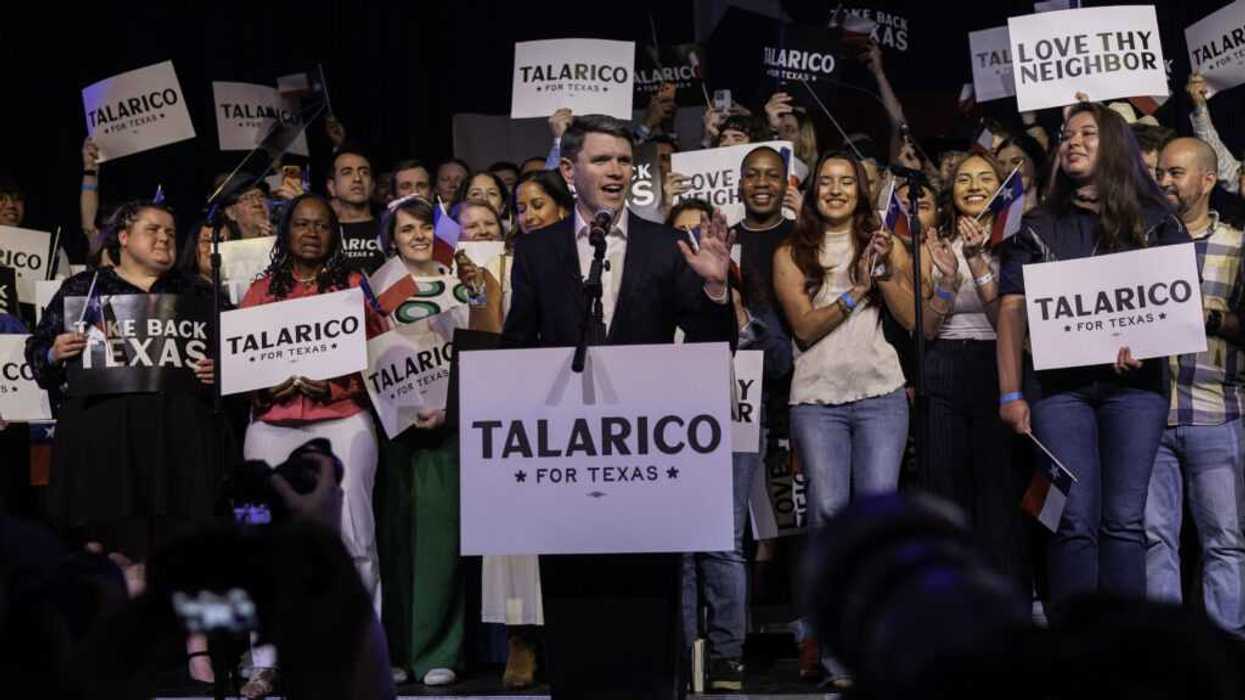

On Sept. 9, 2025, a little-known 36-year-old former middle school teacher and seminarian named James Talarico announced he was jumping into a crowded Texas Senate race, joining several other Democrats vying for GOP Sen. John Cornyn’s seat.
He’d first made news by flipping a Trump-leaning state legislative district in 2018, and became something of a rising star inside Texas Democratic circles. Outside of Texas, however, he still had work to do.
But he was smart — over the next seven years he started going where ambitious and savvy young Dems go to reach new voters, places like Joe Rogan’s podcast and Pod Save America. He gained more national attention during the Texas redistricting battle in 2025 when Texas Dems decided to leave the state in protest.
But when he entered the Senate race, he was still very much an underdog. He told Politico at the time, “[M]y life has always shown me that it’s a good idea to bet on the underdog.”
But Talarico wasn’t looking like such a good bet. When media-darling Rep. Jasmine Crockett jumped in the race in December, it looked like his bid was all but done. If he’d been a rising star, she was, for many Dems, the North Star, with regular appearances on cable news, “The View” and Jimmy Kimmel, and even presidential buzz swirling around her.
Leading up to the Democratic primary, as recently as Feb. 22, Crockett was leading Talarico by as many as 18 points.
Cut to Tuesday night, where Talarico pulled off an impressive win against Crockett, beating her by more than 7 points. He’ll face the winner of the Republican runoff, either Cornyn or Texas Attorney General Ken Paxton, in the general.
So what happened? How did Talarico go from underdog down by double digits to a convincing win? Two words: Stephen Colbert.
On Feb. 16, a little more than two weeks before the primary, Talarico got a huge boost when Colbert accused CBS of blocking an interview with him from airing, a decision Colbert implied was out of fear of the Trump administration’s crackdown on media outlets he deemed unfriendly.
The fracas ate up the national airwaves, and Colbert posted the interview on YouTube instead, where it gained 5 million views in just two days. The Talarico campaign said he raised $2.5 million in 24 hours. Suddenly Talarico was the frontrunner.
Just like it had Sen. Mark Kelly and independent journalist Don Lemon, the Trump administration had targeted Talarico for censorship and intimidation and inadvertently made him a resistance hero, boosting his name ID, his fundraising, and his future prospects.
To be sure, Republicans wanted to face Crockett in the general, figuring their chances in Texas were better against a progressive Black woman rather than a Presbyterian white man.
And their calculus was probably right. But Trump’s GOP, in its bloodlust for lefty scalps, still doesn’t realize it keeps handing the opposition giant gifts — if Kelly wants to run for president, if Lemon wants to compete with corporate media, if Talarico wants to become the first Texas Democrat to win the Senate in three decades, they all got a lot closer to their goals thanks to Trump’s hamfisted attempts at censoring them.
He’s failed all three times — a grand jury would not indict Kelly, Lemon is almost certainly going to be acquitted, and now Talarico is poised to give Republicans a run for their money in November, especially if the scandal-plagued Paxton is the nominee.
These are embarrassing own goals that Republicans simply can’t afford. And they make clear that Trump is no longer the effective dragon-slayer he once was. Good news for the left.
(S.E. Cupp is the host of "S.E. Cupp Unfiltered" on CNN.)




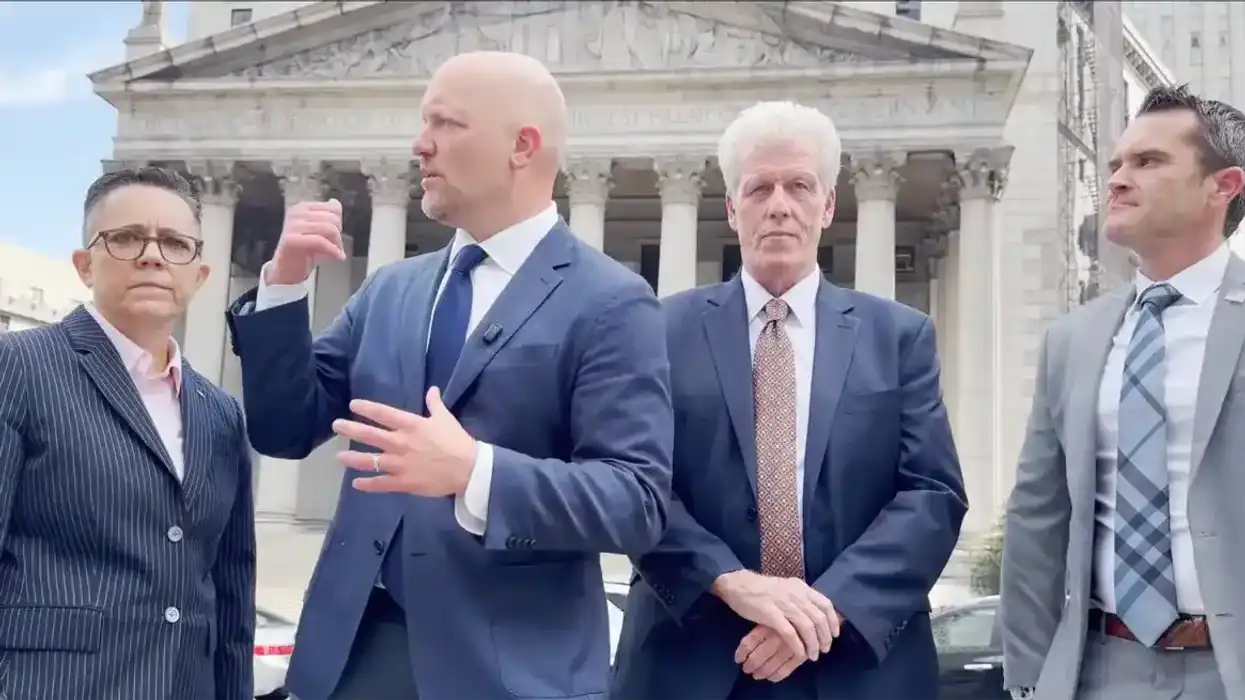









President Donald Trump speaks with the media after signing a funding bill to end a partial government shutdown in the Oval Office of the White House in Washington, D.C., Feb. 3, 2026.
Will Trump’s moves ever awaken conservatives?
Donald Trump has rewritten the rules of the presidency in ways that could change America forever, and not for the better.
His naked self-dealing, weaponizing the Justice Department against his political foes, turning on our allies, the casino-fication of the White House — none of it bodes well for the future of our democracy, setting precedents that other presidents on both sides of the aisle could very well continue.
But one of the most obvious things Trump has changed in politics is its concern with ideology and principle. The long-held philosophy that used to bind the Republican Party together is gone, because he simply didn’t have a use for it.
For conservatives, that’s been especially disorienting and troubling. It began with Trump’s disregard for the debt and deficit, and carried through to this term’s embrace of tariffs, or protectionism. His personal disinterest in what the Christian right used to call “family values” dismantled the evangelical base of the party. And his courting of white nationalists and antisemites changed the face of the party.
None of that has been enough, however, to move conservative lawmakers to significantly break with Trump or even call him out. They happily co-signed his tariffs, watched as he exploded the debt and the deficit, turned the other way at his criminality and immorality, and defended police-attacking insurrectionists at the Capitol. He even managed to tick off the Second Amendment crowd with his crackdown on guns at protests and in Washington.
None of this is conservative. But so long as they kept winning, cowardly Republicans not named Liz Cheney or Adam Kinzinger didn’t seem to care.
But now, with a new idea hatched, will Republicans finally remember their conservative roots?
On Monday, Trump called on Republicans to “nationalize the voting.” It was a startling suggestion for a party that’s always concerned itself with state’s rights and federalism.
“The Republicans should say, we want to take over, we should take over the voting, the voting in at least many, 15 places. The Republicans ought to nationalize the voting,” he said.
The call is in service of his election lie, of course, an answer to the non-existent scourge of voter fraud that rigged just the 2020 election and somehow not the 2016 or 2024 elections.
Except Trump is the one attempting the rigging. He’s tried to end mail ballots and voting machines, sued two dozen blue states for their voter rolls, embarked on a rare mid-decade redistricting campaign, dismantled the FBI’s Foreign Influence Task Force, and pardoned dozens of people who signed false election certifications for him in 2020.
It’s tempting to dismiss the idea as merely a self-soothing ramble, the nonsensical blurting of an old man still fixated on an imaginary injustice. But it should offend and worry everyone, not least of all Republicans.
Elections are held locally for good reason — it’s harder to rig them that way. The Constitution says states shall determine the times, places and manner of elections, for the explicit purpose of decentralizing and protecting their integrity. It’s the backbone of federalism.
But for House Speaker Mike Johnson it’s nothing to get worked up about. “What you’re hearing from the president is his frustration about the lack of some blue states, frankly, of enforcing these things and making sure that they are free and fair elections.”
But Democrats are rightly concerned, and preparing for potential “federal government intrusion” in the midterms. “This is now a legitimate planning category,” said Minnesota Secretary of State Steve Simon. “It’s extraordinarily sad, but it would be irresponsible for us to disregard the possibility.”
Extraordinarily sad, indeed. But will it revive the dormant conservatism in the Republican Party? Will lawmakers remember their principles and patriotism? Or will they continue to sleep through Trump’s total remaking of America’s political system?
Maybe this will be the thing that finally wakes them up.
S.E. Cupp is the host of "S.E. Cupp Unfiltered" on CNN.