



In 2024, young Americans were expected to be the stabilizing force in U.S. politics. But instead, they emerged as one of its most paradoxical constituencies: increasingly disillusioned, economically anxious, and sharply divided. Millennials and Gen Z are rapidly becoming the demographic center of political power: by 2028, they may account for nearly half of the electorate. Yet, according to the Spring 2025 Harvard Youth Poll conducted by the Harvard Kennedy School Institute of Politics, only 19% of young Americans trust the federal government to do the right thing most or all of the time. Just 13% believe the country is headed in the right direction. The question arises: will this generation accelerate democratic fragmentation, or help rebuild a more resilient civic culture?
This growing pessimism is not confined to one party. Young Americans rate both major political parties poorly, displaying chronically low approval of national leadership, and increasingly question whether democratic institutions are responsive to their needs. The result is not apathy–it is polarization.
For voters aged 18-29, the economy (not abortion, nor foreign involvement) has consistently ranked as the dominant concern in 2024 and 2025 polling. Inflation has driven prices up by nearly 20% since 2020. Rent and mortgage costs have also surged significantly. Entry-level job markets remain unstable, and the looming fear of artificial intelligence has only amplified concerns for future employment.
Young adults have been particularly vulnerable to inflation and labor market instability. Many came of age during the COVID-19 pandemic, experiencing interrupted schooling and
early-career disruptions. Home ownership, which has long been considered a cornerstone of the American Dream, feels increasingly out of reach.
This economic pressure has led to political consequences. Some young voters supported Donald Trump in 2024 based on their perception of economic opportunities under his leadership, despite reservations about his other policies, such as tariffs. Others remain aligned with Democrats and express frustration that both past and current leadership have not adequately addressed housing costs, wage stagnation, or student debt.
Importantly, distrust is bipartisan. Democrats face sharper internal criticism, while Republicans show somewhat stronger in-group loyalty. But across ideological lines, a large majority of young voters view the two-party system itself as dysfunctional.
Yet economic anxiety alone cannot, and does not, explain polarization. The digital environment has intensified it. Research from institutions such as the Brookings Institution and New York University has shown that social media algorithms amplify emotionally charged and partisan content. Platforms curate feeds based on engagement, often reinforcing existing beliefs and creating ideological echo chambers. Over time, this dynamic can erode trust in opposing viewpoints and even in shared facts.
Polarization has been linked to declining trust in fellow citizens, skepticism toward major institutions, and diminished respect for democratic norms. The events of the January 6 attack on the United States Capitol demonstrated how digital mobilization can translate into real-world instability. More recently, the death of Charlie Kirk demonstrated how the simple act of sharing and discussing political beliefs can turn violent.
Trust among young Americans themselves is declining. A significant portion report assuming that those with opposing political views have malicious intent. Political conversations
increasingly feel risky or socially costly, leading many to avoid them altogether. This avoidance, ironically, deepens division by reducing opportunities for diverse perspectives to engage in cross-ideological dialogue.
But what can be done?
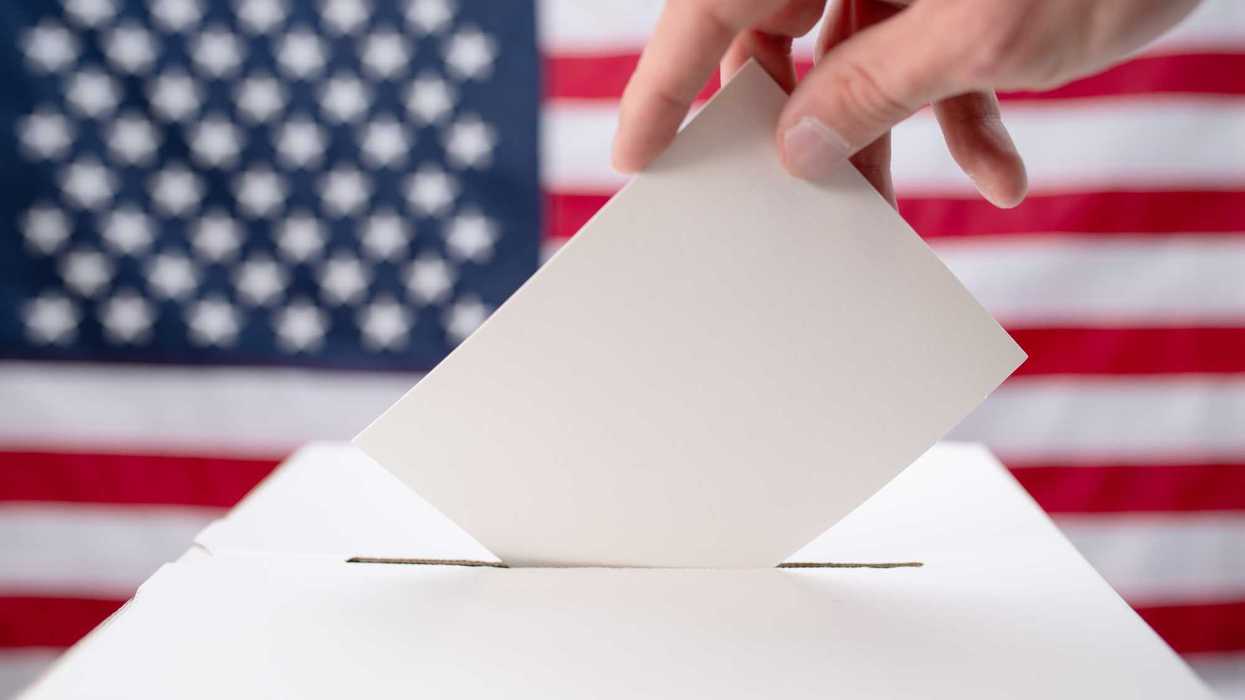
If polarization among young voters is driven by economic insecurity and the spread of misinformation through digital and local echo chambers, then rebuilding civil culture is just as important as voting.
We must learn to have difficult political conversations rather than avoid them. Read news sources across the ideological spectrum by consulting outlets that lean left and those that lean right. Why? Not to confirm existing views, but to understand how different communities interpret the same events.
None of these steps eliminates structural economic pressure nor reforms political institutions overnight. But as Millennials and Gen Z move toward becoming half of the electorate, their political power will only continue to grow. Whether that power leads to further fragmentation or a once-resilient democratic culture depends on how this generation chooses to navigate disagreement.
Young Americans may be increasingly polarized. Whether that polarization leads to democratic erosion or democratic renewal depends on the decisions of the current generation.
Prisha Tiwari is a 17-year-old student at Princeton Day School and a graduate of The School for Ethics and Global Leadership in Washington, D.C. She is deeply interested in politics, public policy, and the current global environment. This opinion piece reflects her perspective on the evolving attitudes of young voters.










The President Invited Iran to Bomb My Home