The Episcopal church in Placerville, California, is not an obvious candidate for political harmony. Its congregation is roughly half conservative and half progressive — a split that, over the past decade, has torn apart faith communities across the country. But this one held together through the pandemic. Through two bruising election cycles and everything else, the congregation’s priest, Debra Sabino, managed to keep their core values front and center. And recently, its members decided they wanted to do more.
Start with what everyone already agrees on
Ken Futernick, co-lead of Bridging Divides El Dorado, was asked to facilitate an event after a recent Sunday service. He began with a simple exercise. He asked people to think about the most important things in their lives — and then to tell the person next to them where their relationships with friends and family ranked on that list.
Almost universally, relationships came out on top. Then Ken drew the obvious conclusion out loud: “If that’s true for all of us, then it would seem to follow that we would want to avoid doing anything that would harm those relationships – like painfully unpleasant conversations about politics that sometimes lead to estrangement.”
He acknowledged the most common solution: just avoid the hard topics entirely. “That’s a rational choice,” he said. “I’ve done it myself.” But he was there to offer something else: a way to have the conversation that actually strengthens the relationship, by approaching it through curiosity rather than argument.
Come to these conversations to understand, not to persuade. That’s the idea behind Living Room Conversations, a format that brings small groups of people together — four to six, typically — across lines of difference, and gives them a structure for actually hearing each other. It has been used in thousands of settings. Ken’s workshop went on to explore how the same approach could extend beyond a formal Living Room Conversation into the everyday conversations people have been putting off.
The phone call, the walk, and what happened next
The Living Room Conversation on immigration went well — people practiced listening, asking real questions, and sitting with views they didn’t share. Then Ken pointed toward the next step: you don’t need a group or a facilitator to do this. You just need one person you’ve been meaning to call. He asked if anyone wanted to role-play what that call might look like.
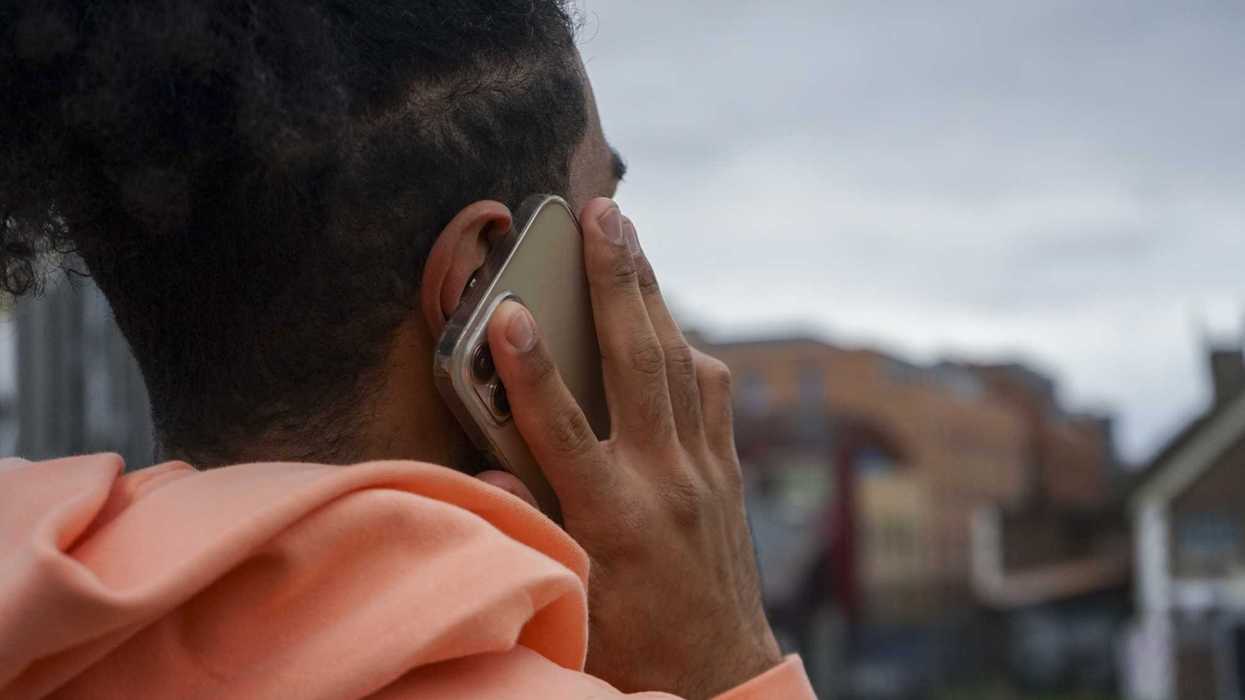
A woman named Dana Epstein volunteered, held a fake phone, and called “Bob” across the room. “Hi Bob, I’ve been thinking a lot about all that’s going on with immigration right now, and I’m curious what you think. I have a feeling we might not agree, but I’m not sure. Would you be willing to go on a walk with me to talk about it?”
“Bob” — also role-playing — hesitated. “I don’t want it to upset our relationship, but I am willing to give it a shot.”
“I don’t think it will,” Dana said. “I’m not trying to change your mind. I just want to understand what you think.”
They took their imaginary walk. He raised his concerns about immigration enforcement. Reflecting back on what she heard, she said, “So what I’m hearing you say is…” He confirmed she’d gotten it right. Then she shared her own perspective, without disputing his.
“It gave me a chance to practice inviting someone into a difficult conversation in a way that feels safe,” Dana said. “You only get better by trying, reflecting, and trying again.”
For Reverend Sabino, the moment revealed something deeper.
“Being with one another in love isn’t passive,” she said. “It’s a skill — and it can be learned. Watching people practice that conversation, and then applaud it, was one of the most tender moments I’ve seen in this ministry.”
Living Room Conversations, she added, offered more than a technique. “It gave people permission — to stay curious, to stay connected, and to trust that their relationships are strong enough to hold honest conversation.”
The homework assignment that matters most
Ken sent the congregation home with an assignment: before they meet again in a month, each person was encouraged to call a friend or relative — someone they suspected might see the immigration issues differently — and try to have that conversation. Not an argument. Not a debate. Just a walk, or a coffee, or a phone call built on curiosity.
Next month, they’ll sit in a circle and share how it went. Ken will also ask for volunteers to participate in another role play – this time, a gathering around the dinner table, where someone will say something like, “I know we usually stay away from politics, but I’d like to see if we can talk about an issue I’m guessing we’re all thinking about – not to argue, but to learn what one another thinks. If we are willing to give it a try, I will share a couple of things that I think will make the conversation something we all enjoy.”
This is the part that feels underrated in the current conversation about political division. Many of the proposals for restoring trust — in elections, in institutions, in each other — are large-scale: reform the algorithm, fix the primary system, change the incentives. Those efforts matter. But they take years, and they depend on people in power doing things differently.
What Ken is practicing, and what Living Room Conversations was built to enable, starts with a desire to connect. It asks one thing: that you approach someone you care about with genuine curiosity about how they see the world — not to fix them, not to be fixed, but to stay in relationship across the divide.
That matters for democracy in a specific way. A lot of distrust in our elections runs on the assumption that the other side isn’t just wrong but dangerous — that they would cheat, rig, or steal if they could. That assumption gets harder to hold once you’ve spent an hour on a walk, actually listening to someone from the other side. You may still disagree. You may even disagree more clearly. But you are less likely to believe they are your enemy.
The congregation in Placerville already knew that, in a way. They’d kept their pews full and their community intact through years that broke a lot of others. Ken’s workshop didn’t teach them a new value. It gave them a technique — a way to act on the thing they already believed, that relationships matter more than winning.
There’s probably someone you’ve been putting off calling.
Joan Blades is the co-founder of Living Room Conversations and MomsRising, and an organizer of the Trust in Elections initiative for the 2026 cycle.
Ken Futernick is co-founder of Bridging Divides – El Dorado and a professor emeritus at California State University, Sacramento. He is also a county school board trustee and the host of the podcast, Courageous Conversations about our Schools