
Our country and our politics are at an impasse. Just consider our past four presidents: Obama, Trump, Biden, and back to Trump. The country keeps swinging from one end of the political spectrum to the other with no clear, sustained direction.
Which begs the question: what’s the breakthrough we need to get us out of this impasse and moving in a more hopeful way—together?
Let’s be clear. We must address what’s at the heart of our current dilemma: a crisis of belief—in our institutions, leaders, news media, even in one another. As I work in communities across the country, people are hungry for an alternative path forward, one that enables us to get things done together—not as Democrats, Republicans, or Independents, but as Americans.
Of course, politics is important and necessary. But it is defined by winning at any cost when Americans yearn to come together.
Indeed, more politics can’t get us beyond this impasse. We need something fundamentally different: a civic response. One that calls us to our better selves. Helps us to revive basic underpinnings we’ve lost sight of in society, like belonging, connection, decency, and dignity for all. Offers a sense of possibility and hope. And provides a practical path forward. Only a civic response can restore our belief in one another and our nation.
As to why, we might simply look at our history. Indeed, a number of commentators have compared our current moment to the late 1970s, including the New York Times writer E.J. Dionne in a recent piece.
Political gridlock. A crisis in Iran. Economic stagnation. Widespread distrust in institutions. The parallels are many.
Back then, President Jimmy Carter captured the prevailing mood in his famous “malaise” speech, which came at the end of a 10-day, nationwide listening tour. What he heard bears an eerie resemblance to what I hear Americans saying nearly 50 years later. Here’s just a taste:
- “Don’t talk to us about politics or the mechanics of government, but about an understanding of our common good.”
- “The strength we need will not come from the White House, but from every house in America.”
- “Mr. President, we are confronted with a moral and spiritual crisis.”
Carter concluded, “After listening to the American people, I have been reminded again that all the legislation in the world can’t fix what’s wrong with America.” About this, he was right.
Yet Carter was off in two key ways, which we should keep in mind today. First, he focused incessantly on what was wrong rather than the inherent sense of possibility Americans sought. Second, for all his listening and analysis, his solutions were largely stuck in politics.
As this year’s midterms loom ever closer, and the 2028 presidential race starts to heat up, we’re once again hearing that the only way to solve society’s problems is “more politics,” or “different politics,” or “better politics.” As much as we need to change our politics, they can’t save us.
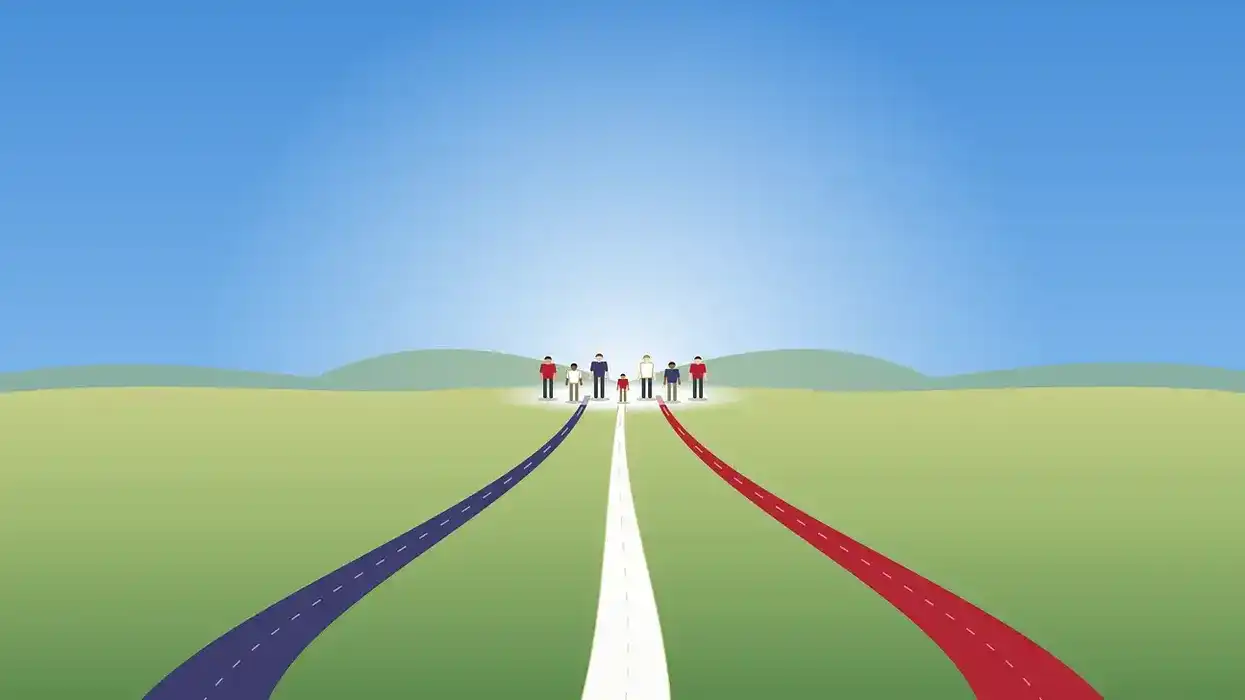
We need a path forward that is practical, unifying, and transcends political divides. A new civic path. I see this at work every day.
Take Alamance County, NC, one of the most divided communities where I’ve worked across nearly four decades. In just a few short years, they built a new community-based system for transitioning people out of the criminal justice system back into society and unleashed numerous other chain reactions of change in youth wellness, the arts, and other areas.
Or consider two rural counties in Jim Jordan’s Ohio congressional district where I’ve been working. People there have stepped forward to tackle issues of youth, senior care, mental health, homelessness, and addiction by centering people’s shared aspiration for belonging in all of their work.
I have plenty more examples, but here’s the point: This new civic path isn’t a call to simply bridge our divides. Talk alone won’t get us anywhere. We need to build together in our local communities.
As we do this, we can move toward something larger for ourselves and the country—a sense that we are on a common mission to create a better country rooted in a can-do spirit.
Right now, more politics will only yield a deeper impasse. But a new civic path can provide the breakthrough we need.
Rich Harwood is the president and founder of The Harwood Institute.