
Finding a reason to be optimistic about the nation’s political future is difficult these days. One hundred students pursuing constitutional change just made it a little easier.
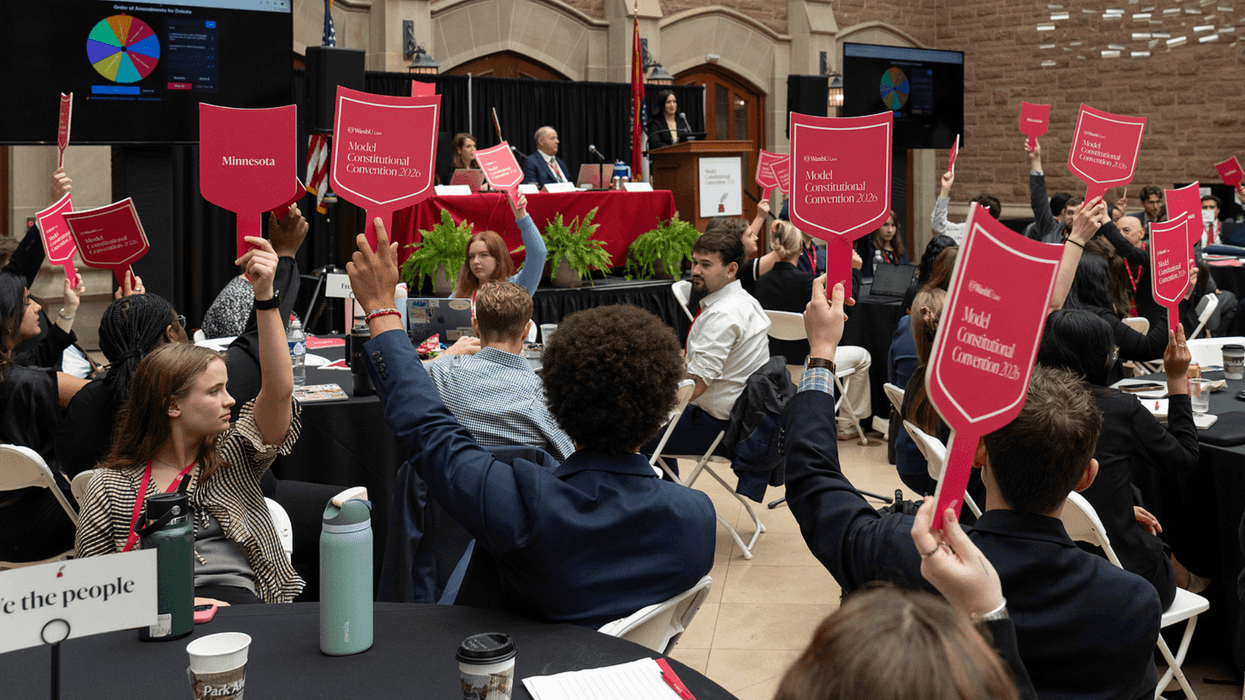
They were chosen from more than 75 U.S. universities and law schools to participate as delegates to the second Model Constitutional Convention (MCC). They tackled serious civic challenges—gerrymandering, campaign corruption, and equal rights expansion among them—by articulating and vetting amendment proposals that they crafted.
Constitutional amendments remain rare and difficult, and today’s polarized politics would seem to make advancing them daunting at best. But the delegates fully embraced the challenge, and marked their Memorial Day weekend in a different but decidedly patriotic way.
They learned—and showed how—to collaborate and represent. They grappled with hard issues, including whether their proposals even belonged in the Constitution (not all did). They negotiated and compromised to secure 76 votes for their proposals, matching the high threshold of three-quarters of the states needed to ratify any constitutional amendment. And they did it with civility and respect (more about which later).
Twenty proposals emerged from 10 committees. Six amendments crossed the 76-vote threshold, besting the first convention’s total of four. (This MCC was at Washington University’s law school, organized by its dean, Stefanie Lindquist, who also convened the inaugural convention in 2024 while at Arizona State’s law school.)
The topics of the proposals, whether accepted or rejected, almost didn’t matter. The key takeaway was the successful use of the convention’s process for gathering, refining, and debating. That’s why all the delegates rose and cheered when the sixth proposal to be considered became the first amendment adopted. They understood that entering anything new or corrective into our foundational law, whether aspirational or operational, requires both great care and supermajority support.
One of the more fascinating debates was over two proposals to deal with abuse of the pardon power. One attempted to revise the existing language to establish parameters for the president’s use of the power, while another proposed creating a “Court of Mercy,” to which the president could still recommend pardons, but which would act independently. The latter received more votes than the former, but neither could muster the 76 required for adoption.
Constitutional change is iterative and takes time. Perhaps a Court of Mercy will be more seriously considered at the next MCC, or in the years or decades ahead, when these students could lead efforts or cast actual votes to amend the Constitution.
The model convention’s founder, Dean Lindquist, had reason to be gratified by what she saw. “Every educator wants to see the students they work with rise to the occasion,” she said. “Seeing these delegates delve into and create solutions for our country’s foundational political problems was beyond rewarding. Any observer could only have come away with hope.”
Two non-conventioneers proved her correct—before the event even began. They happened to sit next to a group of delegates who had gathered for lunch upon their arrival in St. Louis and couldn't help but listen to the students' conversation. Before leaving the restaurant, they told the students how "impressed” and “inspired” they were by such civil disagreement about serious issues, so much so that they also paid the students’ tab. Their generous appreciation could have been directed to any of the delegates over the convention's four days.
The delegates’ own reactions afterward confirmed this. In addition to “wow!” and “fantastic!” was “I’m definitely encouraging my classmates to apply for the next one!” This nascent alumni group will be a welcome civic addition; it could also prove to be one to watch.
Some of our deeper governing challenges will require constitutional solutions. After decades without any amendments, today may not seem an apt time to anticipate future ones. But the clusters or waves of amendments we have experienced throughout history have always come after violent dysfunction, be it civil war, Gilded Age excess, or civil and equal rights denial.
Our current political dysfunction, which has become violent, may not yet have hit bottom. But we’re getting closer, even if it is some years away. When we do, these students prove that their generation is ready and able to lead us upwards again. I, for one, can’t wait. That new direction will likely include amendments. Bring ‘em on.
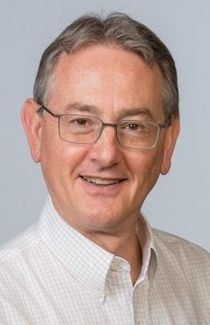
Rick LaRue served as a mentor at both the inaugural and the second Model Constitutional Convention. He is a Fulcrum Contributor, writes at Structure Matters, and was a DC-based nonprofit executive for four decades.

 Following our HWF Civic Futures kickoff last week with Eric Liu, our design partners at Public/Official have created a unique visual to capture the “civic scaffolding” spirit of this conversation.
 Lisa, Coaches Rev and Matt Elkin, and former Stanford Men’s Basketball star Maxime Raynaud at Stanford’s “All Vote No Play” Democracy Day, 2025