



Gertrude Stein famously wrote, "A rose is a rose is a rose is a rose," meaning everyone knows what a rose is. The same cannot be said of a Socialist.
There are many Democratic politicians who proudly call themselves Socialists or Democratic Socialists, and there are many adversaries who brand those individuals as Socialists. Both sides use the same word, but the word means very different things to the two sides.
First, the dictionary/political science definition of socialism is:
"1. any of various egalitarian economic and political theories or movements advocating collective or governmental ownership and administration of the means of production and distribution of goods."
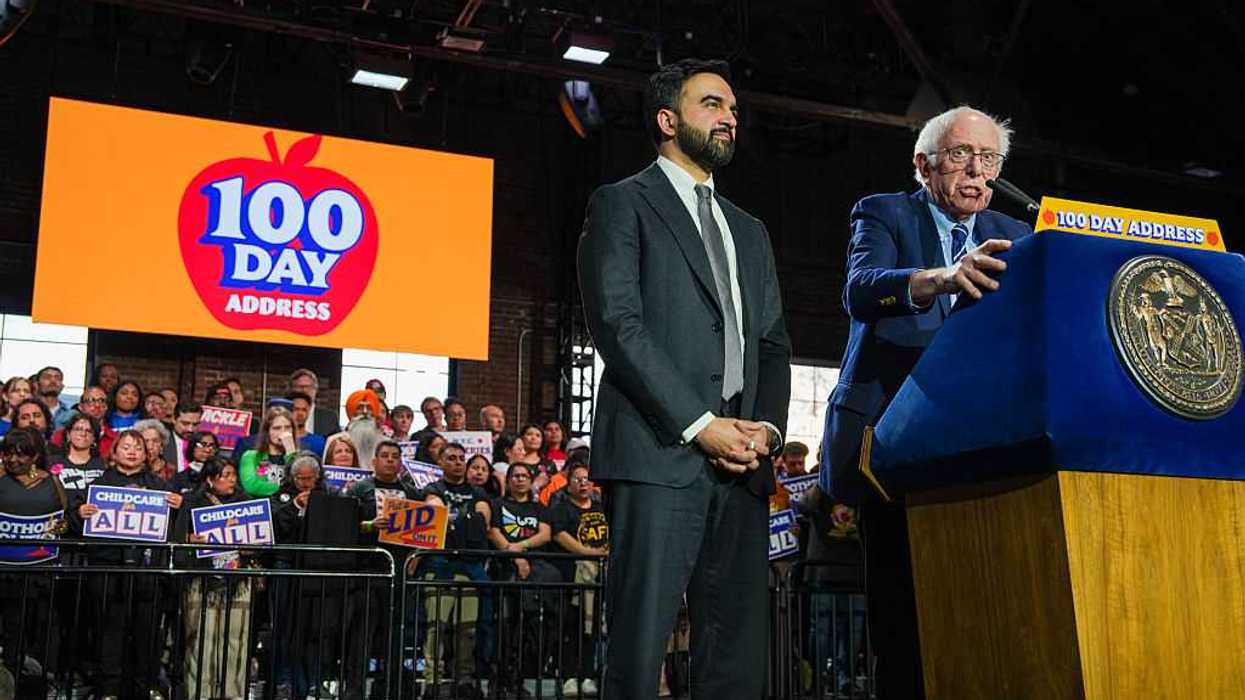
This does not define Bernie Sanders, Zohran Mamdani, or other Democrats who call themselves Socialists. This is despite the fact that the Democratic Socialists of America (DSA) has as a goal "to collectively own the key economic drivers that dominate our lives, such as energy production and transportation."
Even the DSA, saying that the end of capitalism is unlikely in the foreseeable future, instead focuses on increasing the power of the people within a democratic capitalist structure. "At the root of our socialism is a profound commitment to democracy, as means and end.... DSA fights for reforms today that will weaken the power of corporations and increase the power of working people. For example, we support reforms that: decrease the influence of money in politics, empower ordinary people in workplaces and the economy, and restructure gender and cultural relationships to be more equitable."
The DSA is thus, from a practical perspective, an organization fighting for a democracy as defined by the Declaration of Independence, a democracy that is all about securing the rights of all people and the equality of all people. Indeed, Thomas Jefferson, in his last letter, stated that the Declaration of Independence gave voice to the truth that the "mass of mankind has not been born with saddles on their backs, nor a favored few booted and spurred, ready to ride them legitimately, by the grace of God."
And that is what Bernie Sanders, Zohran Mamdani, and others are fighting for. They are not arguing for government or collective ownership of any means of production. And thus they are not Socialists—with a capital "S"—even though they are members of the DSA. They are socialists only in the sense that they believe that the government must be focused more on the rights of the people. Neither they nor the DSA present a threat to our capitalist structure—to some of its details, yes, but not the basic structure,
They are Democrats seeking a government that is focused on fulfilling the promises of our founding principles—the equality of all; the right of all to life, liberty, and the pursuit of happiness; and the role of government being to secure those rights—while recognizing that to do that, creating the conditions for a prosperous economy and industry is essential for government to secure these rights for all.
But Republicans sense the opportunity to create a bogeyman that scares off voters. And so Republicans brand members of the DSA as Socialists—with a capital 'S"—or even Communists—an accusation of being un-American—as Trump has recently done.
But there is nothing communistic about the DSA. As noted above, their commitment to democracy is central. What they are fighting for is a democracy—within our capitalist system—that is truer to the founding principles of our country.
Likewise, the Democratic centrists who recently published their new "Promise to America" and resorted to the trope of calling DSA members "Socialists" are also seeking to negatively brand them. They need to recognize the flaw in their approach, and if they truly want to accomplish what they state in their Promise, they will have to shift to the left and more forcefully support the rights of the people as promised in the Declaration of Independence, knowing that that will mean that they will oppose corporate interests with some regularity.
And I would respectfully suggest that Sanders, Mamdani, and others stop labelling themselves as Socialists because that label is not technically appropriate and gives Trump and his MAGA allies ammunition with which to rouse the very people who they are fighting for to vote against them. Their recent success in election primaries is not a function of this label but of the message that they are advocating.
Ronald L. Hirsch is a teacher, legal aid lawyer, survey researcher, nonprofit executive, consultant, composer, author, and volunteer. He is a graduate of Brown University and the University of Chicago Law School and the author of We Still Hold These Truths. Read more of his writing at www.PreservingAmericanValues.com