



Skip to content
Search

Latest Stories

Follow Us:
Top Stories

What To Know About Alaska’s Election System

News

Voters in Alaska

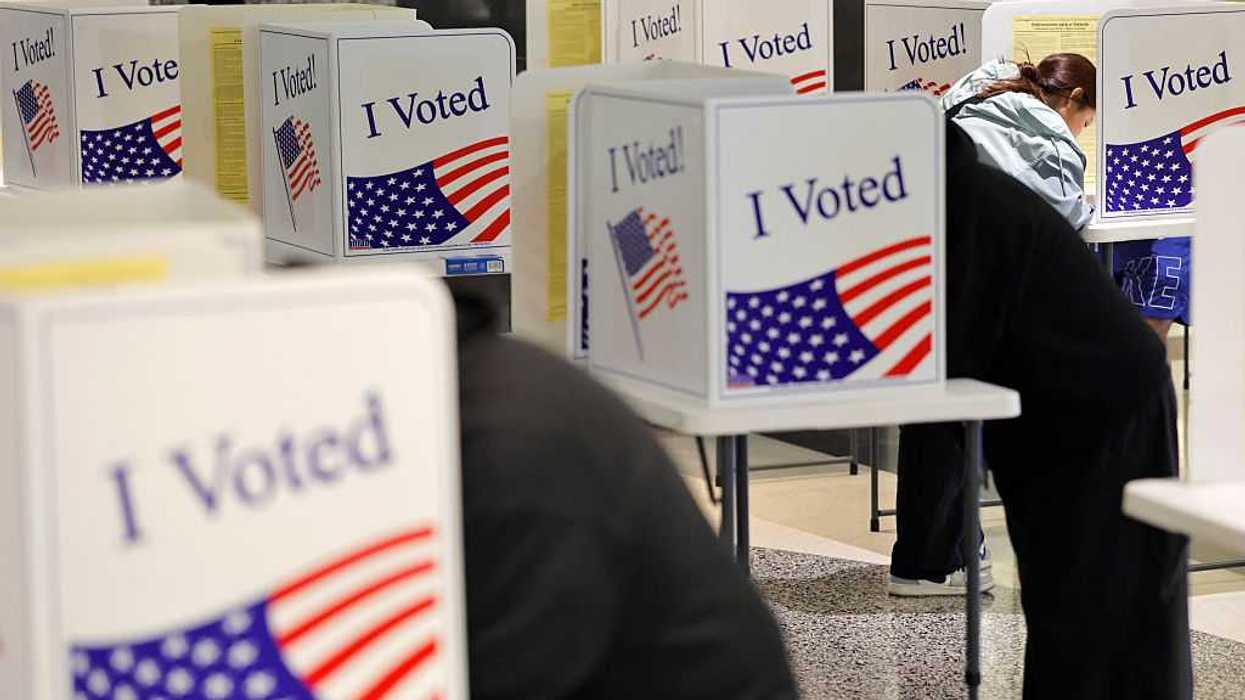
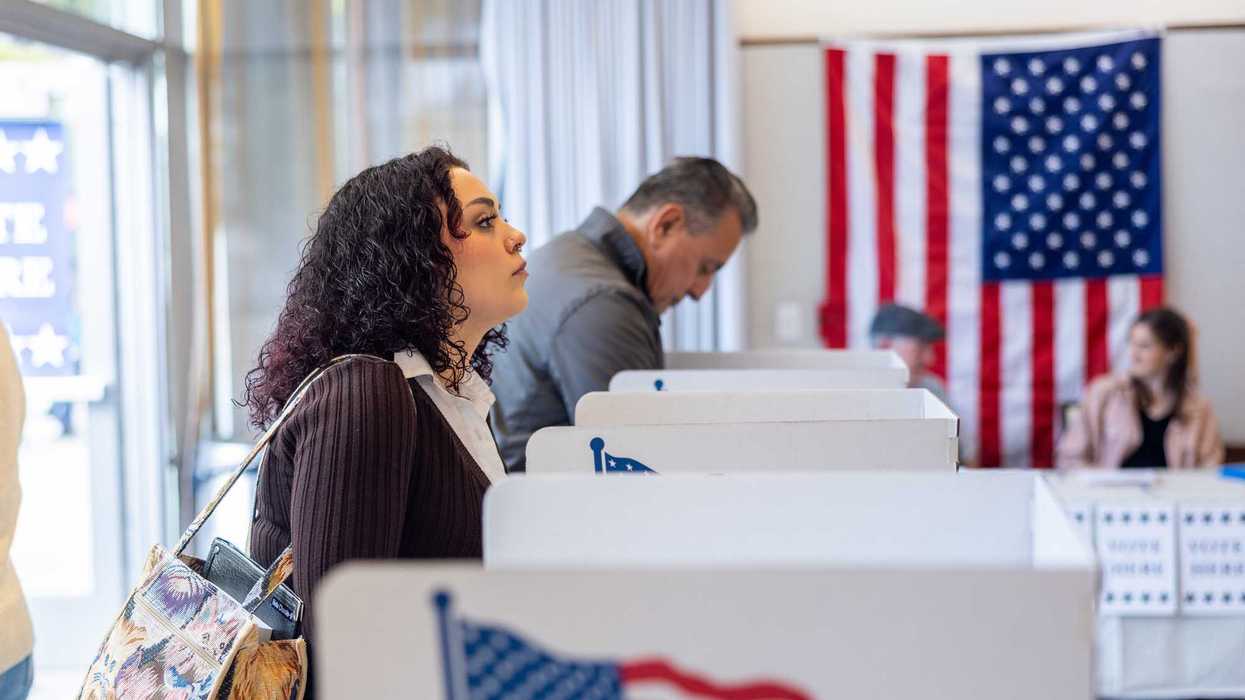
Voters cast their ballots at a polling station at Midtown Mall on October 31, 2026 in Anchorage, Alaska.

(Photo by Justin Sullivan/Getty Images)

This year’s midterm elections have put a spotlight on Alaska’s “top-four” election system – which includes an open, all-candidate primary and a ranked-choice voting (RCV) general election.

Alaskans voted to adopt this system in 2020 and again to keep it in 2024. It was on the ballot again this November; voters in my home state will likely vote for reform for the third time in six years.


That’s because RCV and open primaries have delivered more choice, more voter power, and better government for Alaskans.

How do Alaska’s elections work?

All candidates compete on the same ballot in the primary, regardless of party. Voters each pick one candidate, and the top four vote-getters advance to the RCV general election.

In the general election, voters can rank candidates in order of preference: first, second, third, and so on. If a candidate receives a majority of voters’ first choices, that candidate wins. If not, the candidate with the fewest votes is eliminated, and voters who ranked that candidate “number 1” will have their vote count for their next choice. This repeats until two candidates remain, and the candidate with a majority of votes wins.

How has the reform affected Alaska?

With open primaries and RCV, Alaskans get more choices and can vote honestly for the candidates they like most, without fear of “spoiler” candidates. Candidates listen to more voters and build broad coalitions to win majority support. Elections are more competitive. 84% of Alaska voters say that RCV is simple. RCV is party-neutral, and fiercely independent Alaska voters have elected Democrats, Republicans, and independents since it was first used in 2022.

Since Alaska implemented RCV, the state legislature has been led by a cross-partisan coalition including Republicans, Democrats, and independents. This coalition has put Alaskans’ needs over partisan politics to advance issues that matter to voters. In 2025, the coalition passed the largest school funding increase in state history.

How long will results take?

We might need 15 days to call a close race. But it’s not because of RCV, which takes just minutes to tally.

Alaska has long allowed absentee ballots to arrive up to 15 days after Election Day because of its size and geography. Over 80% of the state is not connected by road. In close Senate races in 2008 and 2010, officials declared the winner at the end of the 15-day period. Alaska did not use RCV until 2022.

Additionally, Alaska’s Division of Elections released a preliminary “cast vote record” on Election Night this year, which can be used to create unofficial RCV tallies. Alaska already has preliminary RCV results.

What about the two Dan Sullivans?

Alaska’s Senate race has two candidates with similar names: incumbent Republican Senator Dan S. Sullivan and nonpartisan candidate Daniel J. Sullivan. The New York Times reported that Democrats recruited the second Sullivan to play “spoiler” and siphon votes away from Senator Sullivan.

Ranked choice voting had nothing to do with Daniel J. Sullivan getting on the ballot – and it actually makes the tactic less effective. RCV can neutralize the “spoiler” effect by giving voters backup choices. In Alaska, any small number of voters uncertain about the “Dan Sullivans” could rank both candidates on their ballot, and their vote will end up counting for the more competitive candidate, Senator Sullivan.

RCV gives all Alaska voters a more meaningful vote. They do not have to vote for the lesser of two evils, or fear “throwing their vote away” if they do not. In the Senate race, 4,481 voters ranked Daniel J. Sullivan or long-shot Gerald Heikes first – but also weighed in between Senator Sullivan and Democrat Mary Peltola, using their backup choices.

Compare this to races without ranked-choice voting, like Tuesday’s Ohio Senate race – where 222,781 voters chose the Libertarian or independent. These voters had no backup choice. They did not get to weigh in between the candidates who actually had a chance to win.

What’s next?

Alaska will release additional updates through its 15-day window, and we’ll get official results on Wednesday, November 18.

We’ll also get a final answer on whether voters want to keep Alaska’s election system – though preliminary results indicate it is here to stay. That’s because Alaska’s election system lets Alaskans vote their values, and support the candidates they believe will best represent them in office. It also empowers elected leaders to govern — by putting the needs of their voters before partisan interests.

Meredith Sumpter is President and CEO of FairVote, a nonpartisan organization seeking better elections.



Read More

2026 midterm voters

Voters mark their ballots in the Kern County Elections Office on November 03, 2026 in Bakersfield, California.

(Photo by Mario Tama/Getty Images)

Trump’s War on DEI Met Its Match: The American Voter

The noise surrounding the demise of Diversity, Equity, and Inclusion (DEI) has been loud, persistent, and, as it turns out, entirely out of touch with the American voter. For the past few years, a coordinated political backlash attempted to turn DEI into a toxic catchphrase and a scapegoat for societal anxieties. Central to this campaign were Donald Trump and his administration, who consistently weaponized the term to fuel cultural anxieties and rally their political base. But during the 2026 midterm elections, the American electorate delivered a definitive, history-making counter-narrative. DEI wasn't rejected; voters voted it back into the highest seats of state power, soundly rejecting that divisive rhetoric.

Look no further than the extraordinary shift in our nation’s gubernatorial landscape. In a historic wave, voters across 17 states elected female governors, shattering the previous record of 14 and ensuring that starting in 2027, one-third of the nation’s state executives will be women. This isn't just a win for gender representation; it is a profound realignment of who gets to lead and a validation of the core tenet of diversity: that leadership should reflect the demographics of the people it serves.

Keep Reading Show less
midterm election voters

Voters cast their ballots on Election Day at the Cross Insurance Center polling location on November 03, 2026, in Bangor, Maine.

(Photo by Joe Raedle/Getty Images)

The Voter as Estimate: What Commercial Profiles Miss About Independent Citizens

In the late 1980s, when my firm, Price Research, prepared a voter survey for the Bakersfield City School District, we began with a basic administrative record from the Kern County elections office. To clean up addresses and append phone numbers, we turned to Political Data Inc. (PDI)—then a young company operating out of two converted dressing-room trailers on the Warner Bros. lot in Burbank. PDI helped us find and organize voters. But to learn what those citizens actually thought about school facilities, taxes, and local bonds, we still had to do something simple: we had to ask them.

Today, that basic administrative list has become the foundation of a multi-million-dollar commercial enterprise. Major vendors such as L2, TargetSmart, Aristotle, i360, and Data Trust assemble public records into vast dossiers, appending anywhere from 600 to over 2,500 individual data points per record—income estimates, housing specifications, vehicle makes, magazine readership, firearm licensing, travel habits, and predictive behavioral scores. What began as a tool for locating voters has evolved into a system for estimating them.

Keep Reading Show less
Voters cas ballots in Ohio

Voters cast their ballots inside a polling location in the social hall at St Patrick's Church on November 3, 2026 in Youngstown, Ohio.

(Photo by Jeff Swensen/Getty Images)

The Election Night TSUNAMI Wasn’t Blue - It Was Independent

Election night turned into what Shawn Griffiths calls a "bloodbath," and our hosts could barely contain themselves reacting live: Troy Jackson just knocked off 30-year Senate fixture Susan Collins in Maine, and that was only the beginning.

Chad, Cara, Shawn, and Ethan break down a stunning wave election that saw James Talarico take the victory over Ken Paxton in Texas and Troy Jackson upset Susan Collins in Maine. Showcasing the open primary in California, Democratic Socialist candidates got crushed by other Democrats, but moderate Republicans survived. Here’s the part the mainstream media will miss: the driving force behind this wave was independent, not blue.

Keep Reading Show less
People voting

Election Day in America

Getty Images

The Future of Our Democracy Is Being Built Close to Home. Will America Pay Attention?

Today, voters in Lexington, Kentucky will decide whether ordinary residents should have a permanent role in reviewing the rules of their local government. If approved, an assembly made up of residents selected by lottery would review the city charter at least every eight years, giving everyday people a recurring opportunity to examine how Lexington is governed.

It's a significant proposal, and one that could put our Kentucky city at the forefront of democracy reform in the United States.

Keep Reading Show less