
Americans are more complicated than American politics allows us to be. Recently, the Searchlight Institute, after speaking with more than 9,000 voters, found that only 14 percent are completely ideologically conservative and only 10 percent are completely ideologically liberal. The remaining three-quarters hold combinations of views that cross conventional ideological lines.
Some conservatives support a wealth cap. Some liberals are open to more deportations. Searchlight divided the electorate into nine groups because “liberal” and “conservative,” “Democrat” and “Republican,” simply did not capture what it found.
Earlier this year, political scientists Stephen Ansolabehere and Brian Schaffner also published evidence that Americans agree on considerably more than our political debate suggests.
Put the findings together. Americans agree about more than our politics suggests, and their disagreements are far more complicated. Yet this country of more than 340 million people keeps getting sorted into two increasingly hostile political camps.
Why?
Part of the answer is that our political system is built to do exactly that. American elections for the House of Representatives use winner-take-all contests in single-member districts. Finish first and you get the seat. Finish second and you get nothing.
Political scientists have long understood the consequence. Single-member plurality elections strongly favor two-party competition. Imagine a congressional district in which four parties receive 40, 30, 20 and 10 percent of the vote. The party with 40 percent gets the seat. The other 60 percent elects no one.
Voters, candidates, donors, and activists understand this. A voter may prefer a third-party candidate but support a major-party candidate to keep the other major party from winning. Political movements that might otherwise become independent parties instead join one of the two parties capable of winning. Political scientists call this Duverger’s Law: winner-take-all elections make it difficult for other parties to survive, compressing a diverse electorate into two warring coalitions.
Then the problem compounds itself.
New York Times columnist David French recently described how political opposition becomes tribal identity. Writing primarily about the right, he showed how opposition to the left makes virtually anyone on the right an ally, regardless of beliefs. The same dynamic holds both coalitions together. Republicans disagree about trade, foreign policy, health care, and spending, but leaving risks empowering Democrats. Democrats disagree about immigration, crime, Israel, and economic policy, but breaking away risks empowering Republicans. The enemy holds the coalition together.
And our constitutional structure gives Americans a powerful reason to fear that enemy. The party that wins control in Washington gains enormous—and increasing—influence over abortion, guns, immigration, environmental regulation, religious liberty, and other questions millions of Americans regard as fundamental. So every election asks the same underlying question: Will we govern them, or will they govern us?
That is the paradox. The electorate is not divided into two ideologically consistent camps. Our political system forces people with very different views into two coalitions and then gives those coalitions powerful reasons to fear one another. The system does not merely reflect our divisions. It deepens them.
In other essays, I have proposed a different constitutional structure for the United States: an American Union in which predominantly Red and Blue regions would become separate semi-autonomous democratic republics while remaining joined through common defense, a common currency, integrated markets, and freedom of movement.
At first glance, the Searchlight research seems to challenge that idea. If Americans are not really Red and Blue, why create Red and Blue republics? Because the point is not to create two ideologically homogeneous democracies. And the Searchlight findings show neither would be. The point is to change the political structure that turns disagreement into a permanent struggle for control. An American Union does that in two ways.
First, Red and Blue Americans would no longer fight every four years over which side governs the other. Neither republic would decide the other’s policies on the issues that most bitterly divide them. Political disagreement would remain. Lots of it. But the arguments would be over how each community governs itself, not how to keep the other side from taking control.
A progressive in Blue America could challenge a centrist without being told that the disagreement hands power to a national Republican government. A libertarian in Red America could challenge a religious conservative without being told that it puts a national Democratic government in power. The opposing national tribe would no longer be waiting on the other side of every election.
Second, both republics would need new constitutions. For the first time in more than two centuries, Americans would have the opportunity to decide from scratch how votes translate into political power. Neither republic would have to recreate the winner-take-all system that helped produce our current two-party structure.
Congress already has the authority to change the rules for House elections. The single-member district requirement comes from a 1967 federal statute, not the Constitution. But the two parties that control Congress owe much of their dominance to the existing rules. They have every incentive to preserve them. An American Union creates the clean slate needed to break that political duopoly.
The new constitutions could allow multimember districts, in which several representatives are elected using proportional rules. Return to our four parties receiving 40, 30, 20 and 10 percent of the vote. In a district electing ten representatives, they could win four, three, two and one seats, instead of giving the only seat to the 40-percent party. Voters could choose parties or rank individual candidates through proportional ranked-choice voting. Unlike single-winner ranked-choice voting, these systems give smaller political groups a real path to representation.
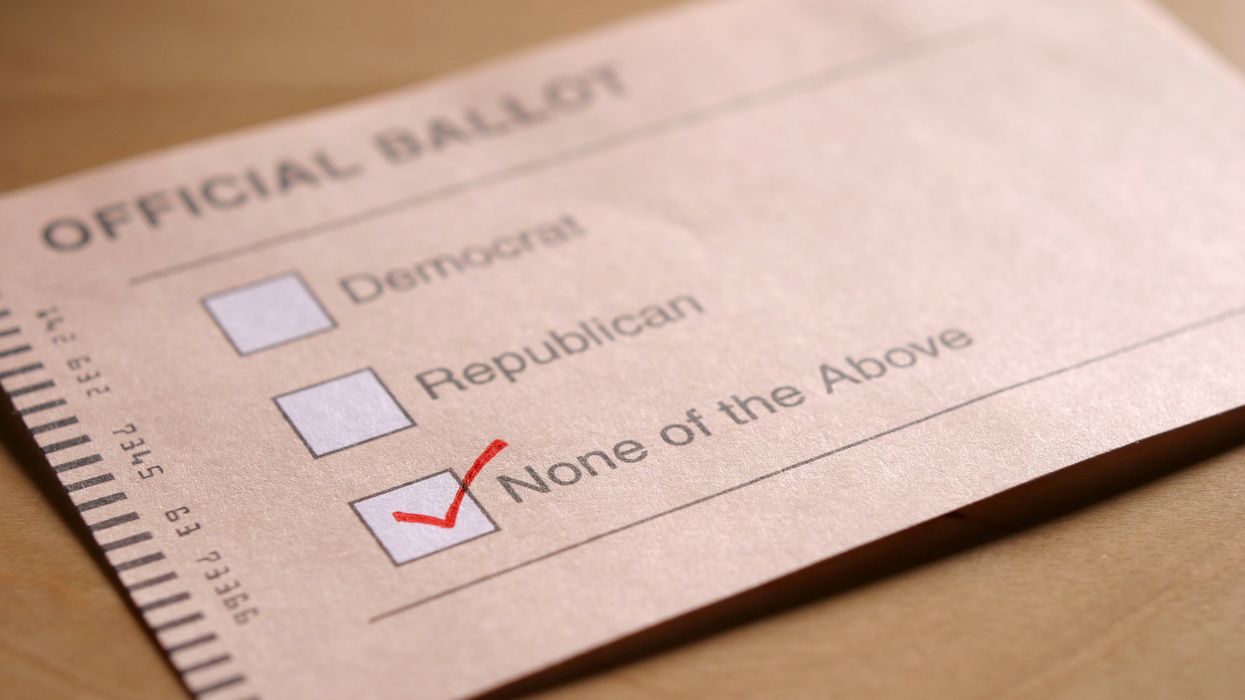
That is where Searchlight’s research becomes especially important. Which party represents a voter whose views cross conventional ideological lines? Often, neither does particularly well. The voter decides which issues matter most, chooses the closest major party, accepts the rest of its package, and votes against the other side. Millions make that bargain. Then we look at election results and conclude that the country consists of Republicans and Democrats, rather than recognizing how poorly those two choices reflect the voters themselves.
An economically populist but culturally conservative voter could find candidates who represent that combination. So could a socially liberal fiscal conservative. Environmentalists, libertarians, labor voters, and other constituencies could organize independently rather than disappearing inside two enormous coalitions that poorly reflect their political views.
And the possibilities would not be limited to political categories we already know. That is one of the most interesting implications of the Searchlight research. Americans hold combinations of views that our existing political vocabulary does not describe particularly well. Give those voters a system in which additional parties can survive, and they will create political coalitions we have not imagined.
That would change political dialogue too. Today, candidates often need only convince voters that the other party is worse. Negative partisanship does the rest. With several viable parties, voters could support candidates who reflect their beliefs, while political groups could compete openly before elections and form coalitions to govern afterward.
Instead of asking, “How do we stop those people from governing us?” we would increasingly ask, “How should we govern ourselves?”
Put those findings together and the paradox becomes hard to miss. The people are diverse. The areas of agreement are real. The current choices are binary. The current politics is tribal.
An American Union addresses both sides of that problem. It ends the national struggle over which political tribe gets to govern the other. And it gives two new republics the opportunity to adopt electoral rules that allow more than two political parties to compete for power.
Instead of two parties telling hundreds of millions of complicated voters which side they belong on, voters would have a better chance to find parties and candidates who actually represent what they believe.
That is the paradox. The electorate is not divided into two ideologically consistent camps. Our political system forces people with very different views into two coalitions and then gives those coalitions powerful reasons to fear one another. The system does not merely reflect our divisions. It deepens them.
Jordan Karp is a lawyer and writer based in New York with a keen interest in American political culture, institutional reform, and civic life.




 Window Rock, Ariz., sits below cloudy skies on Wednesday, Oct. 14, 2026. The town is the seat of government for the Navajo Nation. Officials there have been working with Apache County to push for better elections for the reservation’s voters. (Ash Ponders for Votebeat)