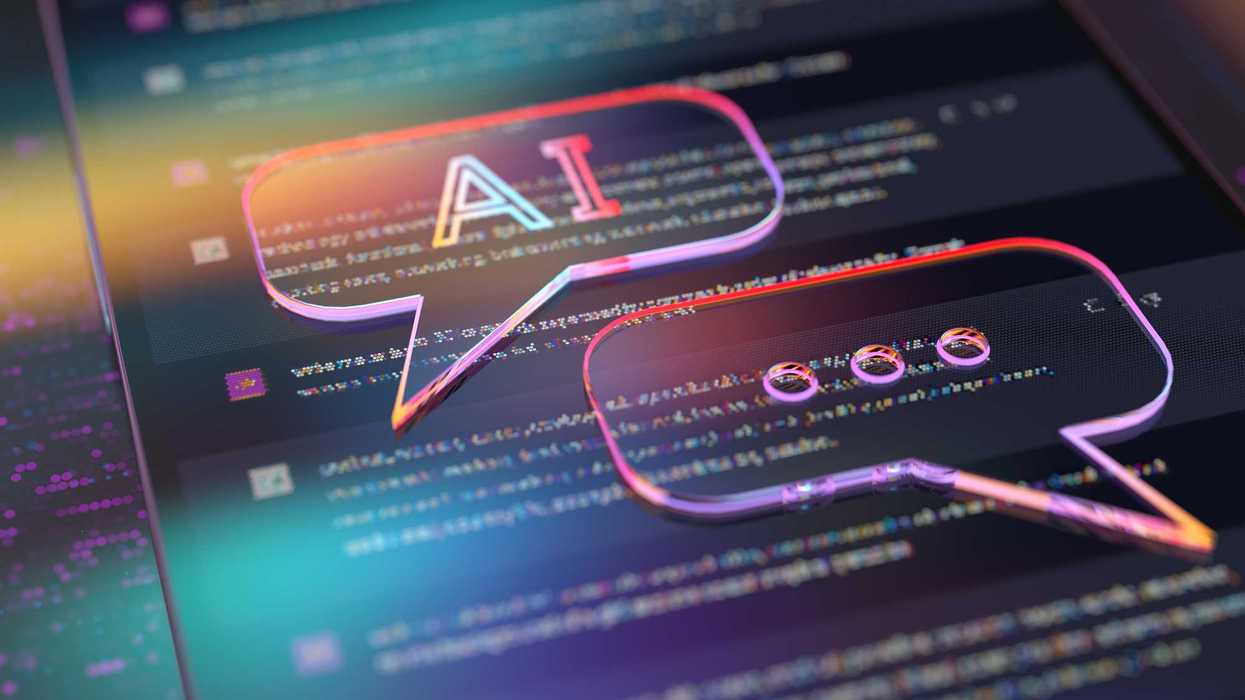
We are entering a strange period in the history of writing and art. For the first time, creators and creatives may have to prove that the work they produced was actually their own, and that a machine did not produce it for them.
The arrival of generative artificial intelligence has unsettled our understanding of authorship. It can produce essays, illustrations, music, photographs, and even entire books in seconds. Its growing presence has raised legitimate questions about originality, copyright, creative labor, and especially disclosure. Readers want to know whether the work they are consuming came from a human being, a machine, or some combination of the two.
But another problem is emerging alongside these debates. What happens when a creator who did not use AI is accused of doing so? What happens when the suspicion itself becomes enough to damage a person’s reputation, livelihood, or opportunity?
I have started calling this feeling AI Suspicion Paranoia: the growing anxiety among writers and other creatives that their genuinely human work might be mistaken for something generated by artificial intelligence. It is the fear of being accused, the pressure to demonstrate one’s authenticity, and the creeping realization that even ordinary writing choices may now be interpreted as evidence of machine involvement.
Suspicion becomes a verdict
A recent controversy involving a Haitian-Canadian novelist offers a particularly troubling illustration.
In September 2026, The New York Times reported that Thélyson Orélien’s novel, It Was Either That Or Die, had been removed from consideration for France’s prestigious Goncourt literary prize after accusations that he had used artificial intelligence to help write it. The book had received favorable reviews, sold more than 54,000 copies in France within weeks, and attracted attention from literary circles. Then came the accusations.
Orélien denied using AI. His French publisher said he had begun writing the novel in 2017 and completed a draft in 2019, years before generative AI tools became commercially available. The controversy began with accusations from a little-followed anonymous social media account, which a columnist at Le Figaro later acknowledged he partly operated. The account’s claims prompted further scrutiny, including AI detection tests and allegations concerning some of Orélien's earlier writings. The Goncourt Academy eventually removed the novel from its shortlist, citing consistent findings suggesting the book was largely AI-generated.
The case is complicated. The Times reported that several detection tools and independent experts found indications of AI involvement, although they did not all express the same degree of certainty. One researcher said, “It’s likely that A.I. was used in this case,” before immediately qualifying that “it’s still hard to say for sure, and we can’t be absolutely certain of the result.” Another researcher said Orélien “has been using A.I. in some way.” His publishers, meanwhile, offered differing responses, and allegations of plagiarism in earlier work further complicated the controversy.
I do not know Orélien, and I am not writing to defend him or to determine whether the allegations hold water. That is not my point. What concerns me is the larger question the controversy raises: what standard of evidence should we require before we publicly question a person’s authorship and credibility?
An accusation that begins on social media can travel remarkably far. A detection result can be circulated, interpreted, and treated as a verdict, even when the people making the accusation acknowledge uncertainty. By the time the creator has a chance to respond, the damage may already be done.
The limits of detecting human authorship
This is not an abstract concern. The International Federation of Reproduction Rights Organizations (IFRRO), in a 2026 study drawing on a survey of 1,993 respondents, 81 percent of whom identified as authors, reported that more than nine in ten respondents believed generative AI had already negatively affected the earnings of authors, publishers, and other rights holders. The harms they identified included unauthorized use of creative works for AI training, market saturation with AI-generated material, lost income and, notably, wrongful accusations of AI use. Some respondents described what they considered a growing “witch hunt” against writers, including accusations based on the use of semicolons, em dashes and even the rule of three.
The survey is not a representative poll of all writers worldwide; IFRRO reached respondents through its membership, with more than two-thirds coming from the United States and the United Kingdom. Still, it offers a striking account of the anxiety being experienced within the creative industries.
And this anxiety is not difficult to understand. AI detection tools are increasingly being treated as instruments for determining authorship, yet their reliability remains a concern.
A 2023 Stanford-led study published in Patterns tested seven AI detectors using essays written by non-native English speakers and American eighth-grade students. The researchers found that detectors incorrectly classified 61.3 percent of the non-native English essays as AI-generated, on average. A particularly troubling possibility is now more pronounced: writing that uses a more limited range of vocabulary or more predictable sentence structures may be more vulnerable to being misclassified.
This matters because writing does not happen under identical linguistic conditions. A writer who learned English as a second or third language may naturally use different sentence structures, vocabulary, and stylistic patterns from a native English speaker. A writer may also have a repetitive or highly structured style. None of these characteristics establishes that a machine wrote the work.
The research on AI detection is still developing. A 2025 study published in Advances in Simulation examined three AI detection tools: ZeroGPT, PhraslyAI, and Grammarly AI Detector. Using 30 academic article introductions, the researchers tested five conditions, ranging from entirely human-written text to entirely AI-generated text, including different degrees of AI editing. All three tools could distinguish among these conditions, but their scores varied considerably, raising questions about their reliability when assessing individual texts. Human assessment was even less reliable: five blinded raters achieved an overall accuracy of just 19%, a result no better than chance. The researchers concluded that AI detection tools may help identify potentially unethical AI use, but should not be relied upon alone. These findings suggest that detection results, particularly when used to question someone's authorship, must be treated with caution.
Meanwhile, AI is already becoming part of the creative process, making authorship even more complicated. Adobe’s 2026 Creators’ Toolkit Report, based on a survey of more than 16,000 creators across eight countries, found that 87 percent of creators who use creative AI said it had accelerated the growth of their business or audience. Seventy-five percent described it as integrated or essential to their workflow. Yet 85 percent also said the final creative decision should always remain with the creator.
These findings complicate the idea that creative work can be neatly divided into two categories: entirely human or entirely machine-made. A writer might use AI to brainstorm, check grammar, translate a passage, or organize research while still exercising the judgment, experience, and creative direction that shapes the final work. An illustrator might use generative tools to explore possibilities before producing an original composition. The extent and significance of AI involvement matter, and creators and audiences have legitimate reasons to discuss them.
But we need to be careful about what we are actually questioning. Using AI as an assistive tool is not automatically the same as passing off an entirely machine-generated work as one’s own. Nor should a particular writing style, by itself, be treated as proof of AI use.
Even the question of disclosure remains unsettled. In a global survey by Oxford University Press of more than 2,600 respondents, 74 percent were unclear about what kinds of AI use they should disclose. Forty-four percent worried that disclosure would negatively affect how others perceived their work. This suggests the uncertainty isn't confined to novelists or visual artists. Even within academic publishing, where disclosure rules are increasingly being formalized, people are still negotiating what counts as meaningful AI involvement and what needs to be declared.
Second-guessing my own writing
This is where AI suspicion paranoia becomes personal for me.
I have caught myself changing the way I write because I worry that someone might mistake my writing for AI-generated. I have become unusually conscious of my use of em dashes, sometimes removing them from a draft simply because they have become associated with AI writing.
I also avoid the familiar construction “It is X, not Y,” even when it is the most natural way to express an idea. I hesitate to enumerate three things in a sentence, even though the rule of three is an ordinary rhetorical device. I sometimes feel compelled to insert a personal anecdote or experience to show that a human being is behind the words being written and read.
Worse, I have even wondered whether I should deliberately leave some grammatical imperfections in my writing. A sentence that is too clean, or a paragraph that is too organized, or an argument that follows a clear structure can suddenly feel suspicious. I find myself thinking about how my writing might be perceived by an AI detector or by someone who has learned to recognize supposed AI writing patterns. Even as I write this on Google Docs, the automatic detector here has already set out its judgment: “This section resembles AI text. This section and 1 other in your document are highly likely AI-generated,” the built-in robot says.
This is absurd when you think about it. These were ordinary writing choices long before ChatGPT existed. Em dashes did not become suspicious when generative AI arrived. Neither did carefully structured sentences, grammatical correctness or the use of rhetorical patterns. Yet writers are increasingly conscious of how these choices might be interpreted.
I am particularly concerned about what this means for non-native English speakers and writers whose styles do not conform to what others consider natural or authentic. If a detector is more likely to flag predictable vocabulary or sentence structures, then people who write in a second language may face a disproportionate burden of suspicion. A writer should not have to make their English less polished or their ideas less coherent just to avoid being mistaken for a machine.
Authenticity, now a civic question?
There is also a broader consequence here that goes beyond creative expression. AI suspicion paranoia can affect how we judge information and one another.
Public trust depends, in part, on our ability to assess the credibility of what we read, see, and hear. Generative AI makes the task more difficult. But if we respond by treating every polished essay as potentially artificial, we risk creating a culture in which suspicion becomes the default. The question shifts from whether a work is good, original, and even truthful, to whether its creator can prove that it is human.
Recent consumer research suggests that this anxiety about authenticity is already shaping public attitudes, finding that 69 percent would trust an image or video less if it were labeled AI-generated, even when there was no evidence that it was false or misleading. This suggests that, increasingly, the mere presence of an AI label can change how people assess and perceive content, regardless of whether that content is deceptive.
This raises a legitimate civic concern. In democratic societies, people routinely judge the credibility of public statements, journalism, research, and creative expression. Those judgments matter, but they should be based on evidence, context, and fair procedures, not on the speed with which an accusation spreads or the authority people assign to a technological score.
What happens when accusation becomes more consequential than verification? Who is responsible when an automated assessment is wrong? What opportunity does a creator have to challenge a finding before losing a professional opportunity? And how do we prevent a culture of suspicion from discouraging people from participating in public discourse, especially those whose voices are already more vulnerable to being questioned or dismissed?
These questions beg for conversation. And the Orélien controversy shows that these questions are not merely for publishers or literary juries. They also concern how we distribute credibility and reputational power in an increasingly automated information environment. Social media users can initiate accusations; detection tools can lend them an appearance of technical authority. And as we’ve seen, institutions can act on them. Yet the person whose work is being judged may have very little control over how the allegation develops.
The burden of proving that we are human
None of this means that we should abandon scrutiny. Writers and artists, first and foremost, should be transparent about significant AI involvement, and publishers, institutions, and audiences have every reason to develop clearer standards for authorship and disclosure. AI-generated work should not be passed off as entirely human-made when that distinction is material to the reader or the transaction. Equally, creators should not be deprived of the opportunity to explain their process and respond to allegations.
The answer cannot be to demand that every writer append a declaration saying, “No AI was used in the creation of this work.” Yet even I have considered doing exactly that. I have even added such disclaimers to some of my own essays posted on social media. It reminds me of a product labeled “100 percent grass-fed” because consumers want assurance about what they are buying. Perhaps we are approaching a time when human creators will feel compelled to certify their own humanity.
But such a declaration would be difficult to verify, and it would place the burden on the creator to prove a negative. It would even raise a more fundamental question: why should a writer have to establish their innocence before their work can be taken seriously?
We are still learning how to live with generative AI. Its use in creative work will continue to evolve, and the standards of authorship, disclosure, and ownership will have to evolve with it. But we should not let our uncertainty about the technology become an excuse to abandon fairness in how we judge people and participate in public discourse.
I do not want to live in a world where writers have to make their work look less human to convince others that it was made by a human. I do not want artists to second-guess their own style, or student researchers to fear that a sentence they wrote independently might become grounds for an accusation. And I certainly do not want a detection score, however sophisticated it may appear, to become a substitute for careful judgment.
Val Amiel Vestil is a Graduate student at the University of Michigan and fall fellow with The Fulcrum.





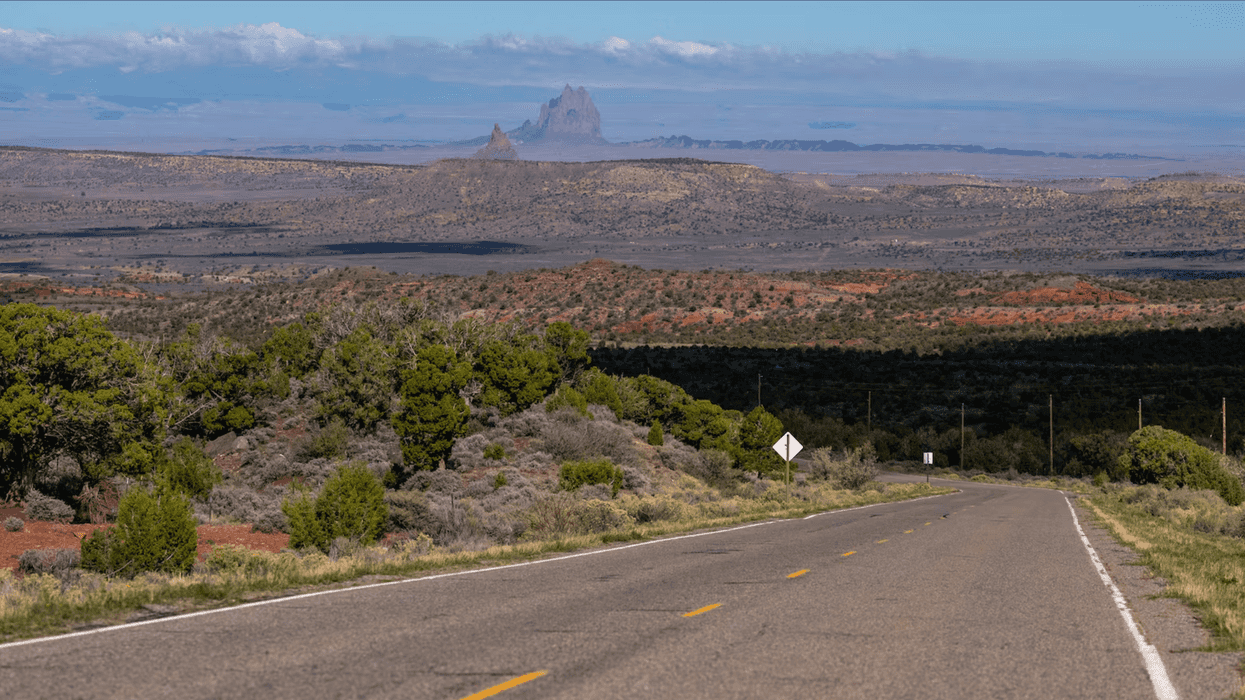


 Window Rock, Ariz., sits below cloudy skies on Wednesday, Oct. 14, 2026. The town is the seat of government for the Navajo Nation. Officials there have been working with Apache County to push for better elections for the reservation’s voters. (Ash Ponders for Votebeat)