
For many people, the current anxiety about artificial intelligence feels overblown. They say, “We’ve been here before.” Every generation has its technological scare story. In the early days of automation, factories threatened jobs. Television was supposed to rot our brains. The internet was going to end serious thinking. Kurt Vonnegut’s Player Piano, published in 1952, imagined a world run by machines and technocrats, leaving ordinary humans purposeless and sidelined. We survived all of that.
So when people today warn that AI is different — that it poses risks to democracy, work, truth, our ability to make informed and independent choices — it’s reasonable to ask: Why should I care?
The answer is not that AI is evil, or has its own agenda, or is plotting against us. The real concern is quieter and more subtle. AI changes how judgments are formed, and it does so at a scale and speed no previous technology has reached.
This Isn’t About Robots — It’s About Judgment
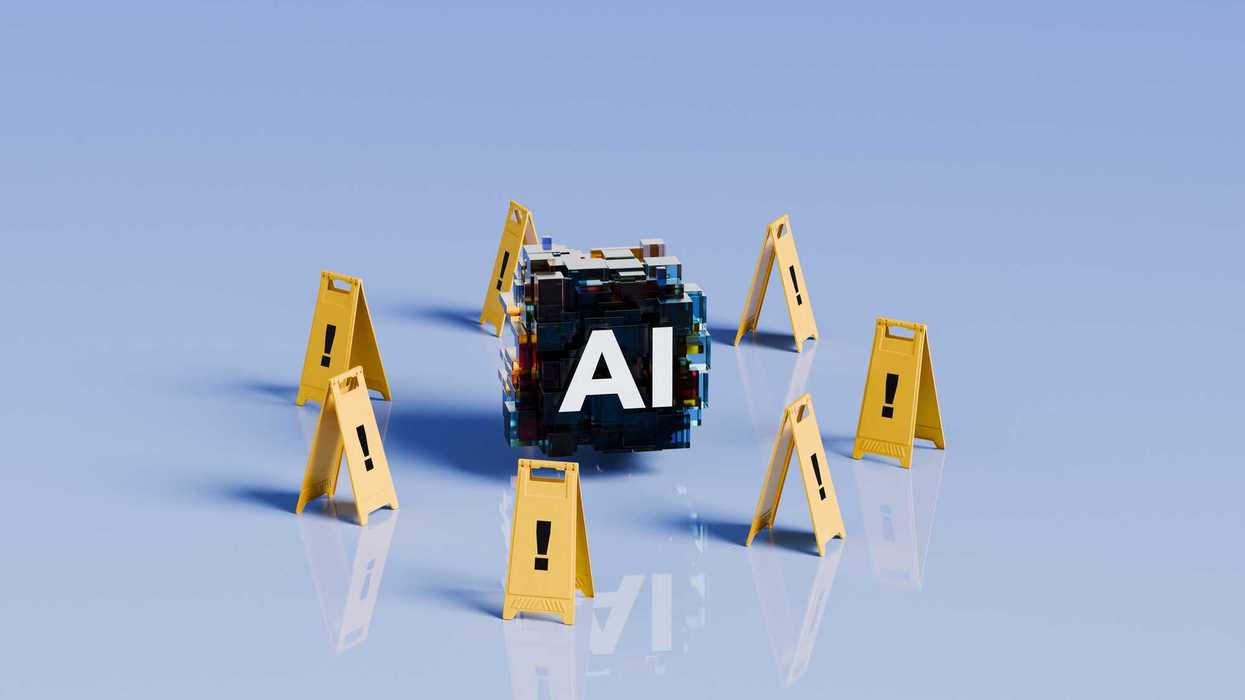
Most fears about AI focus on dramatic outcomes: mass unemployment, autonomous weapons, runaway systems. Those are serious issues, but they miss a more immediate shift already underway.
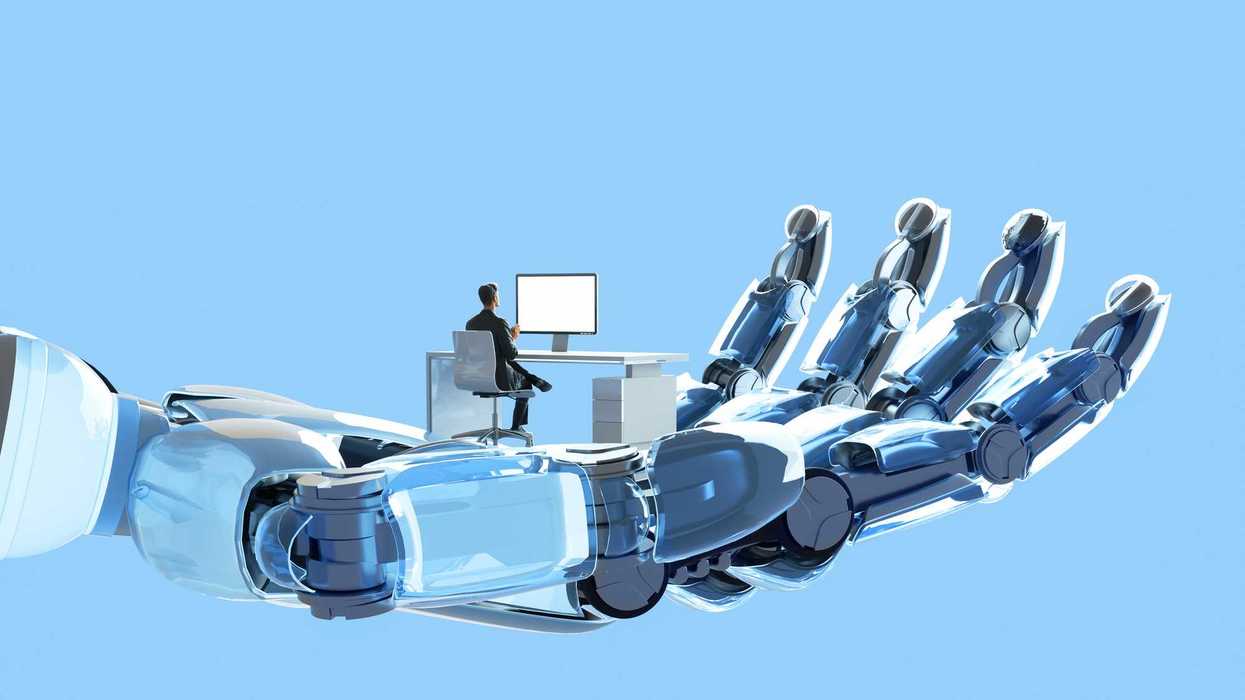
AI doesn’t replace human judgment by force. It replaces it by being effective, fast, confident, and coherent.
To see why, it helps to look at how we’ve traditionally answered questions.
Years ago, if you wanted to understand a topic, you went to a library. You found a few relevant books, read them carefully, compared arguments, evaluated sources, and slowly formed your own understanding. The process was time-consuming, but judgment — deciding what mattered and what made sense — was entirely yours.
Then computers and search engines arrived. With Google, you could instantly find thousands of related sources. But you still had to choose which ones to read, decide what was credible, assemble the facts, and form your own conclusions. The machine found information, but humans still did the thinking.
Now enter AI.
You ask a question once. The system reviews thousands — or millions — of sources, past discussions, data points, and arguments, and then almost instantly delivers a coherent answer that often makes remarkable sense. You can accept it, refine it, or go deeper, but the first draft of your understanding — your judgment — is no longer yours. It arrives already assembled.
What Do We Mean by “Judgment”?
Judgment isn’t just opinion or instinct. It’s the cognitive process of weighing evidence, context, experience, uncertainty, and consequences in order to decide what to believe or what to do.
Judgment is demanding. It requires grappling with uncertainty, weighing tradeoffs, and accepting responsibility. It’s also where accountability lives: when things go wrong, some person or body owns the decision.
AI doesn’t eliminate this process. It changes when and how it happens.
Instead of forming judgments from raw material, humans increasingly review judgments that have already been synthesized — often fluently, confidently, and persuasively.
That shift matters.
Why AI Feels So Convincing
AI systems feel “smart” not because they think like humans, but because they can absorb and organize enormous amounts of information — far more than any individual could manage — and present it clearly and quickly.
Ask about a legal issue, and the system draws on statutes, cases, patterns, and prior interpretations. Ask about policy, and it references history, comparative examples, and arguments on all sides. The result is often impressively accurate, or at least plausibly so.
There’s nothing mystical about this. But the effect on humans is powerful.
When an answer is:
- well-structured
- context-aware
- articulate
- immediate
…it feels authoritative. It reduces uncertainty. It saves effort. It saves time.
And that creates a quiet temptation: Why wouldn’t I trust this?
Conversation Changes Everything
What makes this shift especially powerful is that AI can be engaged the way we engage other people.
Search engines require you to think like a machine — keywords, fragments, trial and error. AI lets you think like yourself. Like you're talking to a friend. You can explain your situation, add nuance, express uncertainty, introduce complications, or explore alternate ideas. The system understands what you’re saying, no matter how complex, and follows the thread.
For the first time, a machine doesn’t just retrieve information — it participates in the process of reasoning. It talks back, suggests, and discusses with you.
That matters because humans trust explanations that feel conversational and attentive. We trust fluent explanations. We are influenced by tone, coherence, and responsiveness. When something engages us conversationally, it doesn’t feel like an external tool. It feels like an extension of our own thinking or input from a friend.
At that point, the line between assistance and influence becomes thin.
How Judgment Gradually Shifts
This is not a sudden takeover. It’s a progression.
First, AI provides information.
Then it provides analysis.
Then it offers recommendations.
Eventually, people defer — not because they are forced to, but because ignoring the system starts to feel inefficient or even irresponsible.
Judgment doesn’t disappear. It atrophies.
And when something goes wrong, accountability becomes blurred:
- The model recommended it.
- The data supported it.
- The system said this was the best option.
That’s not tyranny. It’s drift. No one takes control from us; we slowly hand it over because it works.
Why Scale Makes This a Public Issue
A single biased person can influence dozens.
A biased book can influence thousands.
An AI system can influence millions — instantly, continuously, and adaptively.
Now imagine not one AI system, but thousands. Built by different companies, trained by different people, optimized for different goals — profit, engagement, persuasion, efficiency, ideology.
Some will be careful and transparent. Some will not. Some will be neutral. Some will be highly motivated.
Two people could ask the same question and receive different facts, different framing, and different conclusions — all delivered with confidence.
At that point, disagreement isn’t just about opinion. It’s about perceived reality itself — what facts people think exist and which ones they trust.
Societies and individuals are stressed under those conditions.
The Global Dimension We’re Ignoring
We must also understand that AI doesn’t respect borders. A system trained in one country can shape opinions, decisions, markets, and political discourse far beyond where it was built.
For other global risks — nuclear weapons, climate change, pandemics — we eventually recognized a basic truth: if the risk is global, oversight must be global.
While our efforts with these global risks have been imperfect, the essential international coordination that allows institutions that monitor risks, share information, and establish norms has caused us to pause, reflect, and develop strategies, guidance, and cooperative efforts.
With AI, that coordination barely exists.
Private companies largely mark their own homework. Governments are regulating unevenly. And a competitive race dynamic discourages restraint, transparency, and caution. No country wants to fall behind. No company wants to slow down. The result is fragmentation at exactly the moment shared standards matter most.
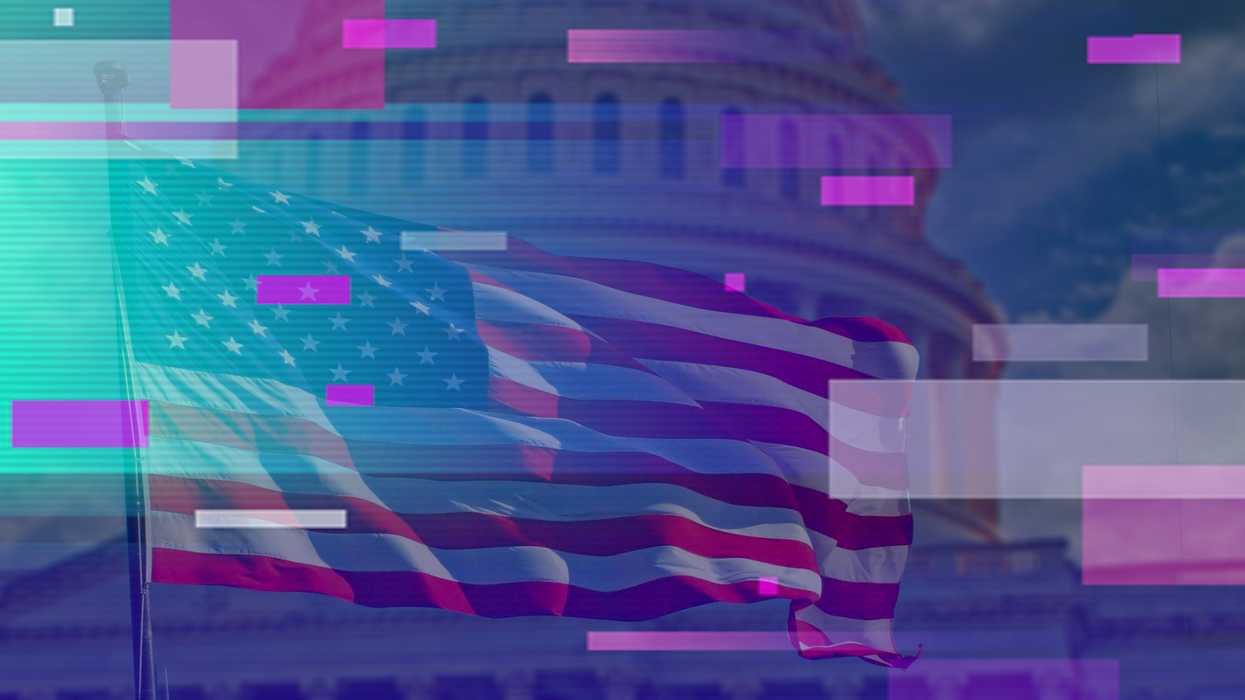
This is especially dangerous for open societies. Democracies depend on shared facts, public trust, and slow, deliberative institutions — precisely the things AI systems place under the greatest pressure. When judgment is accelerated, personalized, and scaled globally without common rules, the foundations of democratic consent begin to erode.
Why Markets Alone Aren’t Enough
Markets are excellent at optimizing for speed, convenience, and profit. They are not designed to optimize for shared truth, civic trust, or democratic stability.
Left entirely to competition, the incentive is clear: build systems that keep people engaged, tell them what they want to hear, and do it convincingly.
That doesn’t require bad intentions. It only requires misaligned incentives.
History shows that when powerful technologies reshape how people understand the world, coordination matters.
So, Why Should You Care?
Not because AI will suddenly take control.
Not because humans will become irrelevant.
But because we may be slowly delegating the first draft of our understanding to systems we did not collectively design, govern, or agree upon.
AI isn’t dangerous because it’s evil.
It’s dangerous because it’s so convenient and fast.
And once we notice how much judgment we’ve handed over, it may already be beyond our control.
And all of this is unfolding not within shared global rules or institutions, but through a fragmented international race involving governments, companies, and systems that operate far beyond any single country’s control.
Jeff Dauphin is currently retired - Blogging on the "Underpinnings of a Broken Government." Founded and ran two environmental information & newsletter businesses for 36 years. Facilitated enactment of major environmental legislation in Michigan in the 70s. Community planning and engineering. BSCE Michigan Technological University.