

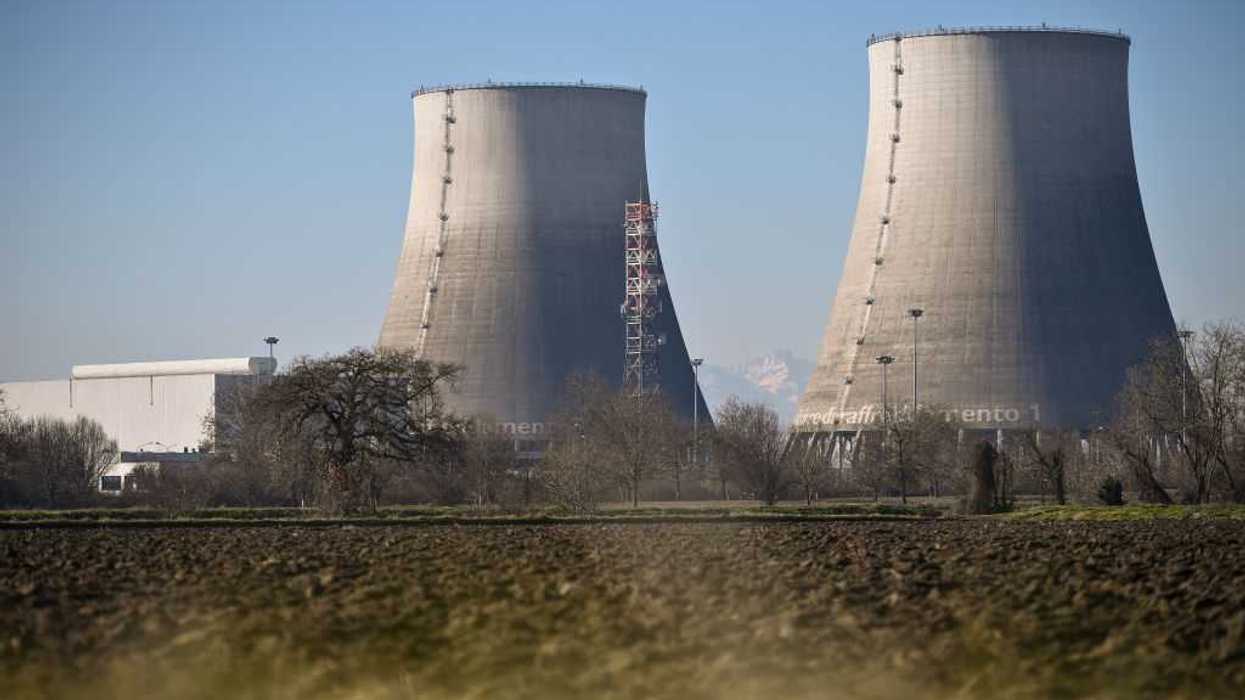

With the rise of artificial intelligence and a rapidly growing need for data centers, the U.S. is looking to exponentially increase its domestic energy production. One potential route is through nuclear energy—a form of clean energy that comes from splitting atoms (fission) or joining them together (fusion). Nuclear energy generates energy around the clock, making it one of the most reliable forms of clean energy. However, the U.S. has seen a decrease in nuclear energy production over the past 60 years; despite receiving 64 percent of Americans’ support in 2024, the development of nuclear energy projects has become increasingly expensive and time-consuming. Conversely, nuclear energy has achieved significant success in countries like France and China, who have heavily invested in the technology.
In the U.S., nuclear plants represent less than one percent of power stations. Despite only having 94 of them, American nuclear power plants produce nearly 20 percent of all the country’s electricity. Nuclear reactors generate enough electricity to power over 70 million homes a year, which is equivalent to about 18 percent of the electricity grid. Furthermore, its ability to withstand extreme weather conditions is vital to its longevity in the face of rising climate change-related weather events. However, certain concerns remain regarding the history of nuclear accidents, the multi-billion dollar cost of nuclear power plants, and how long they take to build.
U.S. Nuclear Energy Growth: A Comparison to France
Facing rising oil prices in the 1970s, France invested in nuclear energy to secure energy independence from other nations. A consolidated structure of policy and government actions allowed France to successfully invest and implement nuclear energy development. By relying on a domestic supply chain and simultaneously building multiple reactors of the same design, France became the lead exporter of energy in the EU, producing 70 percent of its clean energy through nuclear power. More recently, France has invested in nuclear power plants in the United Kingdom and Belgium, cementing their energy dominance across the EU.
The Energy Income Partners suggest the U.S. can learn from France to improve its nuclear energy capacity. Historically, France’s nuclear energy program was made by a single state-owned utility company: Electricité de France. By standardizing nuclear energy design and manufacturing, France lowered the cost of nuclear development. On the contrary, the U.S. spends significantly more and produces less efficiently because it splits its nuclear development into multiple companies with many different designs and manufacturers. Thus, the National Bureau of Economic Research recommended the U.S. deregulate and consolidate their operations—not only would this make production more efficient, but it would lead to greater carbon reductions than wind and solar combined.
U.S. Nuclear Energy Growth: A Comparison to China
The U.S. began building nuclear reactors in 1958, and still generates the highest percentage of nuclear power worldwide—yet it has drastically slowed its construction of power plants, building only three nuclear reactors in the past 13 years. Meanwhile, China built 13 in that same amount of time. Currently, China is building 27 nuclear reactors with average construction timelines of about seven years—far faster than any other country.
Additionally, unlike the U.S., the Chinese nuclear power industry has benefited from sustained state support. While the U.S. faces partisan politics and rotating leadership, Chinese president Xi Jinping and his party have been in office for over a decade and have emphasized nuclear energy growth. China has local strategies, strong centralized government policies, a booming domestic supply chain, and a skilled workforce allowing them to dominate modern nuclear energy development.
Unlike China, the West has seen a lull in nuclear power since the 1990s, driven by limited public support and escalating costs. The Roosevelt Institute found a strong correlation between rising materials and input content, and falling construction costs. China, unlike the U.S., has reduced much of its nuclear expenses by replacing foreign equipment with domestic products. The Roosevelt Institute therefore recommended that the U.S. streamline its regulatory frameworks and pursue domestic production of goods.
Recent Developments in U.S. Nuclear Policy
The U.S. has shut down eight reactors in the past decade, building only three new ones. The most recent nuclear power plants constructed were Plant Vogtle Unit 3 & 4 in 2023 and Watts Bar Unit 2 in 2016—the first constructed in over 30 years. Even then, Watts Bar Unit 2 began construction in 1973 but was suspended in 1985, and did not resume until 2007, highlighting U.S. inefficiency.
The 1979 partial reactor meltdown of Pennsylvania’s Three Mile Island nuclear power plant—the worst nuclear accident in U.S. history—led to the development of the Institute of Nuclear Power Operations, which implemented an intensive safety regulation program. Nevertheless, this incident, alongside the Chernobyl disaster seven years later, intensified public opposition to nuclear energy across the nation.
While this skepticism persisted for decades, support for nuclear energy began increasing steadily in 1996, gaining 72 percent of Americans’ support in 2025. Despite growing public approval, nuclear development faced challenges; frequent design changes and rework slowed nuclear development, while increased labor demands and reduced productivity exacerbated delays. Additionally, reliance on custom-built reactors drove material costs up, turning nuclear power plants into lengthy, expensive projects.
With widespread bipartisan support for nuclear energy in the United States, policy support for nuclear energy has begun to strengthen. Most recently, the Trump Administration endorsed it by claiming that “President Trump is providing a path forward for nuclear innovation.” At an energy and AI summit at Carnegie Mellon University, Commerce Secretary Howard Lutnick stated, “We need to embrace nuclear…because we have the power to do it—and if we don’t do it, we’re fools.”
To further this desire for investment in nuclear energy, the White House established the Reactor Pilot Program (EO 14301), with the goal of accelerating nuclear energy development by creating 10 nuclear reactor designs. The White House wants three new small-scale reactors running by summer of 2026 and a nuclear reactor on a U.S. military base. Strong bipartisan support at the federal level is essential to maintain momentum in building nuclear infrastructure.
Future Outlook
To increase nuclear production and match growing energy demands, advocates say, the U.S. can take valuable lessons from French and Chinese nuclear development strategies. Both nations have developed an extensive nuclear power sector through centralized planning, standardized designs, and strong domestic supply chains. Meanwhile, the U.S. has faced delays from high costs, complex regulations, and inconsistent approaches despite its technical expertise. To increase nuclear energy production, the U.S. could build a stronger domestic supply chain and standardize nuclear reactor designs. The rise of Artificial Intelligence and data centers is causing a massive demand for energy across the U.S., signaling increased need for diversified energy sources. It remains to be seen whether nuclear energy will rise to fill this gap.
Powering the Future: Comparing U.S. Nuclear Energy Growth to French and Chinese Nuclear Successes was originally published by The Alliance for Civic Engagement and is republished with permission.