





Strengthening American manufacturing is a goal that Americans support across political persuasions and demographic groups, from the public to policymakers.
But, as with other topics, partisan and other interests propagate a stale, limited understanding of what is possible. “Either/or” thinking clouds the ability to weigh policy options that impact industries and derail debates. Witness what many present as a clash between a critical industry, such as plastic production, and the worthy goal of environmental protection.
Contrary to some perceptions, American manufacturing’s role in the economy has been an ongoing strength, at least in terms of output. The National Association of Manufacturers (NAM) notes that manufacturing alone employs more than 13 million Americans and generates more than $3 trillion annually for the domestic economy.
The innovations and resilience of modern manufacturers have enabled our country’s dominance on the global stage. Unfortunately, President Trump’s tariff regime has caused some setbacks—including the loss of American jobs every month since the proclaimed ‘liberation day’ announcements
The elimination of overly burdensome regulatory restrictions has been one benefit for American businesses overall, including manufacturers.
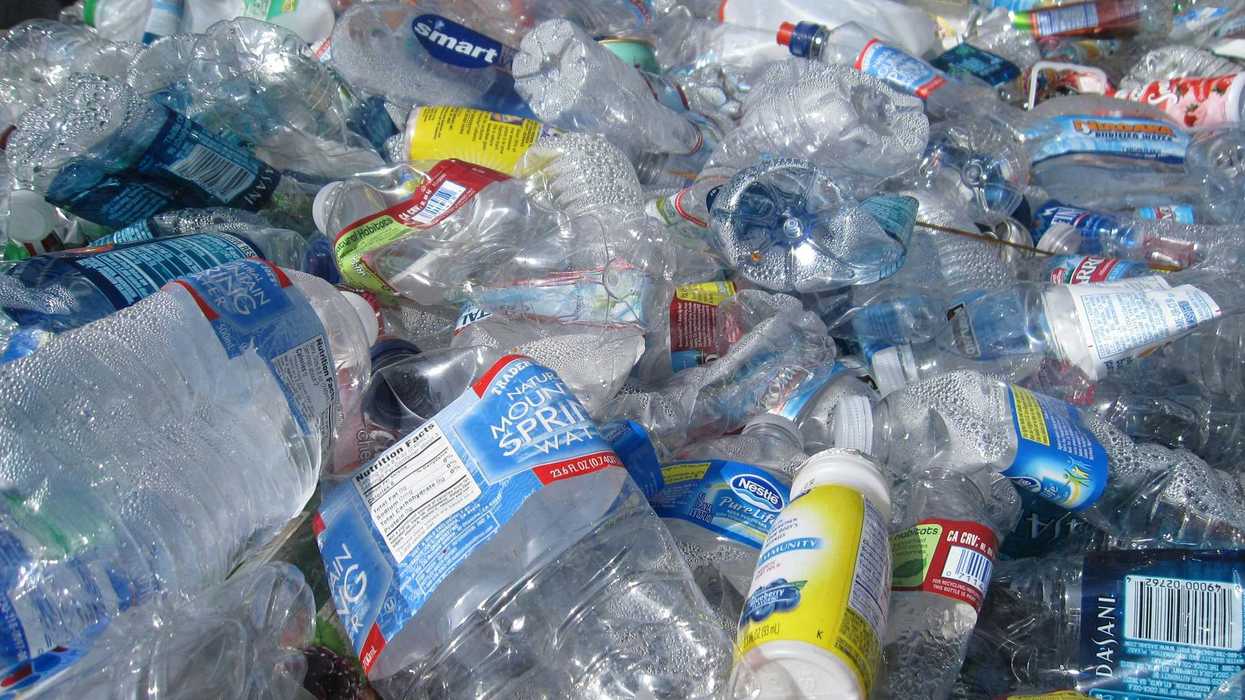
Yet to fully reap the benefits, America needs more of one critical manufacturing input: plastic. This may surprise many, given that plastic is typically perceived as a manufacturing byproduct, and because of increasing grievances from some circles aimed at plastic’s very existence. Categorically demonizing plastic has undoubtedly been on the rise.
Thanks to its versatility, affordability, durability, and lightweight nature, plastic has established itself as the anchor of domestic manufacturing. According to industry estimates, more than a quarter of American manufacturing output comes from sectors in which plastic accounts for more than 5 percent of material inputs.
And plastic is integral not just to manufacturing as an industry itself but to all the industries that utilize products made with it: healthcare, biotechnology, aerospace engineering, food storage, and transportation are but a few. Downstream industries support almost five million onshore jobs, paying out nearly $400 billion in wages annually. With plastic so interwoven across sectors, demand will continue to rise.
Of course, there are challenges and important questions about the proper and responsible use of plastics. Americans largely want to be responsible environmental stewards. A constructive, forward-thinking approach would be for Congress to make policy changes that meet the growing demand in a sustainable way.
Thankfully, there are a couple of common-sense reforms that policymakers can take to increase domestic plastic production and fully unleash American manufacturing innovation.
First, lawmakers should modernize outdated recycling regulations. They should acknowledge new and innovative forms of recycling that past rules could not anticipate, provide greater regulatory certainty, and yield better results. This is one of the stated goals of the recently introduced Recycling Technology Innovation Act.
Advanced recycling is a modern technology that chemically breaks down hard-to-recycle plastics at the molecular level, enabling them to be continually reused. The process transforms used plastics into high-quality food- and pharmaceutical-grade plastics, rather than generating waste—a process that is much closer to manufacturing regulations than to waste disposal.
This process would sound like science fiction not long ago. Harnessing the technology at a commercial scale stands to yield tremendous benefits: more material being reused and recycled, which is better for the environment, and moving us toward a more circular economy.
Second, Congress should pass prudent federal legislation that would establish national standards for plastic recycling. For far too long, American recyclers have worked under a patchwork of often contradictory sets of state rules that have created confusion and made it difficult for manufacturers to properly source recycled plastic for reuse.
Having national standards would clarify definitions of what constitutes recycling and recycled content, and expand recycling infrastructure in American communities.
A recent analysis from the American Chemistry Council and America’s Plastics Makers found that if just 50% of plastics in the municipal solid waste stream were redirected from landfills to recycling facilities, the U.S. could gain an estimated 173,200 jobs, $12.8 billion in annual payroll, and $48.7 billion in additional annual economic output.
The role of plastic in domestic manufacturing and the economy is nearly impossible to unravel. But if policymakers tackle the challenges in a considered way, streamlining and modernizing the regulations surrounding plastic recycling, there is tremendous upside.
A framework that allows American manufacturing and recycling to thrive together and can help continue American manufacturing strength while also advancing a more circular and sustainable economy.
Mario H. Lopez is the President of the Hispanic Leadership Fund, a public policy advocacy organization that promotes liberty, opportunity, and prosperity for all.














The President Invited Iran to Bomb My Home