




We love space, but not as an abstraction. For my twin sons, it is a tradition. Their birthday themes have evolved from “Two the Moon” for their second birthday, featured on NASA.gov, to “From Space to the Farm,” with the boys in those iconic orange astronaut suits, standing in a cornfield. In the year of Inspiration4, we went all in with a full SpaceX mission dress-up. Not long after, one of them picked up the Pioneers and Innovators: Women of Color brochure from NASA Science that I brought home from a meeting at NASA’s Marshall Space Flight Center. He pointed at the brochure and exclaimed, “Mommy!” He truly thought I was in it. With that certainty, he told his friends that his mom had been to Mars. A reasonable conclusion for a four-year-old, considering the NASA swag at home, the launch party watching, and that brochure in his hands, it was a perfect conclusion.
The stunning new photos released after the Artemis voyage have refocused the public’s awe on our journey to the Moon. Yet, this year, I didn't watch Artemis live.
After years of leading NASA-supported work, I am rarely detached from a milestone like this. My career is built on turning satellite data into decisions, especially for agriculture and food security. Through NASA Harvest and SERVIR, the NASA-USAID partnership, I have helped build multi-award-winning Earth-observation tools for crop monitoring and early warning, work NASA has highlighted for advancing international food security. And yet, when Artemis launched, I did not tune in live.
Artemis captured the attention of space nerds and the public for good reason. A launch is the rare moment when years of planning become visible. But the public spotlight tends to stop at the flame and the roar. The less visible story is everything that must be sustained between launches, including the Earth-observation programs that turn space-based measurements into tools people can use on the ground.
To be clear, I don't believe Artemis is wrong. I resist the framing that forces a choice between the moon and the Earth. The science behind sending humans to lunar orbit, mapping Mars, and tracking a drought in the Sahel shares the same physics. Satellites, navigation systems, and water-monitoring tools often stem from the same curiosity. Space exploration has given us extraordinary things we use every day, from the materials in athletic footwear to technologies now on display in science museums around the world. These missions are not in competition.
But without a healthy Earth, none of it matters. Artemis II astronaut Victor Glover captured this beautifully in his viral message. From deep space, he said: "You are special, in all this emptiness. This is a whole bunch of nothing, this thing we call the universe. You have this oasis, this beautiful place that we get to exist together."
He's right. And that is exactly why it stings that the missions dedicated to understanding and protecting that oasis are the ones on the chopping block.
The White House's fiscal year 2027 budget proposal requests $18.8 billion for NASA, a 23% reduction from the final FY2026 appropriations bill, marking the second consecutive year of steep proposed cuts. The breakdown reveals the real priorities: science programs that fund Earth-observing missions would be cut by $3.4 billion, nearly 47%. Exploration programs, meaning Artemis, would increase by nearly 10%, to $8.5 billion.
The Office of Management and Budget frames this as eliminating "over 40 low-priority missions" to make NASA "more focused and fiscally responsible." The examples include Mars Sample Return, a genuinely massive and costly undertaking. Another is SERVIR, a program that delivered Earth science data to support research, including work on food security in developing regions, at a cost of just $10 million a year. That SERVIR is treated as low priority is a clear signal: making space data useful for life on Earth is not considered important work. The proposal also targets the Earth Systems Explorers program, which develops new Earth science missions, cutting it from two recently selected missions to one. It cuts $1.1 billion from International Space Station operations. It eliminates NASA's STEM Engagement programs.
Congress pushed back with rare bipartisan force by rejecting budget cuts, and rightly so. But budgets follow attention, and most people only see NASA when a rocket lifts off. We need to widen the picture.
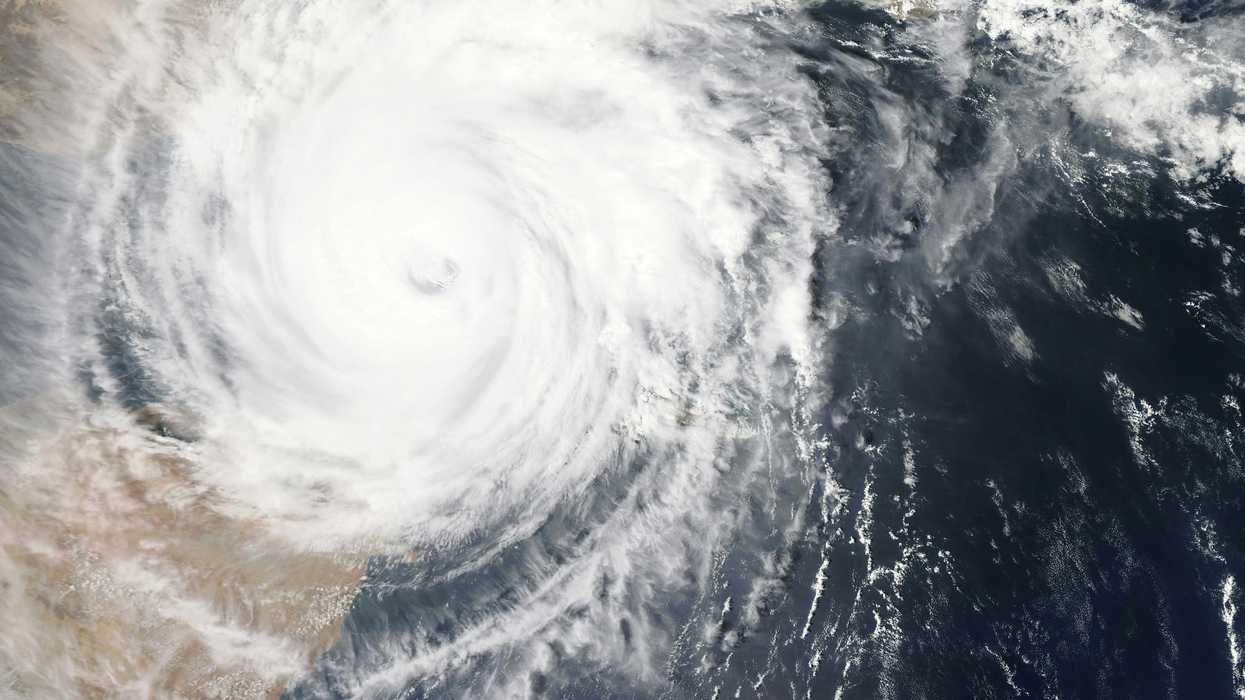
Earth observation missions are not “nice to have.” They are the backbone of how we track what is changing on our planet, and how fast. They help communities, including yours, and countries anticipate drought and food shortages, monitor floods and wildfire risk, track water availability, measure crop conditions, and improve disaster response and recovery. They also provide long, consistent records that make it possible to separate signal from noise, which is essential for planning, insurance, infrastructure, and public safety.
Look up where Earth-observation data touches your life. Search your county or state plus “flood map,” “drought monitor,” “wildfire smoke,” “crop conditions,” or “water levels,” and notice how often satellites sit behind the information you rely on. Second, make Earth observation visible. Share what you found with one concrete local example and name what is at stake, such as safer evacuations, smarter water planning, or more resilient farms. When more people understand that NASA is also a daily public service, not just a launch-day spectacle, it becomes much harder to cut.
But I also want them to understand that some of the most important work NASA does will never make a highlight reel, that it lives quietly in the data that helped a farmer in Kansas or Kenya plan a planting season, or in the flood model that gave a coastal city six more hours to evacuate.
What I felt watching the Artemis coverage wasn't anger or cynicism. It was a quiet grief, the gap between what we are capable of and what we choose to do with it.
- YouTube www.youtube.com
Catherine Nakalembe is a professor of Translational GeoAI, which bridges Geographical Sciences with Artificial Intelligence to address real-world problems, at the University of Maryland, and a Public Voices Fellow on Technology in the Public Interest of The OpEd Project.











The President Invited Iran to Bomb My Home