




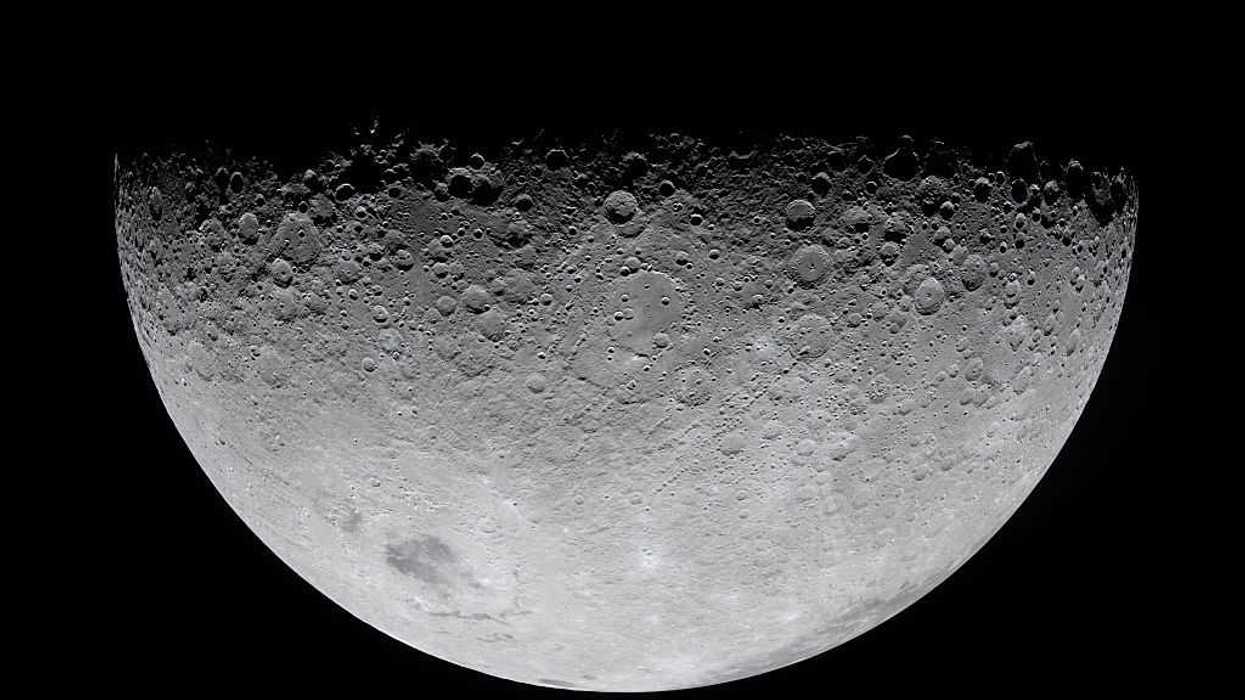

Just last week, four astronauts left Earth’s orbit, journeyed around the moon, and returned safely home. In the midst of new lows for humanity–like someone threatening to destroy an entire civilization when they have the resources to actually do it–the human race is simultaneously reaching new heights. It is marvelous, miraculous, and a milestone for all humans to celebrate. It is almost unthinkable, however, that at this moment, as the world rallies behind NASA in amazement, Trump is dismantling many of its programs, threatening to slash its budget, and generally working to kill your “moon joy.” Houston, we have a problem.
Artemis II hit close to home for me. The astronauts splashed down off the coast of San Diego, where I was stationed as a Navy pilot for the last eight years. More astronauts come from Naval aviation than anywhere else, and I am proud to wear the same wings of gold as two members of the crew. Following multiple deployments as a pilot, I certified aviation departments of surface vessels and helped deploy tactical air control squadrons aboard them; one of those vessels is where the astronauts landed after getting scooped out of the ocean by H-60 helicopters, the aircraft I flew during my service. All to say: I know intimately the preparation, technical rigor, talent, and coordination required for even relatively insignificant pieces of a mission of astronomical proportions. If we want to shoot for the stars, then we'd better recommit ourselves to what gets us there: science and DEI.
You simply do not get to the moon without investing heavily in scientific research and education. During the Cold War, the space race became a national priority. 4.4% of the federal budget was allocated to NASA in 1966–a tab even larger than what had been put towards developing the atomic bomb. The U.S. government also quickly passed the National Defense Education Act, redesigned national curricula, and pumped $1 billion into schools. Only twelve years later, we landed on the moon. Even if exploring outerspace was a financial black hole, it might still be worth pursuing, but the return on investment for NASA science is actually stellar–every dollar spent on NASA adds $10 to the economy, often through technologies that help us every day, from air purifiers to cordless power tools to GPS. Nevertheless, funding for NASA today accounts for only .3% of the federal budget, and Trump’s proposal to the 2027 Budget would cut 23% of NASA’s overall funding and 47% of its science division, risking more than 50 missions. The Planetary Society calls it “an extinction-level event for science.”
Diversity, equity, and inclusion (DEI) has been a North Star for NASA. For decades, the agency has been a leader in DEI, even playing a role in the fight for civil rights. Kennedy worked to create more inclusive job opportunities at NASA in advance of the Apollo lunar program; many experts maintain that these inclusive programs have been instrumental in attracting a talented and diverse workforce. Diversifying has helped NASA achieve an unprecedented amount of skill and talent in its workforce. Plus, diverse teams perform better. NASA’s Unity Campaign was launched with a goal to “rise above…divisiveness,” and ensure employees felt “a genuine sense of belonging,” “empowered to be authentic,” and “safe and respected,” improving morale, cohesiveness, and motivation. When coworkers bond, their differences cease to be feared and misunderstood but are instead recognized as crucial to the mission. It's not rocket science.
The Artemis II astronauts know they stand on the shoulders of giants, from Katherine Johnson, Guion Bluford, and Mae Jemison to Charlie Blackwell-Thompson and Vanessa Wyche. Everyone on that list is Black, a woman, or both, yet the Trump regime seems set on re-segregating NASA. When two-thirds of all astronauts come from the military, the fact that Secretary of War Hegseth is aggressively purging the forces of anything even remotely hinting at DEI affects NASA downstream. Trump’s appointee for Administrator, appointed in defiance of a long-term custom that the job passes to the top civil servant in the agency, was Janet Petro. When Trump’s Executive Order against DEI came out, and NASA closed its diversity offices, she emailed the staff to pressure them to report anyone trying to obscure their connection to DEI, claiming it “divided Americans by race…and resulted in shameful discrimination.” NASA’s historically impressive DEI approach is unlikely to continue while Trump appointees reign.
But why is the government interfering with NASA’s personnel practices and bleeding it dry financially? There are some clues. Administrator Petro named Michael Altenhofen, a top executive at SpaceX, as a senior advisor, before being succeeded herself by Jared Isaacman, a billionaire who has flown on the SpaceX Dragon spacecraft. There are ongoing and valid concerns about SpaceX’s influence on NASA, especially given Musk’s involvement in the 2024 election. Now, many believe Trump hopes to privatize space entirely, a theory not debunked by a budget he proposed in his first term that would have ended funding completely for the International Space Station by 2025. U.S. Senator Van Hollen says the regime wants to “attack the heart of the NASA space science center enterprise in order to contract it out, ultimately to themselves.” By diminishing NASA’s capacity, they’ll be in a better position to push for privatization. So, it is yet another grift when space could and should be something we all share. What happened to Integrity?
It will take everything we’ve got, as it always does, to ensure these important contributions to humanity continue successfully and thoughtfully. But while we celebrate this heroic moonshot, Trump is gutting established programs without which the Artemis II crew would never have gotten off the ground. If astronauts can voyage to space on our behalf, then we can show up for them on Earth. Call your reps and advocate for investments in NASA, scientific research, and DEI–and consequences for corruption. It may take perseverance, but anything is possible when we choose each other.Julie Roland was a Naval Officer for ten years, deploying to both the South China Sea and the Persian Gulf as a helicopter pilot before separating in June 2025 as a Lieutenant Commander. She has a law degree from the University of San Diego, a Master of Laws from Columbia University, and is a member of the Truman National Security Project.













The President Invited Iran to Bomb My Home