

Part 1 of “Today’s Governing Gap,” a three-part series on coalition fragility, governing coherence, and the institutional continuity democratic systems require.
American politics looks stable from a distance. Two dominant parties, fiercely competitive elections, a constitutional framework that has held since the Civil War.
But political systems do not become unstable only when governments collapse or constitutions fail. The instability begins inside the coalitions.
Most accounts of today's politics describe a country deeply polarized. The deeper question may be whether the alliances holding today's parties together can remain durable over time.
American history suggests political coalitions are rarely permanent. They are assembled around the pressures, conflicts, and priorities of a particular era. As those pressures evolve, coalitions eventually shift with them. The process is often difficult to recognize while it is happening.
In 1854, the Whig Party was still one of the country's two dominant political coalitions. Six years later, it had effectively disappeared. The Republican Party, formed largely in response to the Kansas-Nebraska Act and the expansion of slavery into western territories, rapidly displaced the collapsing Whigs as the dominant opposition force in the North.
Eric Foner's study of Republican ideology before the Civil War shows how former Whigs, anti-slavery Democrats, Free Soilers, and other factions reorganized around a new political alignment built on the idea of “free soil, free labor, free men.” The Whig collapse showed how quickly a nationally established coalition can lose the ability to contain its internal pressures.
American politics has passed through similar periods since.
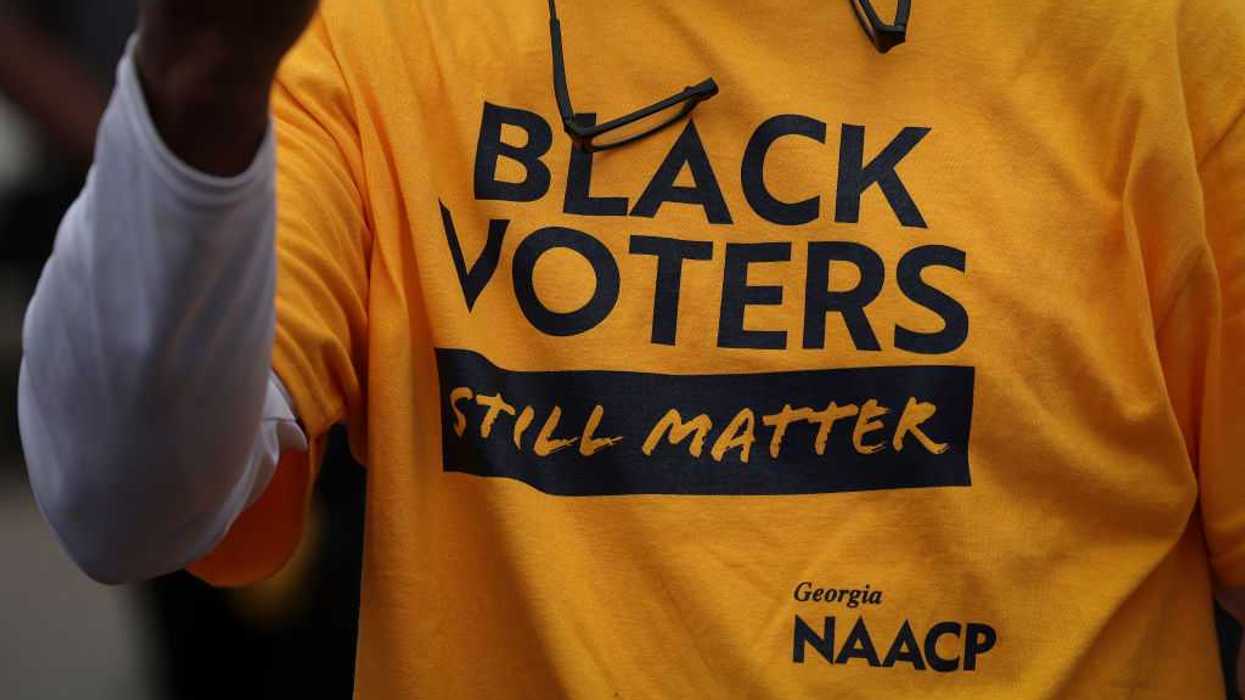
The New Deal coalition assembled by Franklin Roosevelt in the 1930s united labor unions, urban political machines, immigrants, Southern whites, Black voters, and reform-oriented liberals inside a single governing structure. It became one of the most durable political coalitions in modern American history.
But it was never fixed. The coalition contained deep disagreements over race, federal power, labor rights, religion, regional identity, and the role of government. Those tensions were managed for decades because the coalition's factions still saw enough shared political interest to remain together. Eventually, those tensions broke the coalition apart.
The civil rights movement exposed conflicts inside the Democratic coalition that could no longer be contained within the existing structure. One of my clearest political memories is Lyndon Johnson's decision to push the Civil Rights Act of 1964 through Congress, knowing it would fracture the Democratic coalition that had dominated national politics since the New Deal. The political cost became visible almost immediately. That fall, Barry Goldwater, who opposed the Civil Rights Act, carried five Deep South states that had voted Democratic for generations.
The broader realignment took longer to unfold, but the direction was already visible. The old coalition was beginning to reorganize underneath the existing political system.
Political institutions often appear more stable than the coalitions supporting them. Parties can continue contesting elections long after the social and ideological alliances inside them begin to weaken or reorganize.
Political scientist V. O. Key Jr.'s theory of critical elections and Walter Dean Burnham's work on American realignments both examined how political systems periodically reorganize in response to new pressures and conflicts. Coalitions weaken gradually beneath stable-looking institutions, and political change tends to become visible only after the underlying realignment is well underway.
Today's political environment shows signs of this strain.
A 2024 Pew Research Center study of changing partisan coalitions found that the coalitions within both parties have changed substantially since the 1990s. Educational polarization has widened. Religious and geographic sorting have intensified. White voters without college degrees have moved sharply toward Republicans, while college-educated suburban voters have become more Democratic. The parties draw support from distinct social, cultural, and educational worlds.
Political scientist Lilliana Mason's work on social sorting and identity polarization argues that partisan identity now overlaps more closely with race, religion, geography, education, and culture, making political disagreement feel tied to social identity itself.
The Republican and Democratic coalitions each contain factions whose priorities diverge on culture, markets, globalization, public order, foreign policy, and the role of government. Older ideological categories no longer adequately describe them.
These tensions do not necessarily signal the collapse of the two-party system or the imminent rise of a third party. American electoral rules strongly reinforce the existing structure. Democrats and Republicans remain electorally competitive and institutionally dominant.
But electoral stability and coalition stability are not the same thing. A political system can remain formally intact while the coalitions inside it become more fragile and harder to adapt to changing political pressures.
Political systems often appear stable until the coalitions underneath them stop holding together.
The next essay turns to what binds coalitions together when shared governing priorities give way to shared opposition.
Edward Saltzberg is the Executive Director of the Security and Sustainability Forum and writes The Stability Brief.