


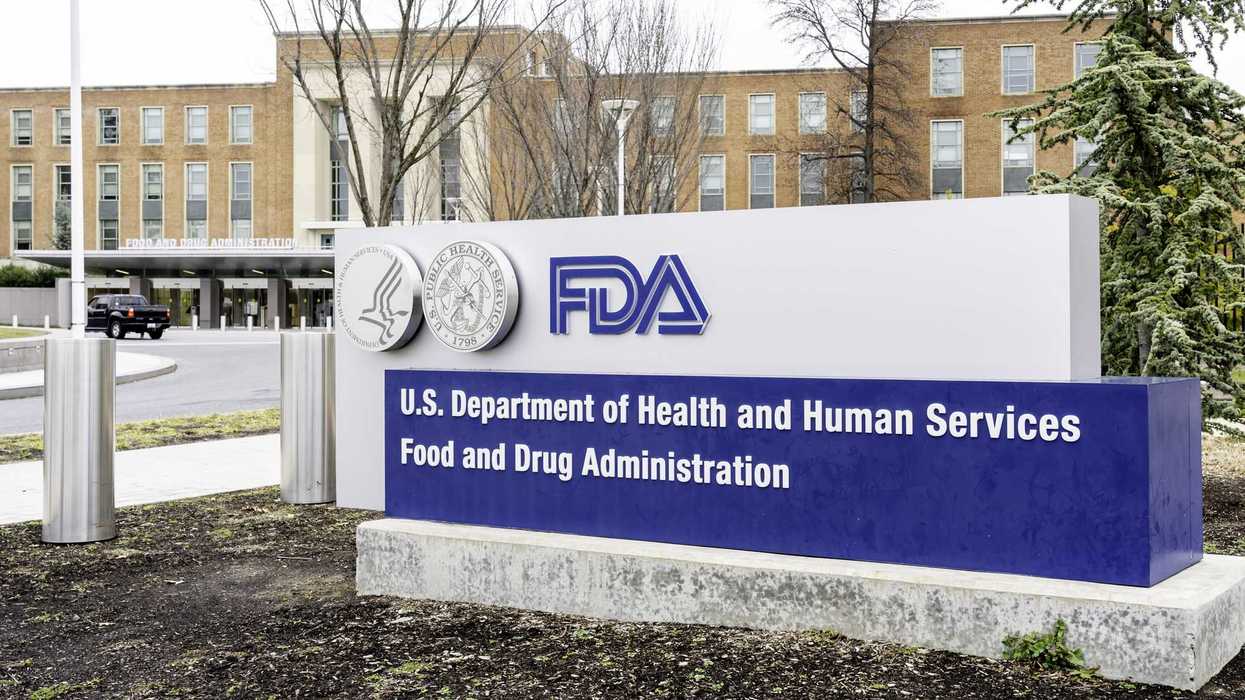
Over the past three decades, drug development in the United States accelerated dramatically. Industry spending increased tenfold between the 1980s and 2019; the number of manufacturers grew; clinical trials became more sophisticated; and new technologies and precision medicines emerged. The Food and Drug Administration kept pace, building processes, standards, and a scientific culture that supported this rapid innovation. It offered pharmaceutical companies a predictable regulatory environment and a level playing field, producing substantial benefits for consumers and researchers alike.
In little more than a year, however, the Trump administration has upended many of these FDA norms. It has tied certain drug approvals to political considerations through a new, opaque program; imposed labeling changes without new scientific evidence; forced out experienced career scientists; replaced respected experts on advisory panels; and promoted unproven therapies. While some of these moves have drawn limited media attention, most have escaped public notice—even though they threaten national health standards and consumer safety. And legal guardrails may be too weak to prevent or limit their effects.
One of the most controversial changes is the Commissioner’s National Priority Voucher (CNPV) program, announced last June and championed by FDA Commissioner Marty Makary, who resigned in May after a turbulent tenure. The program allows companies with products deemed in the “national interest” to obtain approval in as little as one to two months. Yet the FDA already had well‑established priority and accelerated review programs—authorized by Congress—that can result in approvals within six months or less. The CNPV program has no such statutory basis.
Critics argue that CNPV opens the door to political favoritism by failing to define selection criteria, allowing political appointees to decide who receives vouchers, and shifting approval authority from established experts to multidisciplinary teams that may lack subject‑matter expertise. Makary also suggested that pricing could influence priority status, even though pricing is absent from the statutory grounds for approving or rejecting applications and no criteria regarding pricing decisions appear in the statute’s list of prohibited acts.
Two scientists who briefly served as directors of the FDA’s Center for Drug Evaluation and Research expressed strong concerns. Dr. Richard Pazdur publicly warned that the voucher program lacked transparency and risked political influence over drug approvals. Dr. George Tidmarsh told The New York Times the effort would “basically change the entire paradigm of the legal underpinnings of drug approvals.”
These concerns resurfaced at a June public hearing on the CNPV program. Public health experts urged the FDA to abandon or revise the program to establish strict inclusion criteria and ensure political appointees are not making decisions. Several pharmaceutical companies that received fast‑track vouchers praised the effort but acknowledged that many operational details remain vague.
The administrative procedures used to initiate CNPV are also legally questionable. The FDA claims it did not need congressional approval because it has authority under the Food, Drug, and Cosmetic Act and the Public Health Service Act to establish programs that promote public health. That argument is at least debatable. The expedited process created by CNPV may conflict with other congressionally mandated programs under well‑established principles of statutory interpretation.
Even if CNPV is permissible under those laws, its implementation must comply with the Administrative Procedure Act (APA), the governing framework for regulatory action for 80 years. Under the APA, a binding rule that changes the legal status of private parties must undergo notice-and-comment: the agency must publish a draft rule, allow public comment, and issue a final version with a statement of “basis and purpose.” The same process is required to rescind or revise an existing rule—such as the FDA’s current priority and accelerated review programs.
Other recent FDA actions also pose risks to public health. The administration has replaced vetted medical and scientific experts on advisory committees with hastily assembled ad hoc panels, leading to dramatic changes such as altering boxed warnings for postmenopausal hormone therapy and discouraging antidepressant use during pregnancy—without new scientific evidence. Historically, the FDA required new data to justify labeling changes. Most recently, in what critics suggest is a conflict-of-interest, FDA added voting members who are peptide producers[AB2] to an advisory committee that subsequently voted to allow specialty pharmacies to produce and sell peptides.
The agency also ordered labeling changes for acetaminophen, warning physicians about possible pregnancy risks despite inconclusive evidence. In another unusual move, FDA officials overrode clinical reviewers to restrict indications for COVID‑19 vaccines, limiting use in adults under 65 and in children—again without new supporting data.
Over the past year, the FDA has also established new standards that appear rooted in opinion rather than science. These include requiring placebo‑controlled trials for established vaccines—affecting COVID‑19 and influenza vaccines—and relaxing requirements for new drugs by allowing approval based on a single study as the default.
HHS Secretary Robert Kennedy Jr. and some FDA officials have promoted unproven therapies, including Kennedy’s and President Trump’s suggestion that leucovorin, a cancer drug, could treat autism. A pharmaceutical company making such a claim would risk legal sanctions. It later emerged that the FDA had asked a company that discontinued leucovorin in the 1990s to submit an application to justify approval for a rare genetic disorder with autistic features—not autism. The FDA also removed a webpage warning consumers about dangerous or false autism treatments.
Some changes, while likely legal, appear to be driven more by politics than by science. One is the effort to discourage vaccinations by adding alarming information to vaccine safety labels without changes in benefit‑risk profiles—such as embellishing myocarditis warnings for COVID‑19 vaccines and adding febrile seizure information to influenza vaccine labels. Another is the FDA’s plan to offer monetary bonuses to reviewers who expedite their work to bring drugs to market more quickly.
The federal judiciary can strike down agency actions that circumvent APA procedures, including those implementing CNPV. Courts also review whether an agency’s explanation in its statement of basis and purpose is adequate and can invalidate rules deemed “arbitrary, capricious, an abuse of discretion, or otherwise not in accordance with law.” The Supreme Court has held that an action is arbitrary and capricious if it relies on factors Congress did not intend, fails to consider important aspects of a problem, or contradicts evidence before the agency.
Moreover, the Supreme Court recently adopted a more demanding standard for determining whether agency action is “not in accordance with law.” Federal judges must now apply what they believe to be the correct interpretation of a statute rather than deferring to the agency’s interpretation.
Drug companies could challenge the CNPV program if a competitor’s product is moved up in the queue due to political influence or is approved without sufficient evidence. But the public—the group most at risk from these policies—is unlikely to gain access to the courts because individuals cannot show “actual or imminent” injury. Public interest groups face similar barriers. They must wait until harm occurs, then undertake lengthy, expensive litigation with uncertain outcomes.
Regardless of how such lawsuits fare, it would be unwise to wait for them to wind through the courts—or for members of the public to suffer harm. Congress should reassert its authority over drug regulation and strengthen the role of career staff, who are being buffeted by the administration’s actions. And with the recent departure of the FDA commissioner, new leadership must reverse these harmful policies and rebuild an agency that was, until recently, widely regarded as the world’s premier drug regulator.
Dr. Michael D. Blum worked as a medical reviewer at the FDA nearly 40 years ago, subsequently spent over 20 years in the pharmaceutical industry, and returned to the FDA in 2016, where he served as Deputy Director of the CDER Office of Pharmacovigilance and Epidemiology. He retired from the FDA in 2023.
Edward L. Rubin is a professor of Law and Political Science at Vanderbilt University who specializes in government regulation and processes. This article was produced in coordination with the nonpartisan group Lawyers Defending American Democracy and edited by Lexie Verdon, who has worked at The Washington Post and KFF Health News.