



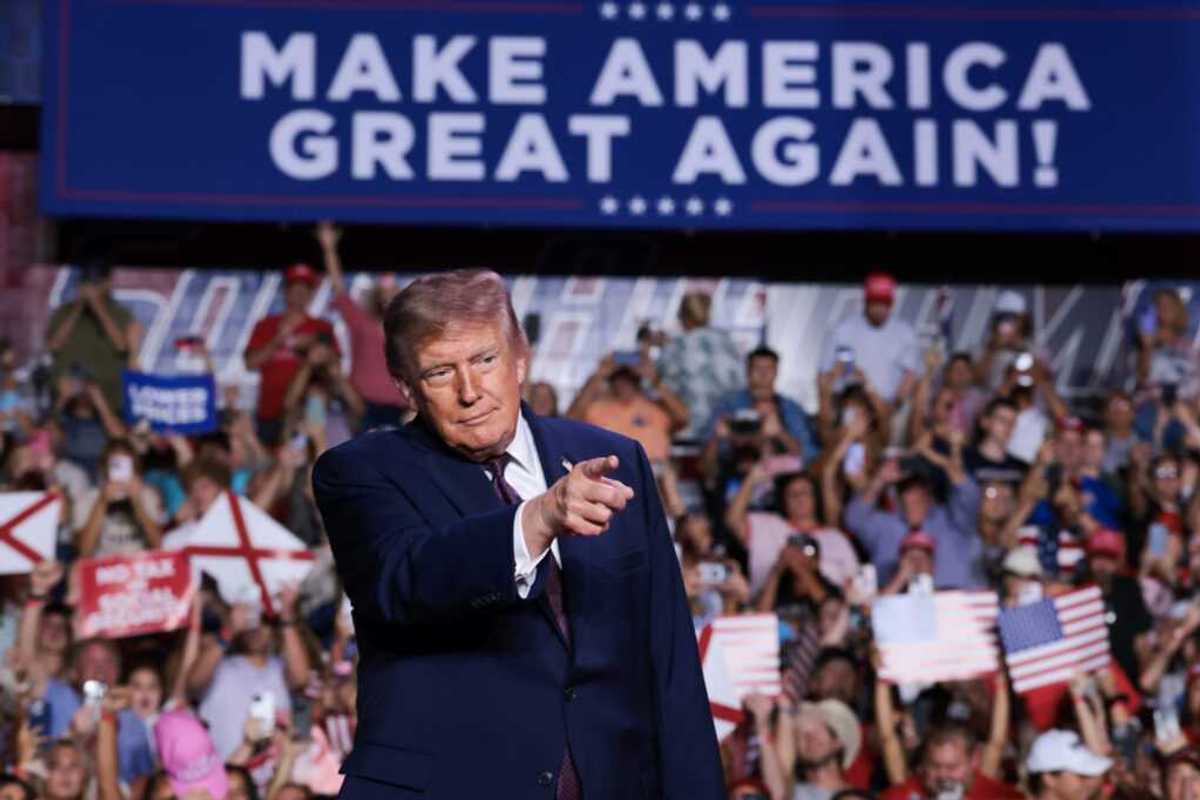
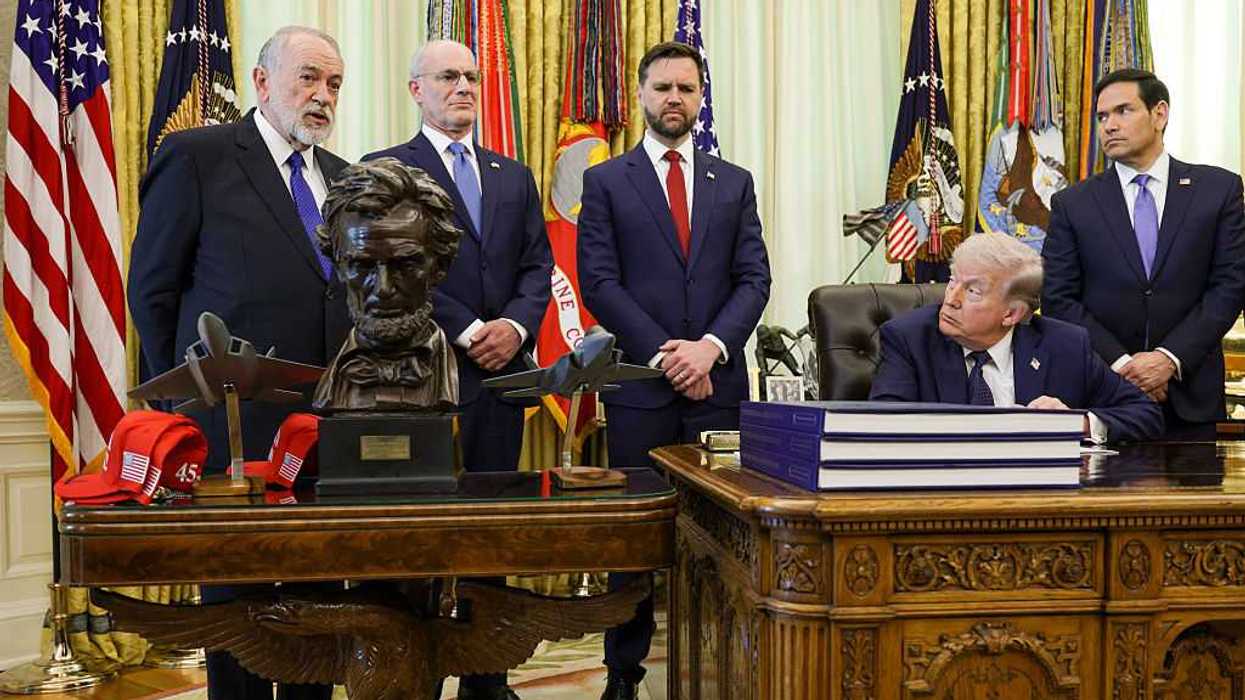

President Trump recently announced a $2.8 billion deal to sell arms to Israel, including 60,000 powerful one-ton bombs, which Israel had widely used to devastate densely populated areas of Gaza.
U.S. law prohibits arms sales in various situations. The Arms Export Control Act (AECA) and the Foreign Assistance Act (FAA) establish eligibility prerequisites for the sale of defense articles to foreign governments. The acts also require that such sales be for specific authorized military purposes.
Israel is technically in a cease-fire with Hamas, although during this period it has continued to use missiles, bombs, and artillery to attack Palestinians in Gaza. When the war was at its peak, most neutral parties in the world agreed that what began as a legitimate defensive action by Israel after the October 7 Hamas attack had turned into an offensive war.
What difference does that make in terms of the legality of Trump's deal? First, under the AECA, defense articles may be sold for specific purposes only, including "internal security and legitimate self-defense." Second, the FAA specifically prohibits security assistance to any country whose government engages in a "consistent pattern of gross violations of internationally recognized human rights."
Without question, the use of arms against Gaza has gone far beyond "legitimate self-defense," and the 60,000-ton bombs in this context are exclusively offensive. As to violating human rights, many observers argue that Israel has engaged in a "consistent pattern" of such violations. This arms deal is thus definitely against U.S. policy and law.
Congress could pass a resolution calling on the President to not go through with the sale because it violates laws passed by Congress. But this Republican-controlled Congress will obviously not pass such a resolution. Nor will the Democrats seek to force a vote on such a resolution because the country in question is Israel, and despite all the controversy about Israel's actions during and after the Gaza War, only a minority of Democrats in Congress would likely support such a resolution.
This is not a new situation. President Biden was guilty of the same action when he approved a $20 billion sale of arms to Israel in 2024.
Nor is the violation of this law limited to arms sales to Israel. Questions have also been raised regarding past arms sales to Saudi Arabia and to Egypt. Politics and short-term goals often, not surprisingly, override humanitarian concerns.
These sales raise several basic questions. First, is the goal of the government's foreign policy to support our "friends," regardless of the laws in place or human rights concerns, or is the goal to support ethical standards by our and all governments, especially those that flow from the Declaration of Independence?
The reader may well ask what the Declaration has to do with issues of foreign policy. In my book, We Still Hold These Truths:An American Manifesto, I used the Declaration as a touchstone to look at all areas of government policy, including foreign policy and defense. While foreign policy must be pragmatic, it should be consistent with the principles America stands for: democracy, human rights, and the legitimate aspirations of all people as recognized in the Declaration.
Instead, as stated in the book, foreign policy has often been based more on military, industrial, or political interests—a narrow reading of our national interest. As a result, "the government has often resorted to gross stereotypes and a good-versus-evil analysis of who is friend or foe, an analysis that ultimately was often against the country’s best interests."
The second question is, how can the President and Congress itself be allowed to ignore what is very clearly the law of the land? What of their oath of office to support the Constitution?.
The President does have the power to overrule these concerns as provided for in both the AECA and FAA, but when he does so, by their requiring a waiver or certification, there must be an acknowledgment that he is doing that and why.
In Trump's or Biden's action, there is no acknowledgment of the fact that Israel's use of these weapons is mostly for offensive rather than defensive action, nor of Israel's consistent violation of Palestinian human rights, but that "extraordinary circumstances" warrant moving forward with the sale and that they were thus overruling the law. They instead chose to move forward with the sale, acting as though there is no violation that the President is overruling. They took the easy way out.
By not acknowledging the problem and stating they were granting a waiver or overruling the restrictions of the law, both Trump and Biden were in violation of U.S. law. And the President should be held to account for that.
Ronald L. Hirsch is a teacher, legal aid lawyer, survey researcher, nonprofit executive, consultant, composer, author, and volunteer. He is a graduate of Brown University and the University of Chicago Law School and the author of We Still Hold These Truths. Read more of his writing at www.PreservingAmericanValues.com











The President Invited Iran to Bomb My Home