

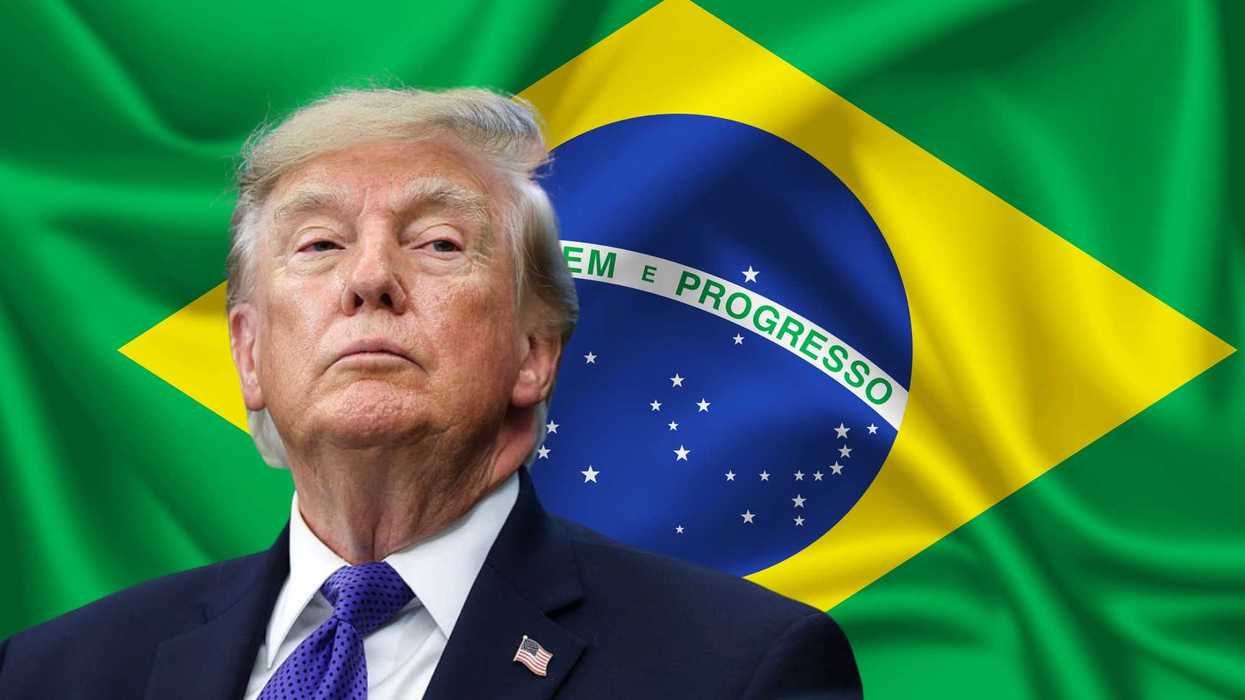

Hugo Balta is currently traveling through Brazil, reporting on democracy, civic engagement, and the political dynamics shaping the South American country at a moment that offers urgent lessons for the United States.
SÃO PAULO—For years, the political mainstream in Washington has treated the sanctity of ballot boxes as an exceptional American virtue under siege from malicious foreign actors. Yet, look beyond the equator, and that high-minded rhetoric instantly dissolves into a dangerous hypocrisy. You cannot self-righteously decry the subversion of domestic voting systems while simultaneously pulling the geopolitical levers to distort someone else’s.
Yet, that is exactly what the Trump administration is doing in South America's largest nation. Following the highly polarized first-round vote on October 4, Brazil's presidential election is officially headed to a high-stakes runoff. Right-wing Senator Flávio Bolsonaro finished ahead with 47.03% of the vote, narrowly leading leftist incumbent President Luiz Inácio Lula da Silva, who captured 45.16%. The domestic contest is tight, emotional, and deeply consequential. But reporting on the ground here from São Paulo, it is clear to me that the real story is being shaped by calculated operations engineered in Washington, D.C.
The footprint of foreign meddling is so pronounced that Brazil’s Federal Police chief, Andrei Rodrigues, recently confirmed that authorities have opened a preliminary investigation into outside electoral interference. The probe was triggered by a formal complaint from Brazil’s Attorney General’s Office following bombshell reporting from The Guardian. According to the report, the Trump administration actively explored redirecting roughly $1 million in U.S. State Department funds to right‑wing civil groups in Brazil. The program’s reported title—“Combating Lawfare and Censorship in Brazil”—was not subtle. Brazilian authorities state it was explicitly designed to destabilize domestic political debate and delegitimize the institutional framework of the Brazilian Supreme Court. If true, this is an aggressive attempt to rewrite another sovereign nation’s democratic architecture from the outside.
The interference didn’t stop at covert funding lines. Additional reporting from The Guardian reveals that the Trump administration weaponized international commerce, imposing a 25% tariff hike on select Brazilian goods to punish the judiciary for prosecuting former President Jair Bolsonaro. Then came the orchestrated political theater: a high‑profile White House meeting with Flávio Bolsonaro, followed by the U.S. designating several prominent Brazilian criminal syndicates as Foreign Terrorist Organizations. While the younger Bolsonaro immediately celebrated the move as a campaign victory, critics rightly argue the timing was engineered to artificially boost his tough‑on‑crime platform. This is not diplomacy. It is electioneering disguised as foreign policy.
Tensions escalated into a full diplomatic standoff when the U.S. State Department attempted to dispatch officials to Brazil under the banner of “electoral integrity.” Brazil’s government flatly denied their visas, calling it an intelligence overreach aimed at influencing the vote. Then, days before the first‑round election, the U.S. abruptly shut down consular services across Brazil, citing vague security concerns. Lula’s campaign blasted the shutdown as a manufactured crisis designed to project a false sense of domestic instability right before voters headed to the polls. Whether intentional or not, the effect was unmistakable: confusion, fear, and political distortion.
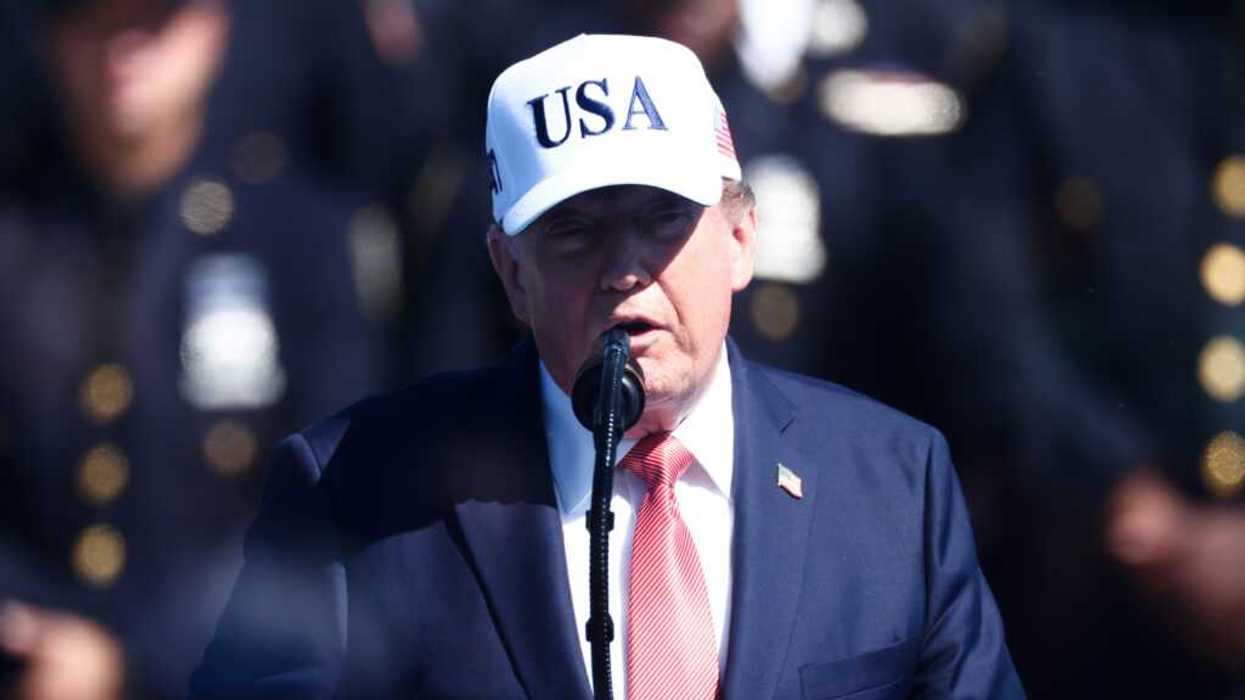
Trump has monitored Brazil’s election "very closely," publicly celebrating Flávio Bolsonaro’s lead as a "great victory." Yet, he strategically stopped short of an official endorsement. According to a report by The Washington Post, this silence was entirely tactical. Insiders note a loud, overt intervention from the White House would have backfired, playing directly into Lula’s campaign narrative of defending Brazil’s sovereignty against foreign colonization. In other words: the discretion was just as calculated as the economic coercion.
The Trump administration continues to deny all allegations, with White House spokesperson Anna Kelly calling them “nonsense” and insisting conservative leaders are winning on merit alone. But back in Washington, more than 30 U.S. Democratic lawmakers—including Senator Bernie Sanders—have demanded that the U.S. halt actions that threaten Brazil’s democratic institutions and commit to recognizing the certified winner of the October 25 runoff.
Their warning should be a wake-up call for the American public ahead of the U.S. midterm elections. You cannot destabilize foreign institutions while insisting your own are sacred. You cannot weaponize diplomacy, trade, and intelligence to tip the scales for a political ally abroad while claiming the moral high ground on election integrity at home. That profound hypocrisy is not just a threat to the 56 million Brazilians who just cast their ballots; it is a cancer on American democracy itself. Once a government normalizes the manipulation of democratic norms abroad, it inevitably imports those exact same tactics back to its own shores. Defending democracy requires absolute consistency—and Washington cannot expect integrity at home while actively exporting instability to Brazil.
Hugo Balta is the executive editor of The Fulcrum and the publisher of the Latino News Network, and twice president of the National Association of Hispanic Journalists.







The President Invited Iran to Bomb My Home