
Skip to content
Search

Latest Stories

Follow Us:
Top Stories

Trump’s Weaponization of the DOJ Threatens Democratic Governance

Opinion

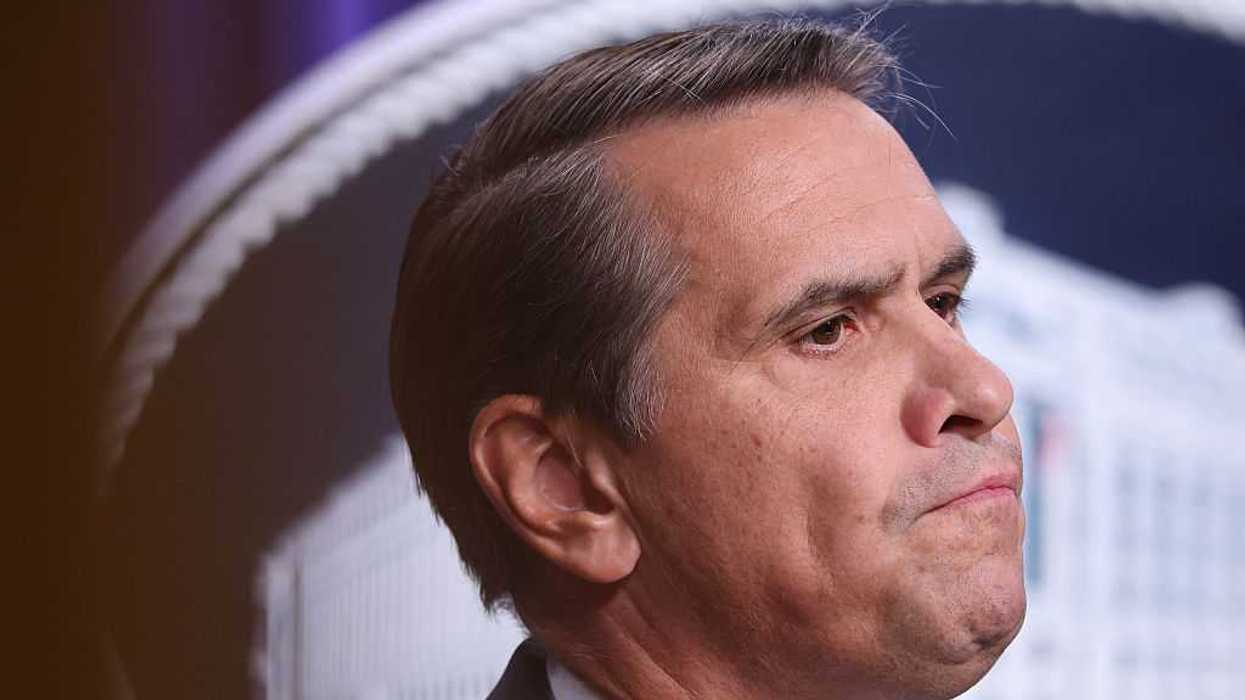
U.S. Attorney General Todd Blanche

U.S. Attorney General Todd Blanche at the Robert F. Kennedy Department of Justice building on September 30, 2026 in Washington, DC.

(Photo by Anna Moneymaker/Getty Images)

The dust from the November 2026 midterm elections has barely settled, yet a familiar, toxic chorus of political warfare is already drowning out the clear message from American voters.

With Democrats securing majorities in both the House and Senate, voters signaled a desire for checks, balances, and a focused effort on the pressing economic issues squeezing everyday families. Instead, President Donald Trump has chosen to meet the incoming legislative branch not with an open hand, but with a weaponized Department of Justice.


Following the election, Trump issued a series of directives ordering the DOJ to investigate Democratic lawmakers, accusing them of "criminal acts" and "extortion" for simply fulfilling their constitutional duty of congressional oversight. Without offering any supporting evidence, Trump alleged in his post that Democrats were distributing "threatening letters to many people, all innocent."

Meanwhile, congressional members have publicly released several letters requesting documentation on issues like tech company contributions intended for the new White House ballroom project.

Attorney General Todd Blanche quickly fell in line, saying, “What we've seen over the past several days and even over the past several weeks are outright threats,” on CNN’s “State of the Union.” Blanche used the national television appearance to validate counter-investigations against political opponents whose rhetoric he deemed "vile and dangerous."The hypocrisy here is as blinding as it is dangerous.

For years, Trump and his supporters have weaponized the term "lawfare," crying foul at every legal proceeding, impeachment, and investigation, labeling them as partisan witch hunts. Yet, the moment the American electorate votes to shift the balance of power, the administration turns around and uses the literal apparatus of federal law enforcement to intimidate the incoming majority. When incoming House Oversight Chairman Robert Garcia tells the White House to "lawyer up" regarding administration activities, federal contracts, and mass firings, he is not committing a crime—he is doing the job the Constitution mandates and voters just demanded.

The leading Democrat on the House Oversight Committee promised Sunday to launch multiple investigations into Trump administration officials, saying Democratic leadership would no longer “take the high road.”

“When Republicans go low, what we’re not going to do anymore is just take that, take the high road, and turn the other cheek,” Garcia declared. “The days of us not fighting back are over.”This retaliatory escalation fundamentally rejects how a democratic government is supposed to function. Oversight is not extortion. Checks and balances are not criminal acts.

More importantly, this playground retaliation completely ignores the mandate of the midterm elections. Voters did not go to the polls demanding a never-ending cycle of mutual legal destruction. They went to the polls looking for solutions to economic anxieties, inflation, healthcare, and governance that actually functions.

Governing requires collaboration, especially in a divided Washington. It requires a willingness to sit across the table from political rivals, find common ground, and pass legislation that helps the American people. By using the DOJ as a personal shield and sword, Trump is poisoning the well before the new Congress is even sworn in.

If the Trump administration spends the next two years consumed by vengeance and retaliatory investigations, ordinary Americans will pay the price. It is time to drop the threats of prosecution, respect the constitutional role of congressional oversight, and get to work on the issues that actually matter to the people who cast their ballots last Tuesday.

Hugo Balta is the executive editor of The Fulcrum and the publisher of the Latino News Network

Read More

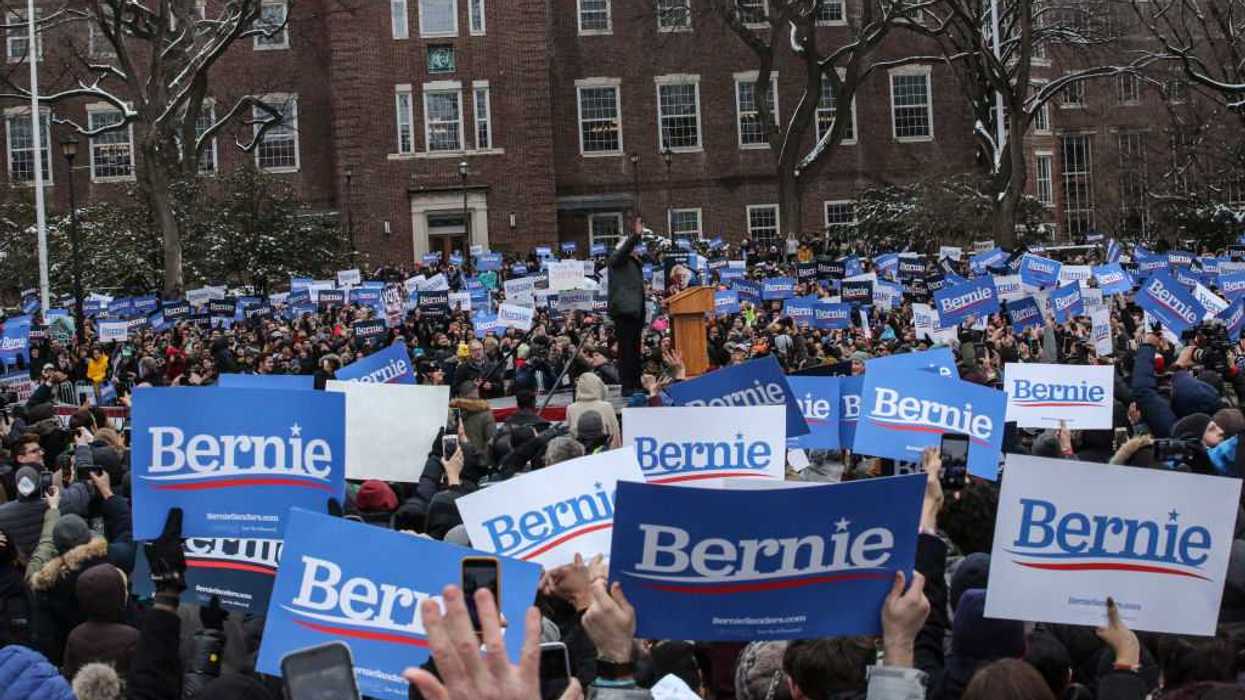
Democratic Presidential candidate U.S. Sen. Bernie Sanders (I-VT) holds his first presidential campaign rally at Brooklyn College on March 02, 2019 in Brooklyn, New York.

A lobbyist who worked for both Bernie Sanders and Fortune 500 clients explains what democratic socialist wins mean for business, and how to prepare.

VIEW press/Getty Images

I Campaigned for Bernie Sanders Then Lobbied for Amazon

In 2016, my political outreach company, Firehouse Phones, worked on the presidential campaign of a democratic socialist. It was one of many campaigns my firm touched, but that one stays on my resume for a reason: it taught me more about how persuasion actually works than any client engagement before or since.

Today I run Ohio River South, a government affairs firm focused on the nation's fastest-growing region — the American South. Over the past decade we've advocated for nearly two dozen Fortune 500 companies — Amazon in my earlier lobbying years, and later growing a client roster that included Alphabet, Microsoft, General Motors, United Healthcare, and Capital One.

Keep Reading Show less
The White House
The white house with green lawn and trees
Photo by Josh on Unsplash

The Politics of Gratitude: Why Washington Punishes the Loyalty It Cannot Price

On a Sunday night in August, Senator Jon Ossoff told a campaign rally in Atlanta that President Trump would rather build his ballroom and “travel with Natalie” than do his job. He never used her last name. He did not need to. Natalie Harp, the White House aide known to colleagues as Trump’s “human printer” for trailing him with a portable printer and transcribing his social-media dictation, had become a punchline before most Americans knew who she was.

The backlash arrived within hours. White House officials accused Ossoff of insinuating an affair; Republican Rep. Brandon Gill noted that Harp survived bone cancer only because the Right to Try Act, which Trump signed in 2018, let her seek an experimental treatment outside the normal approval process, and dismissed any other reading of the moment as unfair. Weeks earlier, Harp had been at the center of a far more consequential story: in July, she was one of a handful of aides, alongside the defense secretary and two senior staffers, chosen to accompany Trump on a covert switch of aircraft as he left a security summit in Turkey after officials detected a credible Iranian threat, while most of the traveling delegation stayed behind on a decoy plane. That is the real proximity Ossoff's line was needling. Then came a detail that complicated the story further: Trump had personally given Harp and several other aides cash gifts of $45,000 apiece, which a former federal ethics official called troublesome, since money on that scale can leave a recipient feeling indebted to whoever signs the check.

Keep Reading Show less
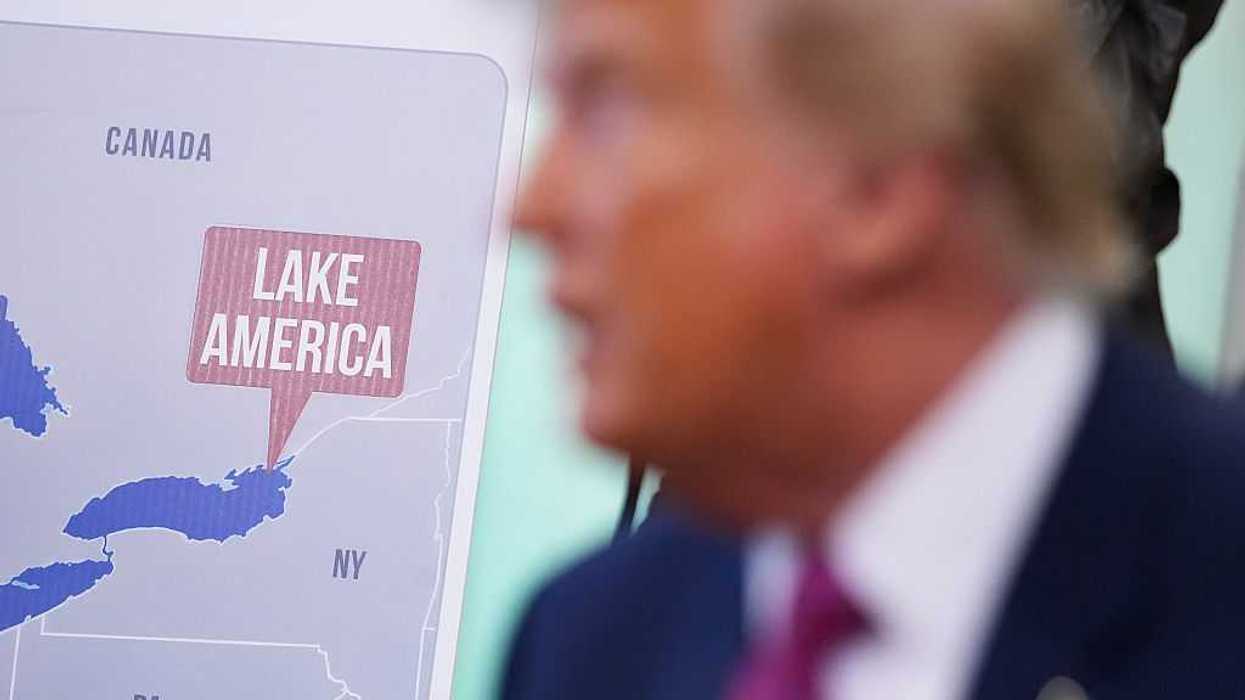
A map labeling Lake Ontario as "Lake America" is displayed behind U.S. President Donald Trump.

A map labeling Lake Ontario as "Lake America" is displayed as U.S. President Donald Trump signs an executive order during an event in the Oval Office of the White House on August 27, 2026 in Washington, DC.

Andrew Harnik/Getty Images

Cartography of Convenience: Why Rushed Renaming Erodes Public Trust

In tough economic times, governments often reach for the easiest kind of progress: a new name on an old sign. Wage stagnation, inflation, crumbling roads, and rising rents are hard problems that take years and real money to fix. Renaming a street, a lake, or a strait is not. It costs a fraction as much and lets officials point to something they “did.” A new name never fixes a pothole or lowers a grocery bill. This year offered an unusually rich catalogue of the habit, reaching from a city council in Texas to a wartime waterway in the Persian Gulf.

A Concept Borrowed From the Cremation Ground

Indian philosophy has an old idea called shmashana vairagya, describing the sudden clarity a person feels standing at a cremation ground, when ordinary ambitions look small. The feeling fades once the mourner goes home. Public policy has its own version of this cycle. In the raw hours after a tragedy, a scandal, or a surge of national feeling, officials decide, sometimes within a single social media post, what belongs on a map or a sign forever. The emotion passes in hours. The bill, when there is one, stays for years.

Keep Reading Show less
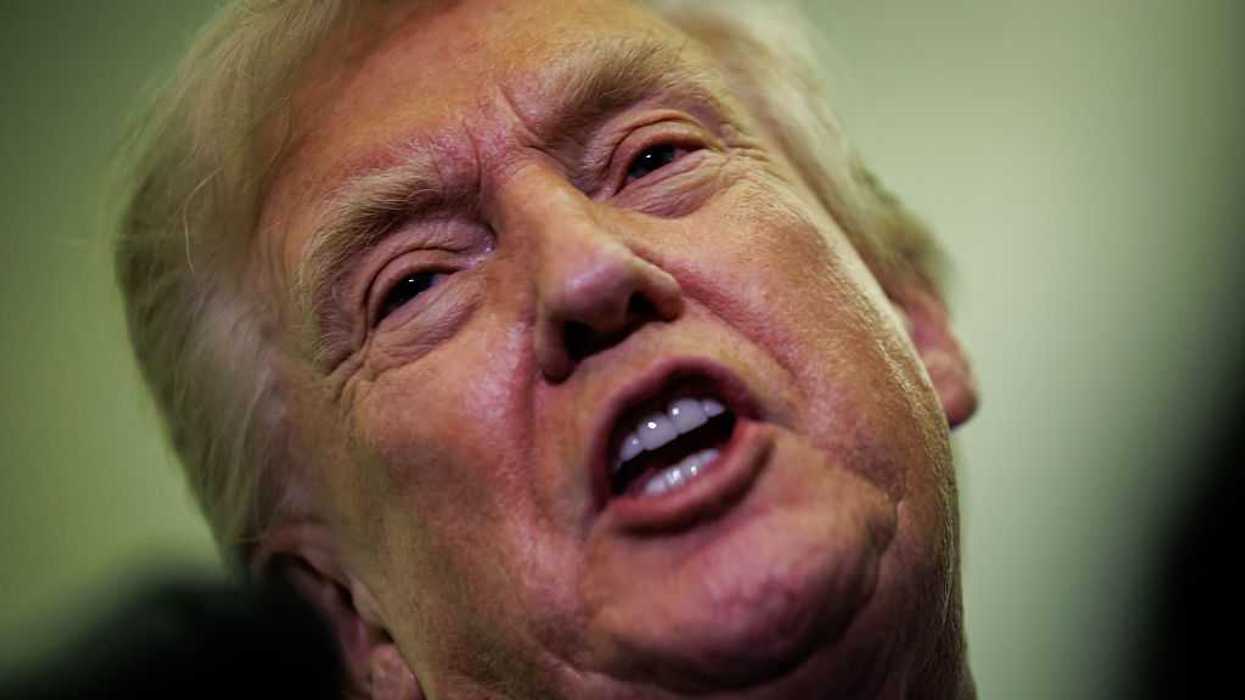
Donald Trump

U.S. President Donald Trump on February 6, 2026.

(Photo by Samuel Corum/Getty Images)

A Demagogue in the White House: Will the Guardrails Hold?

A demagogue does not seize all power at once. He takes it piece by piece.

In Trump’s second administration, those pieces accumulated in plain sight. The president generated so much disruption and noise that Americans struggled to keep pace. Each new controversy displaced the last, obscuring a more consequential story: the steady accumulation of presidential power.

Keep Reading Show less