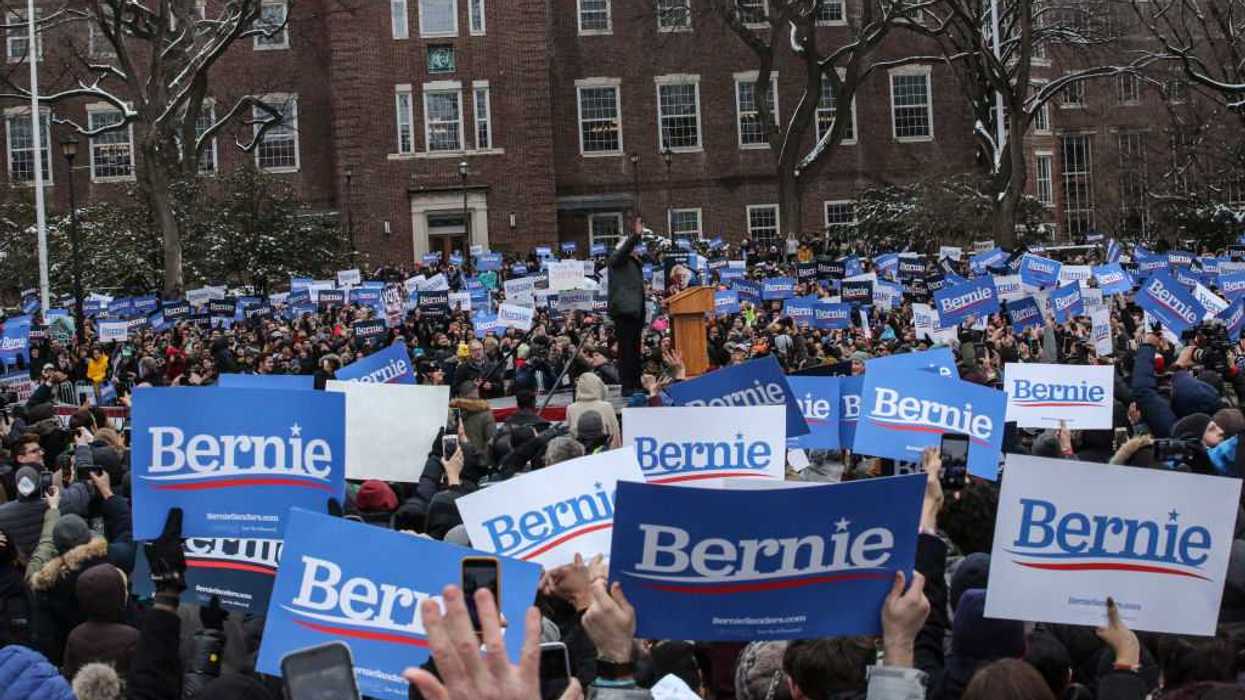

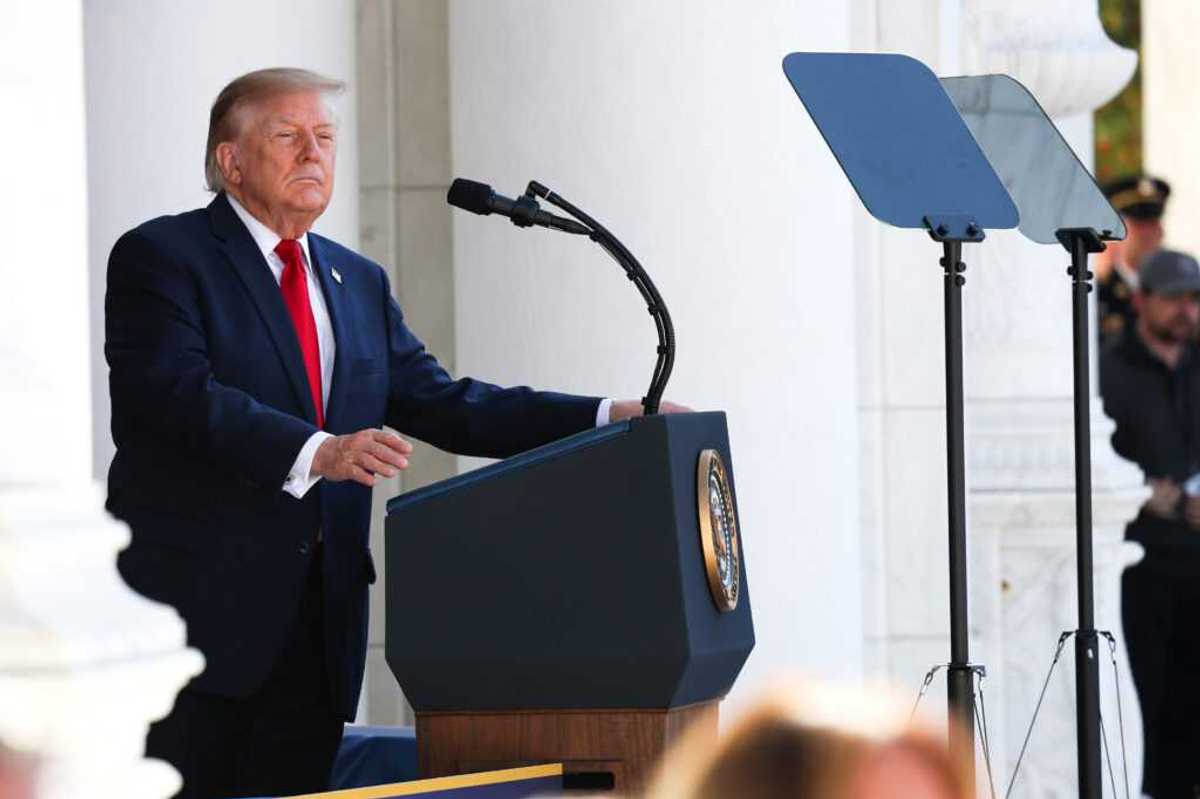




In April, Republican Rep. Tony Gonzales of Texas resigned after being accused of having improper relationships with staff, including a former staffer who died by suicide. The Republican who ran to replace him, gun influencer Brandon Herrera, known online as “the AK Guy,” had a long history of using profane and misogynistic language to denigrate women.
The district had gone for President Donald Trump by 15 points in 2024. But on Tuesday, Democrat Katy Padilla Stout flipped the seat, which stretches along the U.S.-Mexico border from El Paso to San Antonio. Padilla Stout, a former child welfare attorney and teacher, will be the first Latina to represent the district.
Padilla Stout’s win came amid a bipartisan reckoning over sexual misconduct spurred by the release of the Epstein files. In Ohio, Democrat Brian Poindexter defeated Rep. Max Miller, who had been accused of domestic violence by his ex-wife; he denied the allegations. In North Carolina, Democrat Jamie Ager flipped a seat held by Rep. Chuck Edwards, who dropped his reelection bid and was censured after a House Ethics investigation into his inappropriate relationships with young staff. Rep. Jimmy Gomez of California, also under a House Ethics probe over alleged relationships with staff, lost to progressive Angela Gonzales-Torres.
Voters’ frustration with high prices and anger at the Trump administration’s policies drove Democrats’ tsunami-level victories Tuesday, flipping control of both the House and the U.S. Senate.
But the results also show that voters were fed up with misbehaving men of both parties. The release of the files connected to the late disgraced sex offender Jeffrey Epstein became a major campaign issue for Democrats, who connected the Epstein files to corruption. And many Democratic men became more comfortable leaning into their own masculinity on the campaign trail. Voters also largely weren’t swayed by Republicans’ efforts to make the election a referendum on the narrow conception of gender they put forth with attacks on transgender people and a pugilistic, machismo-laden vision of masculinity rooted in muscles and high testosterone.
The conservative ideal of masculinity was perhaps best encapsulated by Secretary of Defense Pete Hegseth’s state of the force address in September, where he declared the department would no longer be the “woke” or “weak” department with a Dr. Seuss-ian definition: “No fatties. No trannies. No beardos. No weirdos. No wimps. No radicals.”
He went on to declare: “The ideological clowns are out. The patriotic cowboys are in — with testosterone testing on top.”
Trump’s closing message of the 2026 midterm elections also focused on how people presented themselves and conventional ideas of attractiveness as opposed to what voters really cared about: He kept telling voters to look at people’s asses. He most frequently lauded the derrière of GOP Sen. Jon Husted of Ohio, who lost his race on Tuesday notwithstanding, and said rapper and recent MAGA convert Nicki Minaj had “a beautiful ass” at a rally in Michigan.
At first blush, this election cycle might not seem very gendered, especially compared with recent midterm cycles. In 2022, outrage over the Supreme Court overturning a right to abortion helped Democrats to a better-than-expected performance, and 2018 took place in the wake of the #MeToo movement and Justice Brett Kavanaugh’s confirmation to the Supreme Court.
But in the past couple of years, both political parties have been reorganizing around the axis of gender, the driving force shaping so much of American life and American politics.
If politics flows downstream from culture, consider two of the bestselling and most talked-about books of the year: Caro Claire Burke’s “Yesteryear,” a novel about a tradwife influencer who wakes up in 1855, and Belle Burden’s memoir “Strangers: A Memoir of Marriage,” a real-life cautionary tale from a woman whose identity and financial independence were subsumed by a husband who cheated on and then abruptly left her. The ideal of the “Pilates girl” jumped from the manosphere to mainstream reality TV shows like “Love Is Blind” and “The Secret Lives of Mormon Wives.” Discussions of what it means to be a “girl’s girl” also dominated culture and reality television.
Discussions of motherhood and postpartum psychosis swept the headlines during the trial to determine whether Massachusetts mother Lindsay Clancy was criminally responsible for killing her three children. Then, a nationwide discussion about sexual assault on college campuses was reignited when a former Cornell student filed an explosive lawsuit against the university, and seven men she accused of raping her at a fraternity house in 2024.
This was also the year of tradwives and girlbosses, looksmaxxing and framemogging, alphas and betas — and a UFC fight on the White House lawn.
That “Freedom 250” fight was a moment much hyped by Trump, who won a second term after being found liable for sexual abuse and campaigned on an aggressive, ascendent vision of masculinity. He appointed several men accused of sexual misconduct to his Cabinet, including Hegseth and Health and Human Services Secretary Robert F. Kennedy Jr.
The right declared a total cultural victory after Trump’s win in 2024, viewing the result as a repudiation of “wokeness” and the start of a golden, seed-oil-free age of hotness, glistening with the sheen of beef tallow skincare products.
And even though the Make America Healthy Again (MAHA) movement, which helped elect Trump and elevate Kennedy to his Cabinet, was led by women concerned about food quality and safety, Kennedy has spent much of his time focused on boosting testosterone and combating erectile dysfunction. The obsession with hormones bled into the Texas Senate race, where much of Republicans’ messaging was to alternatively accuse Democratic Senator-elect James Talarico of being “low T,” or low in testosterone, and gay or transgender.
On the left, Democrats largely eschewed the explicit appeals to identity politics and social justice-laden language that defined their party’s messaging in the first Trump term, a period some dubbed “Woke 1.0.”
In a sign of how much Trump has reoriented American politics around image, Democrats have also leaned into hotness and thirst to boost support for candidates like Michigan Democratic Sen.-elect Abdul El-Sayed, Georgia Sen. Jon Ossoff and Montana Rep.-elect Sam Forstag.
Democrats also made a play to win the men, especially young men, who shifted right in 2024, by showing that their party can be masculine too. Candidates like El-Sayed, Montana independent Senate candidate Seth Bodnar and Indiana Democratic Secretary of State-elect Beau Bayh ran ads featuring them lifting weights, shooting guns or both.
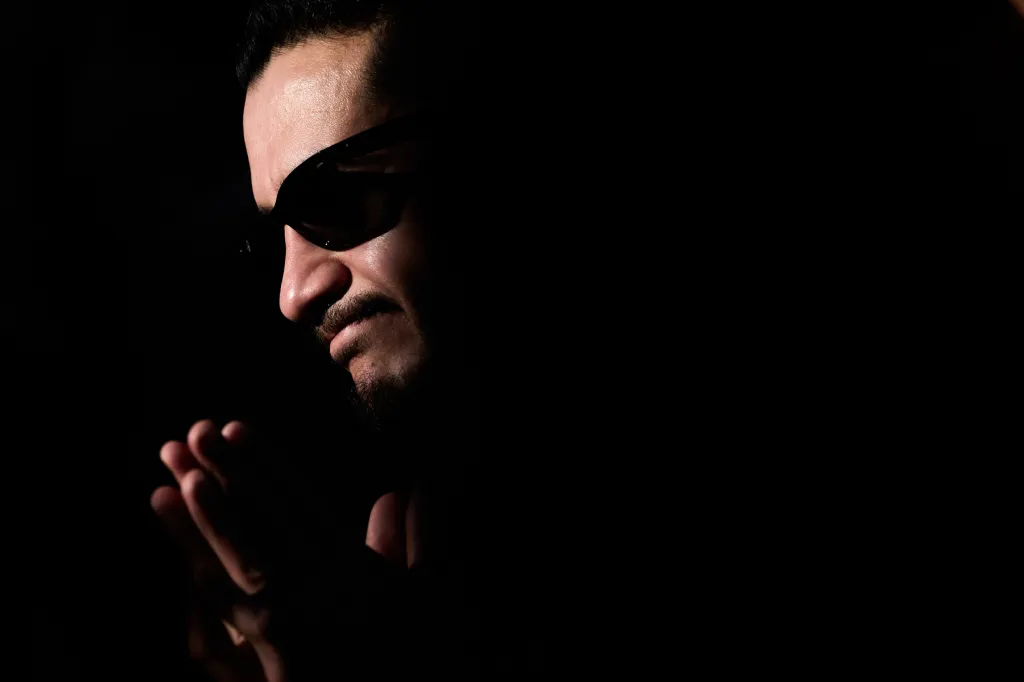 Democratic candidates like Abdul El-Sayed also made a play to win young men this election by showing that their party can be masculine too. (Julia Demaree Nikhinson/AP)
No Democrat ran on masculinity more than El-Sayed, a weightlifting, rock climbing public health expert who sought to undercut his opponents’ machismo at every turn. In September, he accused Vice President JD Vance of having a fake beard and challenged him to a weight-lifting contest.
He argued against data centers by saying it wasn’t worth building more of them so Republican nominee Mike Rogers “can make AI videos of himself looking swole.”
When Rogers accused El-Sayed of being anti-football, he challenged him to a game: “Since you’re too afraid to debate me, how about you ‘hold me accountable’ on a football field instead. Tackle, no pads like we used to play when we were kids. I’d be happy to show you [how] much I love football.”
And El-Sayed closed out his campaign by challenging yet another Cabinet member’s athleticism.
“Pete Hegseth, everybody knows that guy from the locker room,” he said in an interview with comedian Hasan Minhaj. “You know he would have rode the pine. He probably got to start two games his entire career playing whatever sport he was, and it made his life, and his parents came and cheered so hard for him.”
Hegseth’s father, Brian Hegseth, jumped in to his son’s defense, accusing El-Sayed of having “little man syndrome” in a post on X.
“Proud to say, as Pete’s dad, he was an absolute star on the court in HS. Captain, all-conference, all-state player…earned!,” he wrote. “We parents cheered him on, yes. That’s what families do-support each other. #Envy makes him bitter.”
El-Sayed won his race by 7 percentage points as Democrats held all the statewide offices on the ballot in Michigan and are on track to flip three U.S. House seats.
A faction led by Vance that has been encouraging young people, especially young women, to get married and have children younger as a solution to falling birthrates was also met with skepticism from many on the right.
Five days before the 2026 midterms, Vance held a Fox News town hall at Texas Christian University to turn out young voters, many of whom backed Trump in 2024 but are feeling squeezed by the economy, see milestones like homeownership as increasingly out of reach and, in many cases, are disillusioned with politics.
Kate White, a senior at the university and vice president of the organization’s Turning Point USA chapter, began her question to Vance by noting that the right pushes “the constant message” to young people to get married and have as many children as possible. It’s a call to action that she said “doesn’t acknowledge” how expensive it is for young people like her to afford homes and start families.
“And so my question is, how does the right and yourself expect us to start families young when the average price of a home in America now costs more than $415,000, which just feels out of reach for us?” she asked.
“First of all, thank you for the question and thanks for the support,” Vance responded. “I want to point out that I think that I’ve been asked four or five questions by my count, and I’ve only been asked one question about Jon Husted’s ass, and it was by Jesse Watters,” the Fox News host.
Vance did go on to answer the question in earnest, blaming low housing supply on immigrants, an argument economists say is unfounded, and high home prices on Wall Street investors. Those arguments fell flat with voters in Texas, where Democrats swept every statewide office in a historic rout for the GOP: both Talarico and Texas Gov.-elect Gina Hinojosa flipped Tarrant County, which includes Fort Worth, and nationwide exit polls indicate young voters swung left.
The struggles of young men were a major fixation of politicians, pundits and think-tankers across the political spectrum — though that concern and curiosity has largely not extended to young women, who face many of the same economic headwinds as young men but vote much more reliably Democratic.
The 2024 election unleashed a torrent of antipathy toward working women, with some connecting the Elon Musk-led so-called Department of Government Efficiency and its sweeping cuts to the federal workforce to wanting to punish “girlbosses” and busybody “HR ladies.”
But cracks in that coalition didn’t take long to appear. Some Vance-backed proposals, like redirecting childcare subsidies intended for lower-income working parents to married, stay-at-home parents, rankled others on the right who oppose government intervention in family policy.
And several right-wing commentators were furious at Texas Republican Senate candidate Ken Paxton for a tweet celebrating women accounting for the vast majority of the job growth since early 2025 — never mind that the majority of working women are not corporate “girlbosses” but work in healthcare, education and food service jobs.
Amid Trump’s cratering approval ratings and voters’ discontent with high prices and the cost of living, Republicans’ main midterm message was to attack transgender people and children.
Republicans spent millions on ads hammering Democrats’ stances toward transgender people in key 2026 races — even in states that have already banned transgender students from playing on women’s sports teams and have prohibited gender-affirming care for minors. In some battleground races in states like Ohio and Iowa, some Democratic candidates even ran ads emphasizing their opposition to “biological men in women’s sports” and “transgender ideology,” leaving many transgender voters feeling disappointed and betrayed.
It was messaging that embraced a narrow view of gender, misgendering trans girls and women and falsely implying that Democrats back gender-related surgeries for minors, which are exceedingly rare.
Transgender rights were also directly on the ballot in several states.
While anti-transgender attacks didn’t sway voters to back Republican candidates, the story got a little more complicated in states like Nebraska, Arizona and Washington, where voters approved new ballot measures targeting transgender athletes. Washington’s new measure requires all girls — not just transgender ones — to have their biological sex verified by a physician in order to play on women’s sports teams.
Trump’s willingness to comment on bodies and sometimes retrograde views of gender were central to his closing message.
In the president’s final campaign swings for Republicans running in battleground races, some, like Florida Sen. Ashley Moody, lamented Trump not complimenting her “assets.”
Moody narrowly defeated Democrat Angie Nixon in her race for a full term while in Iowa, Ashley Hinson lost to Democrat Josh Turek, the first Democrat elected to the Senate from the state since 2008.
Trump’s closing commentary on Republican candidates’ bodies wasn’t as positive for Hinson as for some candidates.
“I knew Ashley for a long time, and she was a little bit heavier, okay. And she put herself — she knew what she was doing, she knew the weight that was on her, literally, the weight, and she knew the importance of what she was doing, and she went out the old-fashioned way too, not with, you know, ‘Give me a shot,’ the old-fashioned way,” Trump said at a Sunday rally in Dubuque, Iowa, before his train of thought was interrupted by a heckler.
The Masculinity Midterms was originally published by The 19th and is republished with permission.