

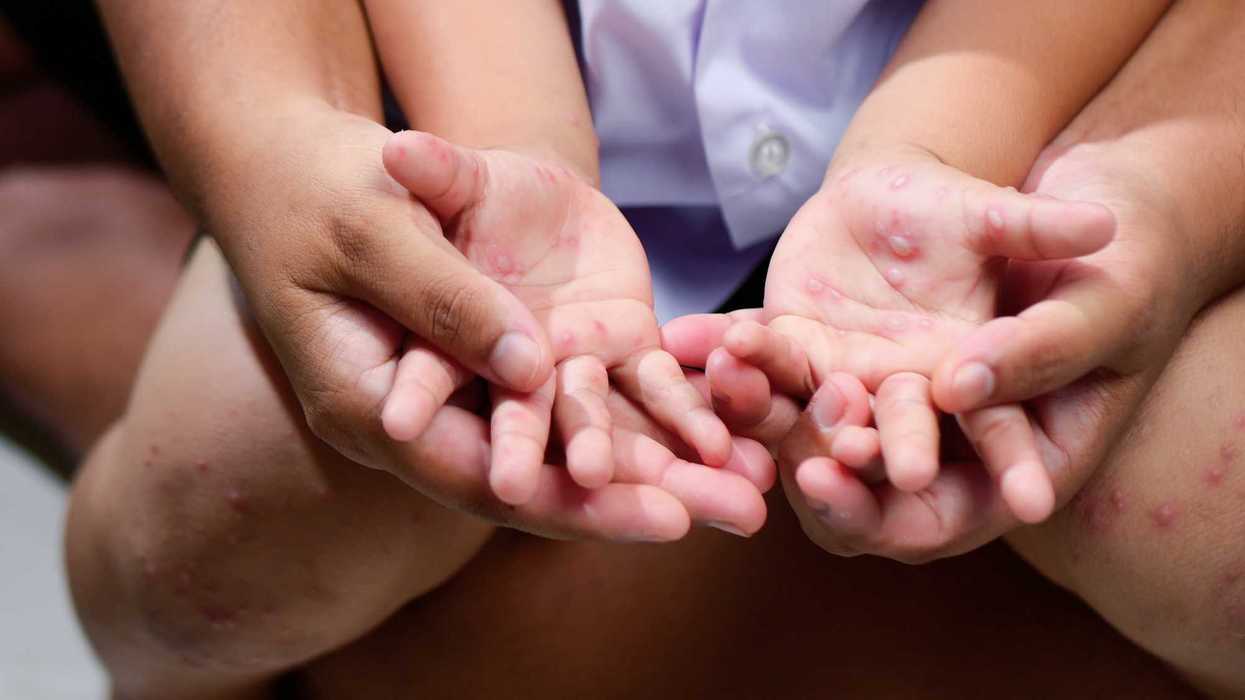
This week, the Pan American Health Organization (PAHO) is stripping the United States of its measles elimination badge of honor. This is a big deal. For the past 26 years, the U.S. has been considered a country without sustained measles outbreaks. Infections were mostly imported and effectively contained through public health interventions. But the situation has deteriorated rapidly, and the effects can no longer be ignored.
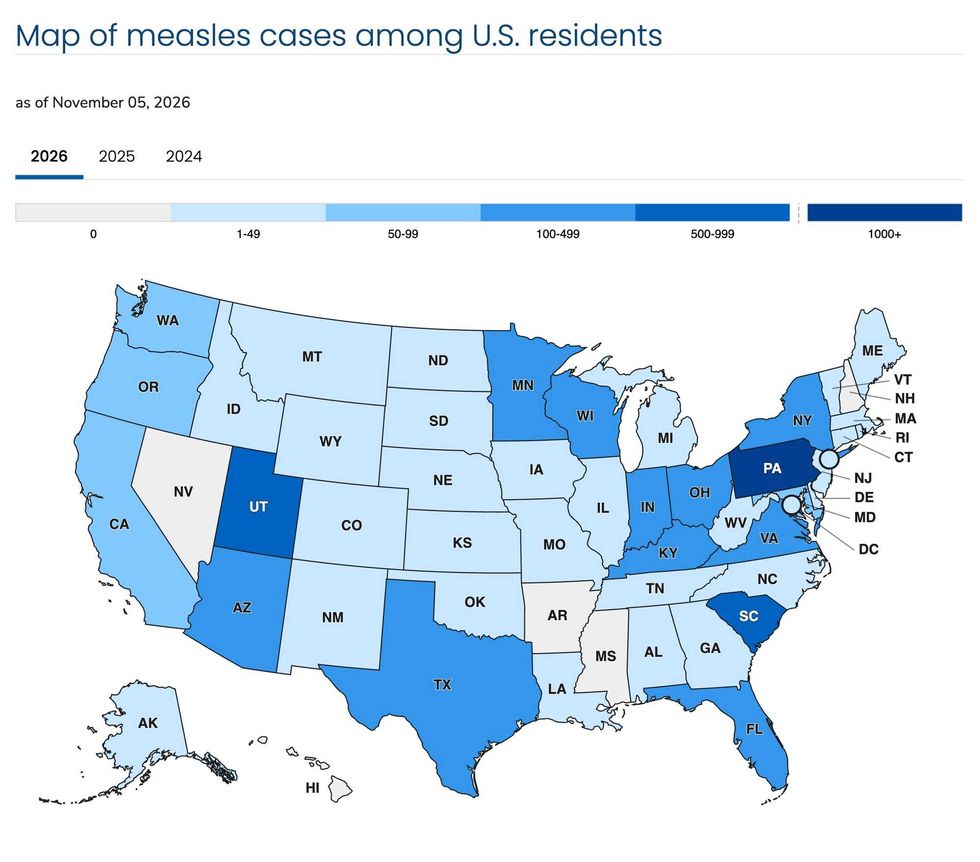
Since the start of 2026, there have been 10 deaths from measles. Half occurred in the first two weeks of November. Three of those who died were infants, including one who died on Election Day in New York state. Prior to last year, the most recent death from measles occurred in 2015. According to the Centers for Disease Control and Prevention (CDC), 5,412 measles cases have been recorded across the U.S. this year, as of mid-November.
Last year, there were 2,289 confirmed measles cases. This represents a 136% increase in infections. CDC data also indicates that most measles infections (96%) occurred among unvaccinated people. Utah, South Carolina, and Pennsylvania are among the hardest-hit states, but outbreaks are surging nationwide. Most states had not recorded a measles death in more than 35 years.
“The loss of measles elimination status is a blow to public health. The U.S. achieved elimination in 2000, so we have enjoyed more than 25 years of freedom from outbreaks,” Dr. Caitlin Rivers, a senior scholar at the Johns Hopkins Center for Health Security, told The Fulcrum. “It's not just people who decide not to get vaccinated who are at risk. There are millions of people who are vulnerable, including infants too young to be vaccinated and people being treated for cancer.”
A few things are worth keeping in mind as we digest these numbers. Measles is one of the most contagious viruses known to humans, making vaccination campaigns critical. Safe and effective measles vaccines have been available in the U.S. since 1963.
Robert F. Kennedy Jr.’s vaccine skepticism is well documented. Before becoming HHS Secretary, he chaired the Children’s Health Defense, an organization that challenges the safety and efficacy of childhood vaccines, and promotes the discredited claim that vaccines cause autism. Kennedy has repeatedly made this statement. Just months after taking office, Kennedy fired all 17 members of the CDC’s Advisory Committee on Immunization Practices (ACIP), replacing them with appointees, some of whom have faced criticism for spreading misinformation during the COVID-19 pandemic.
During the pandemic, health misinformation, often amplified through social media, contributed to the erosion of public trust in health authorities and fueled vaccine hesitancy.
The consequences of the erosion in trust linger and are connected to the current surge in measles cases. More parents are requesting exemptions from school vaccine requirements. This weakens what epidemiologists call “herd immunity.” For measles, at least 95% population vaccination coverage is needed to interrupt transmission and protect vulnerable groups, including infants and people with compromised immune systems, like cancer patients.
Meanwhile, doctors on the frontline are scrambling to keep families safe.
“As herd immunity to measles erodes, my greatest concern is for our most vulnerable patients—infants too young to be routinely vaccinated and immunocompromised children,” Dr. Meera Siddharth, a pediatrician from Philadelphia who serves mostly low-income patients and immigrant communities, told The Fulcrum. “Families now face the added stress of weighing the risks of travel and everyday social gatherings where vaccination status is unknown. For pediatricians, communicating the serious risks of measles and countering vaccine misinformation within the confines of a 15-minute visit is an increasing challenge.”
In a blunt statement, the American Public Health Association (APHA) blamed the current measles outbreaks on the administration, arguing that a national call to vaccinate would have slowed down last year’s outbreaks and contained the spread of this highly infectious disease.
“Instead of choosing to take such preventative measures to keep communities healthy and maintain the nation’s elimination status, HHS leadership allowed unscientific ideas and talking points to guide important decision-making, leading to a web of confusion and heartbreaking loss.”
Erica Schwartz, the CDC Director confirmed by the U.S. Senate last August, pushed back against criticism. "The measles elimination designation is not what protects Americans. Vaccination does.”
Quoted in a Medpage Today article before the official downgrading of the U.S. measles elimination status, she added, “We know where transmission is occurring, and we're working with state and local health departments to reach those communities. Losing a designation doesn't mean we abandon an evidence-based approach. It means we remain focused on stopping outbreaks."
While this sounds reasonable, mass firings of health experts at the CDC, alongside funding cuts to science-driven research not aligned with the Make America Healthy Again agenda, make stopping outbreaks harder. An anonymous survey conducted by health researchers at Michigan State University and shared with more than 600 CDC workers, found that the agency’s workforce is worried about its ability to protect the Americans’ health and respond to public health emergencies.
The United States is not the first country to lose its measles elimination status. Canada lost its designation in November 2025, followed more recently by Austria, Spain, and the United Kingdom. But the U.S. was long considered a global health champion. Losing measles elimination status is more than symbolic. It has real-life consequences, too often compounded by partisan politics surrounding vaccine efficacy.
During a webinar hosted by the Association for Health Care Journalists, Dr. Noel T. Brewer, chair of the committee reporting to the Pan American Health Organization on behalf of the U.S., summarized it well: “The United States is no longer a safe place for children in regards to measles.”
Beatrice Spadacini is a freelance journalist for the Fulcrum. Spadacini writes about social justice and public health.