


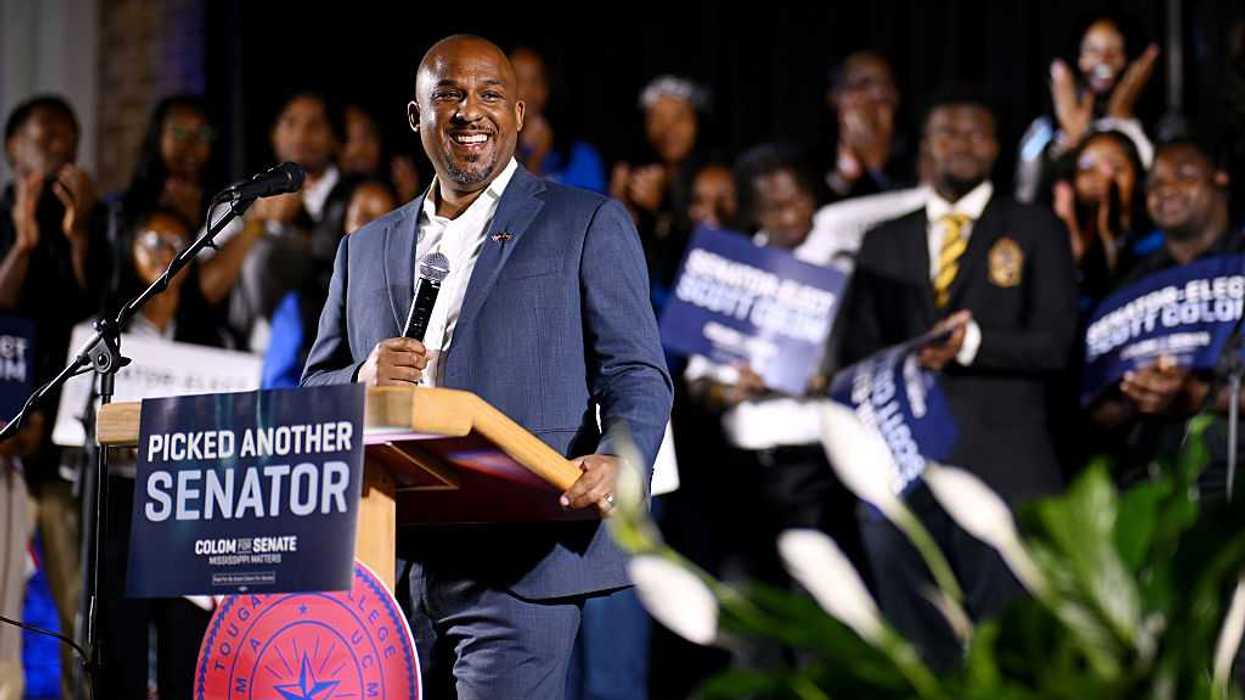

On November 11, 2026, it became certain that, with a turnout 35% higher than in the last midterm elections, Mississippi voters chose Scott Colom as their next United States Senator. That is historic because the victory broke through more than 100 years of voter suppression — including the 2026 versions of it - to elect the State’s first African-American US Senator since Reconstruction.
It took the 13th Amendment to the US Constitution, the initial post-Civil War Reconstruction Act, and federal enforcement before African-American men in Mississippi first voted. That was in the 1867 election, which led to a new state constitution and legislature that sent Hiram Revels to Washington as the country’s first African-American US Senator. His successor, Blanche Bruce, served until 1881 and was Mississippi’s last Black US Senator preceding Senator-Elect Scott Colom.
That 146-year gap is explained by voter suppression - including through Jim Crow laws consecrated by the State’s 1890 constitution and racial terrorism by the Ku Klux Klan and other groups. Black voter registration during Reconstruction rose to 97% by 1868 and plummeted to just 6% by 1892 as Reconstruction was dismantled. The US Commission on Civil Rights found that Mississippi’s voter registration rate stood at just 6.7% in 1964. The Civil Rights Movement helped bring it to almost 60% by 1967 through great efforts, at the cost of lives.
That history merits greater attention for understanding the significance of Scott Colom’s win. His margin of victory with 99% of the ballots counted was 8,031votes, just 0.8%, and it is due to painstakingly diligent work by grassroots activists and organizers inspired by Colom’s character, indefatigable efforts, and campaigning brilliance. They were also energized by the US Supreme Court's dismantling of civil rights protections. His win is the result of voters' anger at conditions brought about by the MAGA agenda.
Turnout in counties with a majority African-American population was considerably higher than in other counties. Every Mississippi county shifted Blue, with Colom winning 18 counties that had gone big for Trump two years earlier. This indicates that the outcome was driven by African-American voters and was a multi-racial victory.
Yet, Scott Colom’s margin of victory would likely have been considerably wider if the vote had not been suppressed in significant ways.
Mississippi’s virtually permanent voting disenfranchisement of those convicted of a broad array of felonies (23, including nonviolent crimes) blocks approximately 5% of the state’s Black adults from voting. They make up 60% of such disenfranchisees, while only 37% of the State’s population is Black. That doesn't say who they or other disenfranchisees would have voted for, but Black voters went 91% for Scott Colom, as did 25% of white voters. Legislative reform of felony disenfranchisement in Mississippi failed as recently as 2024. Court challenges have failed as well, leaving that reform high on the voting rights agenda.
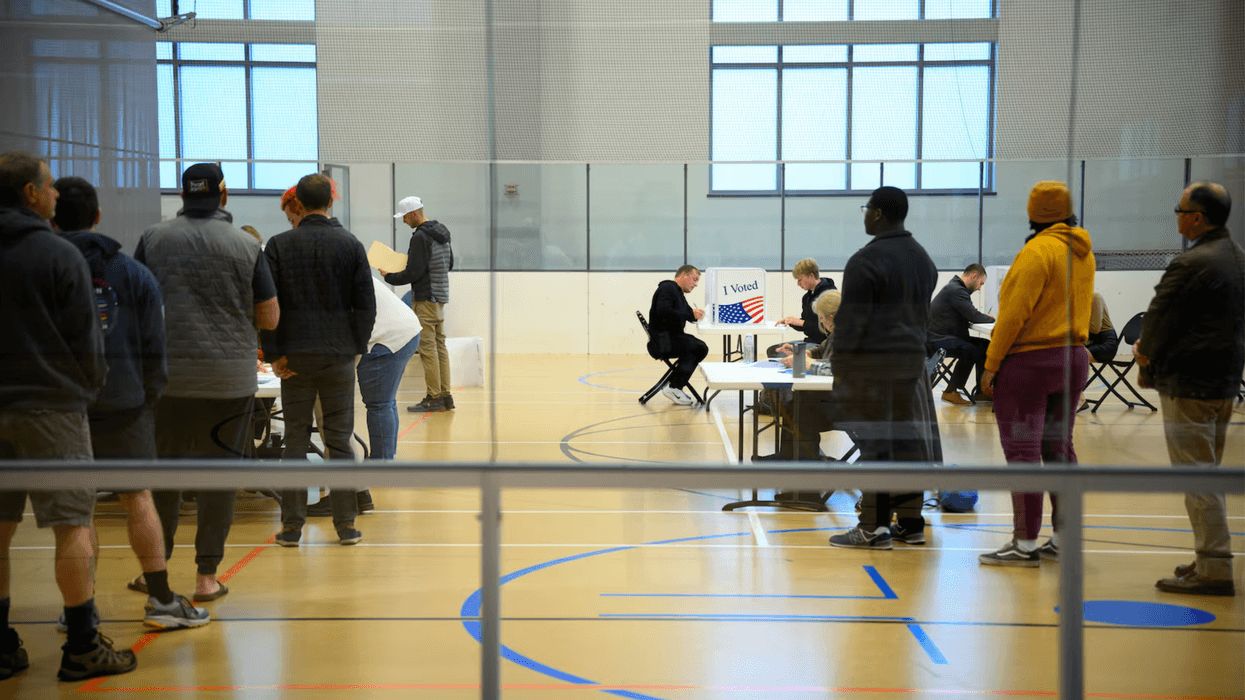
A 2026 voter list foul-up moved at least 59,000 Mississippians from “Active” to “Inactive” status since 2024, with a surge between the primary and November 3 voting. That caused polling confusion, with hours-long waits in the rain in some places. Plus, it forced thousands to use “Affidavit Ballots”, placing onerous burdens on those voters and increasing the risk that officials would reject their attempts to correct the misclassifications.
The State sent counties unverified address data produced by Experian, a consumer credit reporting enterprise, as the basis for changing voter status. Using unverified address data from commercial sources to change voter status or to purge their registrations leads to over-reclassifications. That is a euphemism for voter suppression.
The fiasco reached across the state, while DeSoto County in northwest Mississippi, with a 47% non-White population (but no Black elected representatives), accounted for more than 33% of the wrong voter classifications. Nearly 20% of the country’s voters were affected. Hinds County, which includes Jackson (with its majority African-American population), rejected approximately two-thirds of more than 2,000 Affidavit Ballots. That indicates disparate racial impact, which voting rights groups warned about in advance.
Mississippi also makes voting difficult in less obvious ways. It does not provide early in-person voting, with a narrow exception for those with an acceptable excuse who can go to their county election office.
Voting by mail is allowed only for those with an acceptable excuse who sign an application containing an oath validated by a notary or similar authority. Approved voters are then to secretly mark their ballot with such a person present, who must sign as a witness. Disabled persons can use anyone who is at least 18 years old as their witness. Those are high hurdles.
Mississippi law requires a polling place official to initial the back of a ballot before handing it to a voter for it to be counted as valid. Failing to initial, deliberately or by mistake, creates a path to disenfranchise voters. The State’s post-election procedural audit does not examine rejected ballots to quantify how many were not initialed or to identify the reasons for invalidation, both of which are significant for identifying disenfranchisement and curtailing potential voter suppression.
Racial gerrymandering is not a factor in statewide U.S. Senate races. Nonetheless, it subverts African American representation, with Mississippi’s state legislative districts typically electing representatives of the district’s majority race, while boundaries minimize the number of African American majority districts.
As of July 1, 2026, Mississippi’s SHIELD Act requires local registrars to verify voter registration applicants' US citizenship via State sources and the flawed federal SAVE database. If there is no verification, the prospective voter must provide proof of citizenship. The Act also requires the Mississippi Secretary of State to compare the voter registry to the SAVE system annually and notify local registrars of matched voters, who must then provide proof of citizenship. That places a burden on voters similar to a poll tax because of the costs of birth certificates, passports, or other acceptable ID. Given the infinitesimal incidence of non-citizen voting and the likelihood that some voters will not be able to meet the burden, this is another layer of voter suppression.
When Mississippi became the 20th U.S. state in 1817, only white, taxpaying, property-owning males who had lived there for a year or more were allowed to vote. That was the strictest voting regimen of any state at the time, and the tradition continued thereafter. A 1902 law created a White-Only Primary in what was a one-party state, thus excluding African-Americans from political power. Jim Crow laws, including racially applied poll taxes and esoteric literacy tests, plus mass incarcerations, combined with racial violence that included at least 656 lynchings in the State.
All of this met resistance, which led to the modern Civil Rights Movement in Mississippi. Numerous advocates of African-American voting rights in the State were murdered in that era, including Reverend George W. Scott and Lamar “Ditney” Smith in1955 (the same year that Emmett Till was gruesomely murdered there), Hubert Lee in 1961, Medgar Evers in 1963, and Michael Schwerner, James Chaney, and Andrew Goodman murdered together in 1964.
The legacy of all who fell in the fight against Mississippi’s suppression and the inspiration provided by leaders like Robert Moses, Fannie Lou Hamer, James Meredith, Dorie Ladner, and so many more fueled the zeal of Senator-Elect Scott Colom’s volunteers as well as activists from the Mississippi NAACP, Southern Poverty Law Center, ACLU, religious communities, and others who labored to ensure a credible 2026 election. The coalition of voters who backed Scott Colom is looking for change, and electoral reform needs to be part of that change to ensure all eligible Mississippians have a voice in their future.
The Mississippi Voting Rights Act (MSVRA), which did not pass in 2026, addresses modern voter suppression and would help ensure voting rights to all eligible voters. Its passage along with investigation of the voter list fiasco should be on the legislative agenda, though the Governor wants further gerrymandering and ending the mail-in ballot grace period. The state’s legislative seats were not up for re-election this year, but they, the governorship and state supreme court’s composition are up in 2027. Passage of voting rights protections will be a test of whether the current legislature answers the call of history. History indicates that it will not be an easy accomplishment.
A national challenge concerns passage of an effectively updated version of the Voting Rights Act, addressing among other things recent negative Supreme Court rulings. While facing a likely presidential veto, its passage should be a rallying point as are the MSVRA and other measures on the Mississippi reform agenda.
We can all take lessons and inspiration from Mississippi’s voting rights struggle, including the movement that elected Scott Colom. It’s time to carry that forward.
Pat Merloe provides strategic advice to groups focused on democracy and trustworthy elections in the U.S. and internationally. He has engaged with those promoting credible elections in more than 60 countries over four plus decades.






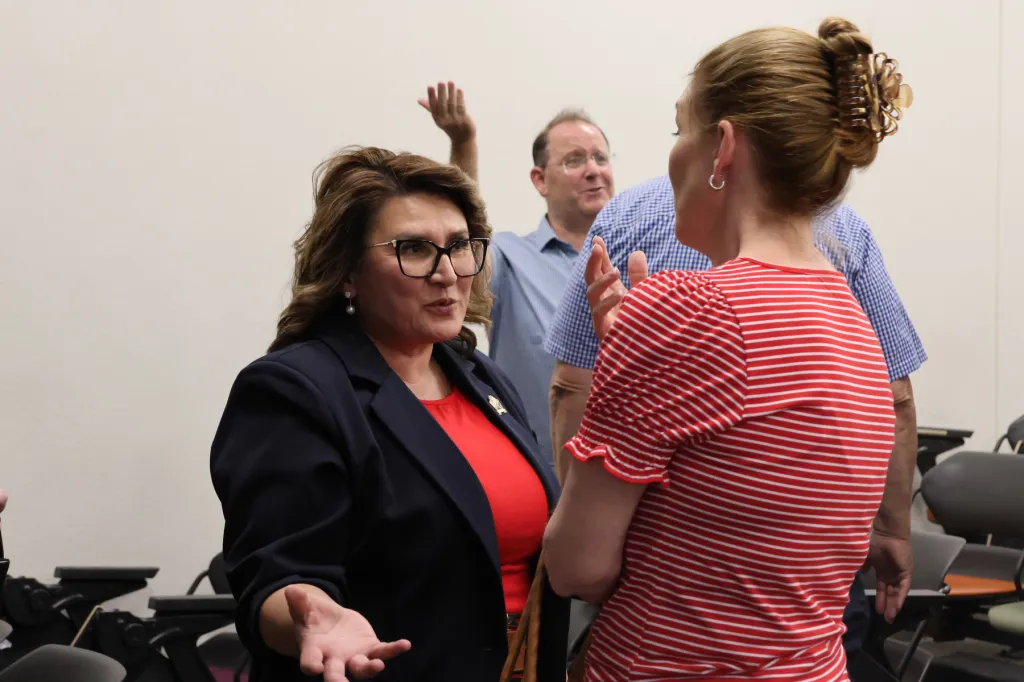 Congressional candidate JoAnna Mendoza has leaned into her working class background as she runs for a seat in the U.S. House to represent Arizona’s 6th congressional district. (Courtesy JoAnna Mendoza campaign)
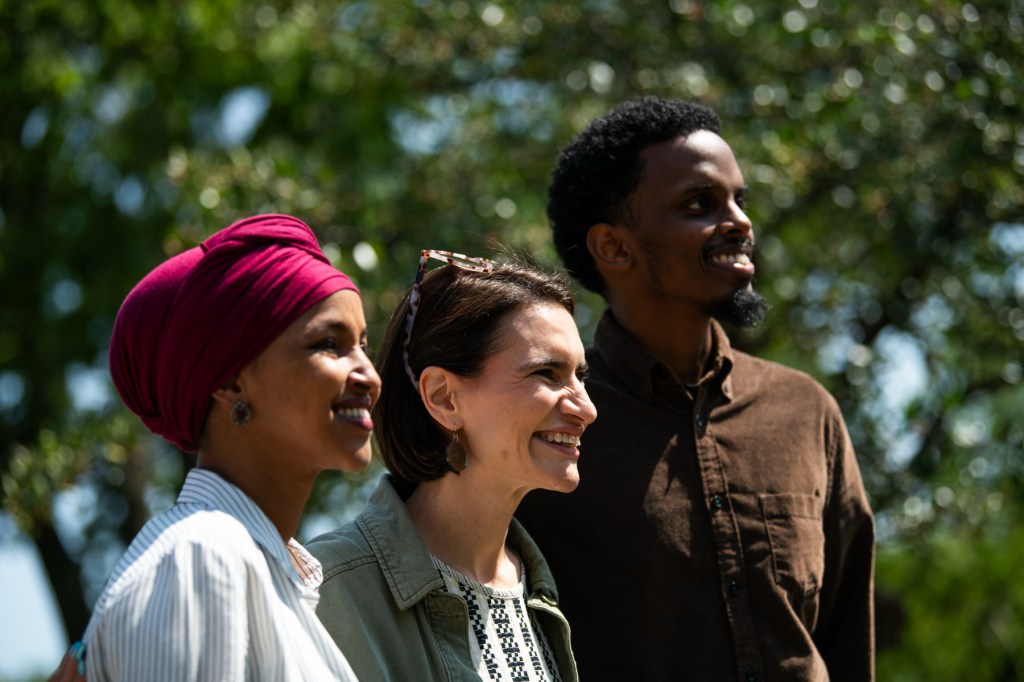 Politicians who come from working class backgrounds, like Minnesota Lt. Gov. Peggy Flanagan (center) and Minnesota state Sen. Omar Fateh (right), are resonating with voters during a particularly challenging economic period. (Stephen Maturen/Getty Images)