
America runs on a deal nobody signed but everyone is expected to honor. Host communities open their schools, their courts, and their markets. Newcomers, in turn, fold into the civic mainstream instead of asking their new country to rearrange itself around them. It isn’t written into any statute, yet it has been the quiet engine behind two and a half centuries of messy, mostly successful assimilation.
That deal is being argued out right now on a stretch of prairie forty minutes northeast of Dallas.
A Test Case, Not a Symbol
The development once called EPIC City, and now rebranded The Meadow, is a proposed 402-acre community in Collin and Hunt Counties near Josephine, Texas, built around the East Plano Islamic Center. Plans call for more than a thousand homes, a mosque, a K-12 faith-based school, and commercial space. Since it was announced in 2024, it has drawn a state securities investigation, a federal fair-housing inquiry from HUD, a request from Senator John Cornyn for a Justice Department probe, and, as of August 17, 2026, a fresh lawsuit from Attorney General Ken Paxton. A Travis County judge has already sided with the developers once, ordering a state agency to honor its own agreement with them. The dispute is not settled, and it is not going anywhere soon.
National coverage has treated The Meadow as a referendum on whether Texas, and by extension America, can accommodate a visibly Muslim, self-organized community without triggering a political backlash. That framing captures something real. It also skips past a quieter, larger story unfolding around it.
What the Numbers Actually Say
Roughly 1.1 percent of the American population is Muslim, spread across nearly 2,800 mosques nationwide — more than double the number that existed in 2000. Contrary to the “epicenter of Islam” language that has attached itself to this fight, that population is not a monolith arriving from one country. Pew Research Center finds that only about a quarter of Muslim-American adults are immigrants from the Middle East or North Africa; a fifth are converts, and four in ten U.S.-born Muslims identify as Black. Separate analysis of the same Pew data finds Muslim Americans wearing the hijab in public at roughly two-thirds the rate of Muslims surveyed internationally, and expressing overwhelmingly unfavorable views of groups like al-Qaeda — 81 percent unfavorable, among the highest rejection rates recorded for any group in that survey. None of that fits a “Sharia city” headline. It doesn’t fit a pure persecution narrative either. Both caricatures are doing work the data doesn’t support.
Two Obligations, Not One
A fair accounting has to hold two things at once.
News organizations and, in this case, elected state officials who elevate a handful of inflammatory soundbites into a narrative of regional religious war are trading accuracy for engagement. Texas has absorbed rapid demographic change in its suburbs over the past decade without the civic unraveling that cable-news segments imply, and that story deserves as much airtime as the shouting match does.
At the same time, communities entering that public square carry a reciprocal duty to read the room. Promotional language describing a housing project as the future “epicenter of Islam in North America” was always going to be heard by anxious neighbors as closer to a territorial claim than a marketing pitch, whatever the legal reality behind it. The First Amendment protection here is not in question. The political judgment behind how that project was pitched to a skeptical public is a separate matter — and it was handled poorly.
What Pluralism Actually Requires
None of this settles the underlying legal fight, which courts will decide by weighing fair-housing law against a state government that has, at points, reached for “Sharia law” as a rhetorical bludgeon rather than a legal argument. But the legal fight isn’t the whole story. The larger question is whether Americans can still tell the difference between a contested land-use dispute and a referendum on an entire faith community’s right to exist in a suburb.
They can, if both sides keep their end of an old bargain: restraint from the institutions and officials who shape the narrative, and civic self-awareness from those entering a new community. Neither is a large ask. Both are increasingly rare.
Meda Parameswara Reddy, Ph.D., is the Director of the Reddy Center for Critical and Integrated Thinking. A former R&D executive holding 30 U.S. patents, he specializes in interdisciplinary research and public policy analysis. His writing has appeared in Proc. Natl. Acad. Sci. (PNAS), RealClear platforms, The Fulcrum, The Humanist, AFRO American, The Friday Times, and South Asia Monitor, where he serves on the editorial board. He also hosts the interview show "SAM Dialogues with Dr. M. P. Reddy." Website: mpreddyinsights.com | Contact: mpreddy54@yahoo.com







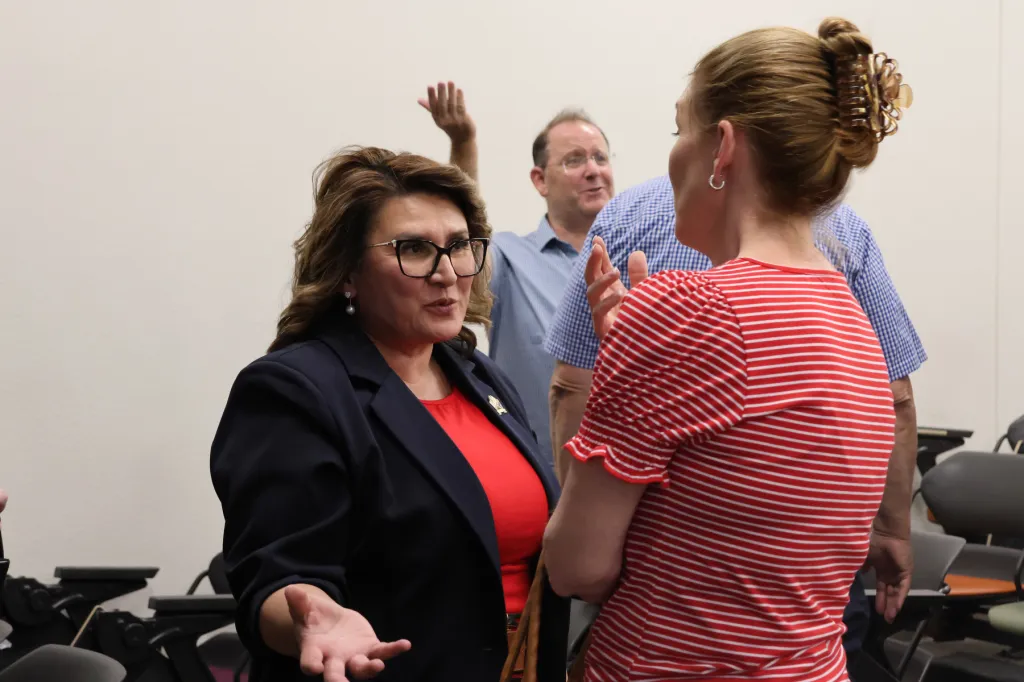 Congressional candidate JoAnna Mendoza has leaned into her working class background as she runs for a seat in the U.S. House to represent Arizona’s 6th congressional district. (Courtesy JoAnna Mendoza campaign)
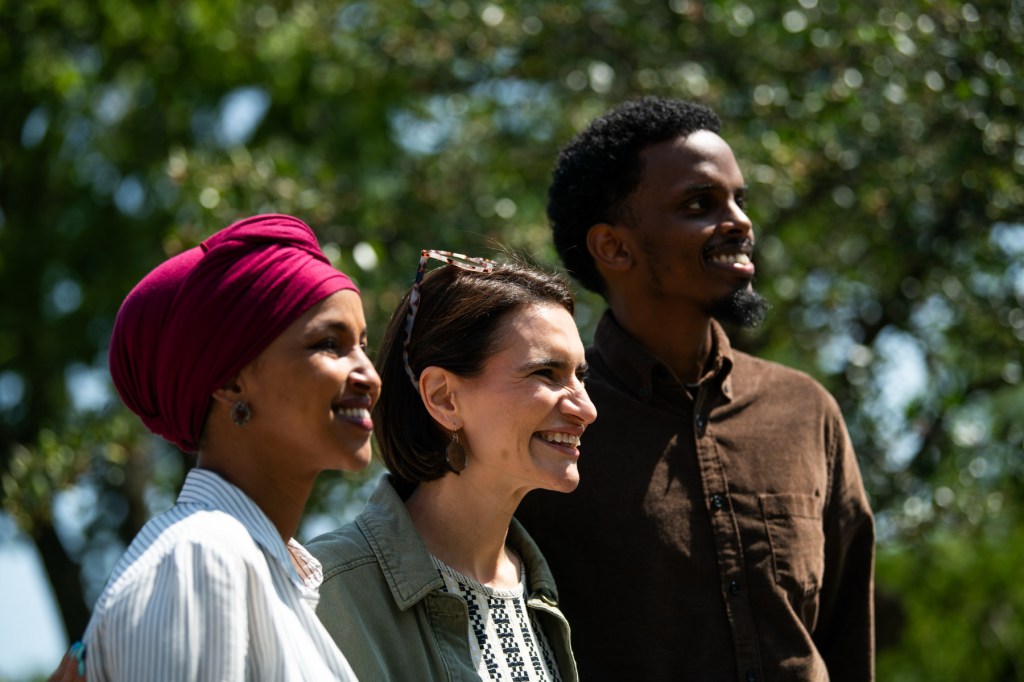 Politicians who come from working class backgrounds, like Minnesota Lt. Gov. Peggy Flanagan (center) and Minnesota state Sen. Omar Fateh (right), are resonating with voters during a particularly challenging economic period. (Stephen Maturen/Getty Images)