

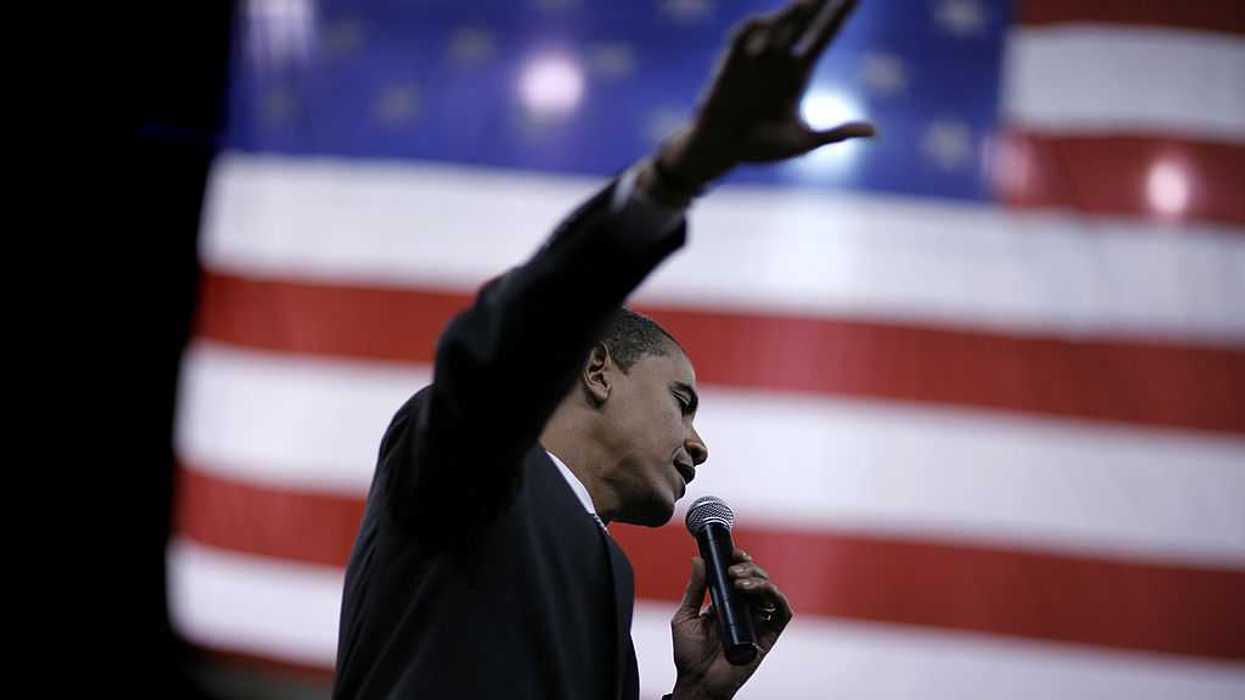

In 2008, Barack Obama, then a young Senator from Illinois, ran for president proclaiming he was “fired up and ready to go” and promising “hope and change.” He made the cover of Vibe magazine, the first politician ever to do so.
Obama’s photo ran under the headline “It’s Obama Time.”
As Duke University Law Professor Jedediah Britton-Purdy explains, Obama had “a redemptive version of American politics… Both in his campaigns and in the public-facing aspects of governing, he insisted on common principles and the possibility of a shared perspective. His persistent refrain, from the career-making speech at the 2004 Democratic National Convention to the elegiac address after the Dallas murders of 2016, has been that unity is deeper than division.”
His election electrified the country.
Eight years later, the United States took a dark turn, seemingly turning its back on Obama’s vision and his hope-and-change vibe. Instead, the country seemed to embrace resentment and a rejection of everything that the election of Barack Obama stood for.
On November 3, it took a step back from the abyss.
The results of the 2026 midterms are already being described as a rejection of Trump and Trumpism. They are that, but they are something more.
They are a reaffirmation of Americans’ attachment to democracy and of our unwillingness to relent in the face of Trump’s assaults on it. In 2024, we ordered up a serving of authoritarianism.
The 2026 results indicate that Americans didn’t like its taste. We said no to the brutality of ICE; no to rampant corruption, no to racism and bigotry, no to endless wars and an economy that serves the 1% and few others.
But they are more than that. The results produced a series of firsts, barriers broken, new possibilities glimpsed.
In Michigan, confronted with JD Vance’s Islamophobia, Abdul El-Sayed urged voters to choose “hope over hatred.” And they did.
In Obama-like fashion, El-Sayed used his victory speech to sing the praises of inclusion and diversity. “As I was campaigning,” he said, “some of you would come up and ask, ‘How come you don’t hit back? How come you don’t call them racist or hateful?’“
“They weren’t targeting me,” El-Sayed added. “They weren’t just attacking me. They were targeting and attacking you. They were targeting and attacking the very idea of America….They want an America that is too small for some of us. We know that America is big enough for all of us.”
One thousand miles to the south in Texas, James Talarico gave his victory speech at a podium adorned with the slogan “Love Thy Neighbor.” He reminded his audience that “In this state and this country, power belongs to the people.” He compared himself to the biblical character David facing down Goliath, saying, “David had hope. He had faith….Scripture has taught me, my own life has taught me, always bet on the underdog.”
He observed that the attacks on him were “the final howls of a dying establishment….We united Texans of all backgrounds and all faiths…who were fed up and ready for change…”
El-Sayed, a left Democrat and a Muslim, promising to put money in people’s pockets and Medicare for All; Talarico, a devout Christian, with a more soothing style, both offered hope and promised change.
And lest there be any doubt about the Obama vibe that infused the 2026 election, the former president brought it to his campaign appearances for both El-Sayed and Talarico.
After those appearances, University of Virginia Professor Barbara Perry observed, "Democrats have found their true spokesperson for the midterms."
Whether Obama’s appearances made a difference or not, the message he delivered in 2008 certainly seemed to resonate with voters fed up with doom and divisiveness.
And just as in 2008 when Obama became America’s first black president, the 2026 election delivered its own share of historic firsts.
With the Democratic takeover of the House of Representatives, Hakeem Jeffers is poised to become the first Black Speaker of the House of Representatives. He showed his political mettle by insisting that Democrats focus on affordability in the 2026 campaign and promising that under his leadership, the House “will be hyper-focused on driving down the high cost of living.”
Everywhere, it seems voters were not distracted by the usual attacks on Democratic candidates' identities.
As a result, El-Sayed will be the first Muslim to serve in the United States Senate. He will be joined by New Hampshire’s Chris Pappas, who will be the first openly gay member of that body. He highlighted his gay identity by talking lovingly about his husband.
He promised to go to Washington as part of “a new generation” determined “to fix things."
Peggy Flanaghan, Senator-elect from Minnesota, will be the first Native-America senator in US history. Annie Andrews will become the first woman to be elected to the Senate from South Carolina.
At the state level, Keisha Lance Bottoms is the first Black to be elected governor of Georgia and the first woman to be chosen for that office in Georgia. Bottoms will also make history as the first female Black governor in US history.
Like El-Sayed and Talarico, Bottoms used her victory speech to evoke the spirit of Obama when she said, Georgia, “We sent a message loud and clear that we want a leader who will put Georgia first and who will stand up to all the chaos coming out of Washington, D.C. But even more importantly, you sent the message that in these times of division and acrimony, you believe in something foundational, and that is hope.”
Texas voters chose a Hispanic woman, Gina Hinojosa, as governor, another first. Evoking an Obama-like call for unity, she said, “Let me be clear: we did not end one era of single party rule just to usher in another…The same national pundits and political class who ignored and then misunderstood this campaign will declare this a victory for Democrats. They continue to misunderstand.”
And in another first occurred in New Mexico when Deb Haaland was elected the first Native American governor of her state, and first female Native American governor in US history.
President Trump reacted to the election result with deflection and denial. “I don’t like to consider it a defeat for me. I wasn’t on the ballot,” he said, “after campaigning for two months telling his supporters at least 41 times to ‘pretend I’m on the ballot.’”
“No matter how good the president is, you lose.”
Trump lost, but America won. We can feel hope that the November 3 results signal the beginning of the end of the Trump era.
However, even as we remember how much work remains to preserve American democracy, we should recognize that the 2026 midterm election was a good start.
Austin Sarat is the William Nelson Cromwell professor of jurisprudence and political science at Amherst College.






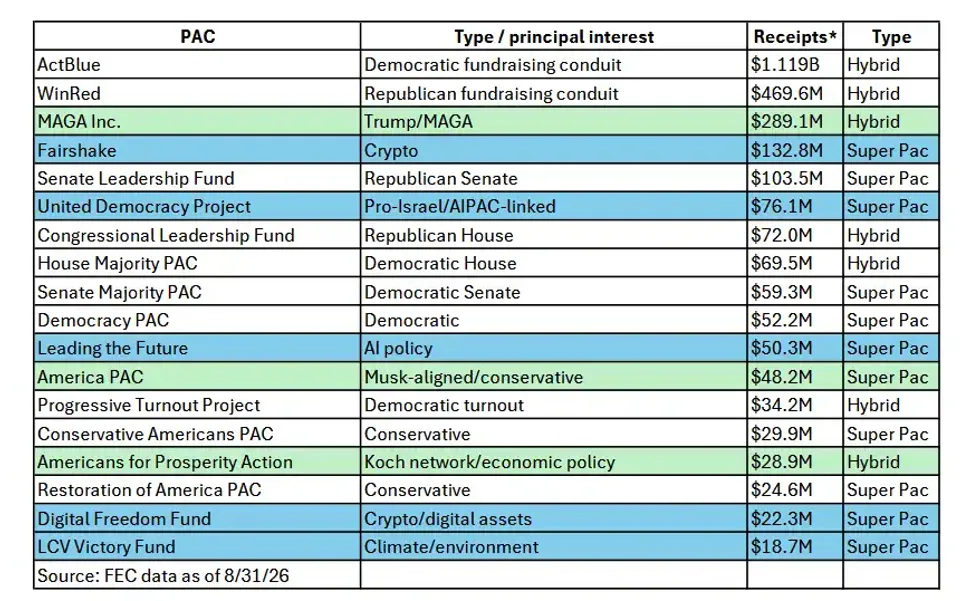 In terms of money flowing through the campaign-finance system, political action committees (PACs) are three times more active than candidates running for reelection or office. That is concentrated political power that leaves many congressional candidates running for reelection or office dependent on PAC support.