
This will not end well.
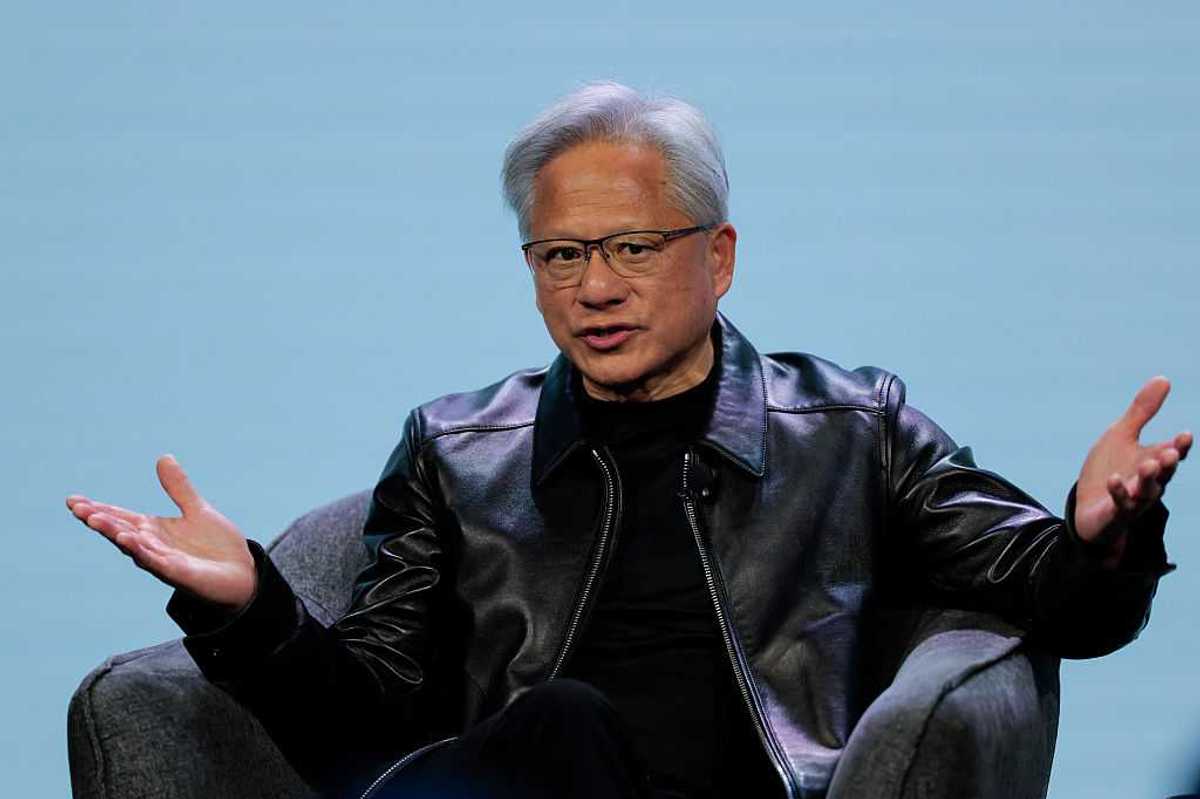
On Monday morning, Jensen Huang was reinstated as chief executive of Nvidia, the technology design company he founded back in the early 1990s. Nvidia designs the most valuable chips for artificial intelligence, which is why it’s now second only to Apple among the most valuable companies in the world.
Let’s review: On November 12, Nvidia’s board ousted Huang for having a sexual relationship with a subordinate. The fact that he also had an affair with Alice Huang (no relation), an alleged asset of the Chinese government, didn’t help his case. Nor did allegations that her company, Megaspeed, seemed to collude with Nvidia — along with the possible help of Commerce Secretary Howard Lutnick — to circumvent restrictions on sales of highly sensitive chips to China. Just last week, the U.S. Departments of Justice and Commerce confirmed that Megaspeed was under criminal investigation for “smuggling” billions of dollars worth of Nvidia semiconductors.
On Sunday, the New York Times reported that Alice Huang had extensive contacts with an “official of China’s top spy agency for more than a year” during her affair with the CEO.
That same day, Republican Sen. John Kennedy joined "Meet the Press" to suggest, “It appears to me, I emphasize ‘appears,’ that the Department of Commerce has allowed the Communist Party of China to circumvent our export controls on advanced chips. Either that, or they didn’t know what they were doing.”
A day earlier, the Wall Street Journal reported that President Donald Trump had been poised to fire Lutnick when it was revealed that, contrary to denials, he had visited Jeffrey Epstein’s “sex island.” But after Lutnick donated $25 million to Trump’s presidential library, Lutnick’s job was once again secure.
In remotely normal times, this would have the White House lawyering up and running for cover.
But in case you hadn’t noticed, these are not normal times.
Trump is famously obsessed with the stock market, and Nvidia is the centerpiece of the AI-fueled stock boom. Huang’s ouster, combined with the fact that he had organized Nvidia in such a way that no obvious successor could replace him, caused its stock to tank. Huang and Nvidia were in effect too big to fail, which is why Trump wanted him reinstated.
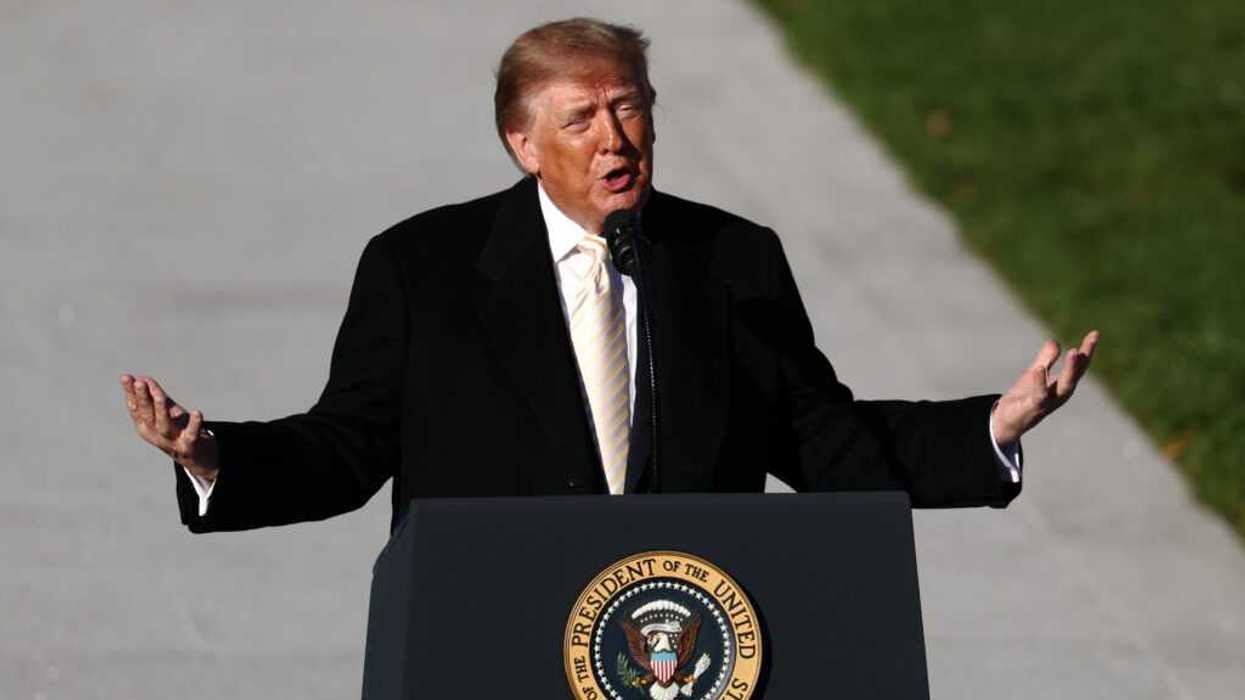
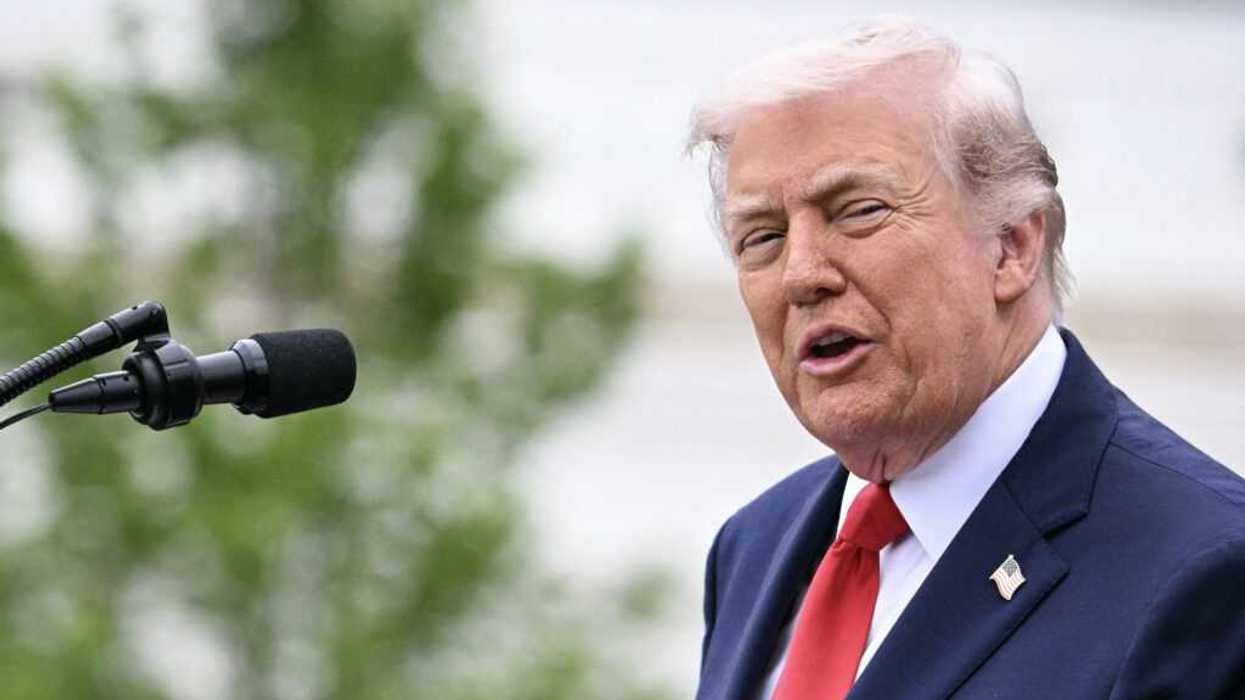
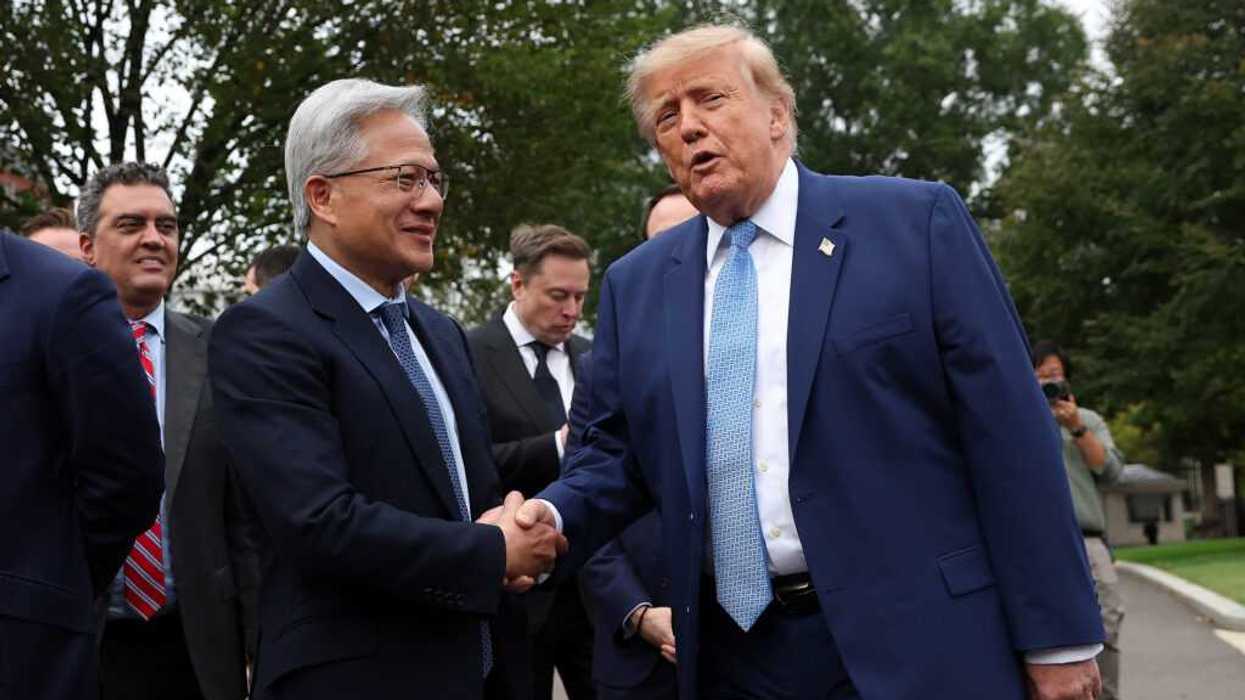
The same day Kennedy raised the possibility of very serious crimes, Trump called into an Nvidia board meeting and convinced the company to reinstate Huang. The board complied. Trump then called into CNBC, took credit for the move and insisted that Huang had been “exonerated” after a “a very thorough investigation” by the administration. Trump said Huang had shown “bad judgment” but that he “did nothing wrong.”
No one should be shocked that Trump, a serial adulterer, would shrug off a sex scandal. But the more important scandal here is not the sex.
For starters, we know that Trump was informed of Huang’s compromised situation months ago and did nothing.
The current pop in Nvidia’s stock notwithstanding, this is not good news for the chip manufacturer. By reinstating Huang under political pressure, the board has gelded itself. The potential shareholder lawsuits they have opened themselves to are incalculable.
It’s also not good for equity markets. The moral hazard of the president — and reportedly the vice president — intervening to boost Nvidia’s share price is hard to fathom. Bailouts distort markets.
The moral hazard hardly ends there. As of Monday morning, Nvidia was still under investigation by the SEC, and presumably by the Justice and Commerce Departments, for, among other things, accounting practices that hid the sales of chips to Asian companies suspected of diverting the most sensitive of those chips to China. Now that Trump has declared Huang “exonerated,” speculation that the investigation will be terminated for political expediency is unavoidable.
If it is revealed that the administration called off criminal and national security investigations to protect a friend and donor to the president’s projects (at Huang’s direction, Nvidia previously gave $25 million for Trump’s ballroom, and Huang attended a $1 million a plate MAGA Inc. fundraiser), the incentive to purchase special treatment from the government will only intensify. And, I would expect, a preemptive presidential pardon is inevitable.
Then, of course, there are the profound national security questions raised by a president seemingly more interested in his bromance with China’s dictator and his obsession with the stock market. Oh, and we don’t know what the president promised to the board to gain the reversal.
Obviously, Congress has to investigate. Given the voters’ concerns with the manifest corruption of this White House, as well as the popular queasiness with AI and data centers, the Democrats would be insane not to mount an investigation that could provide ample opportunities for Republicans to distance themselves from this ongoing dumpster fire.
This isn’t a matter of “where there’s smoke there’s fire.” We can see flames.
Jonah Goldberg is editor-in-chief of The Dispatch and the host of The Remnant podcast. His Twitter handle is @JonahDispatch.