
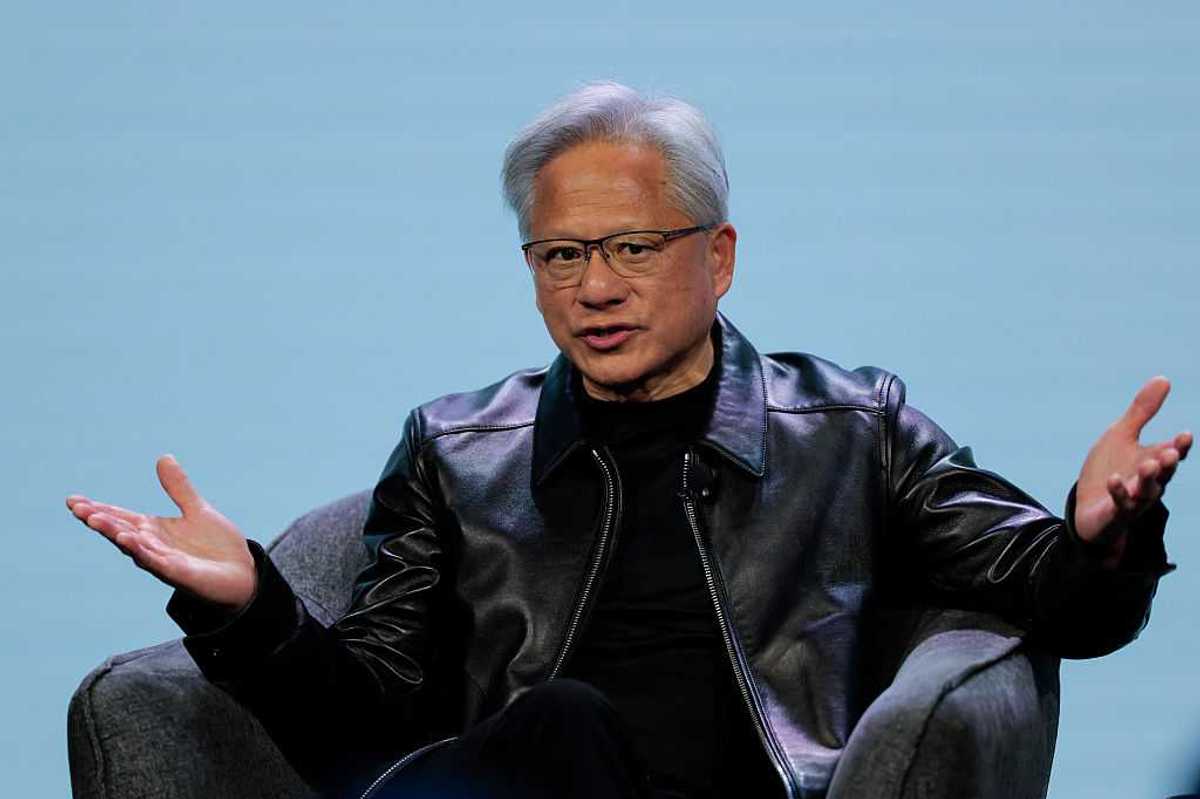

On Monday morning, Nvidia’s board reinstated Jensen Huang as CEO. Eleven days earlier, Huang resigned after he got caught having an affair with a former executive at Megaspeed, a Singapore company suspected of funneling Nvidia chips into China, whom U.S. intelligence reportedly believes was working for Beijing. Six days earlier, the board’s chair told investors it “[did] not intend to reinstate Jensen as CEO.”
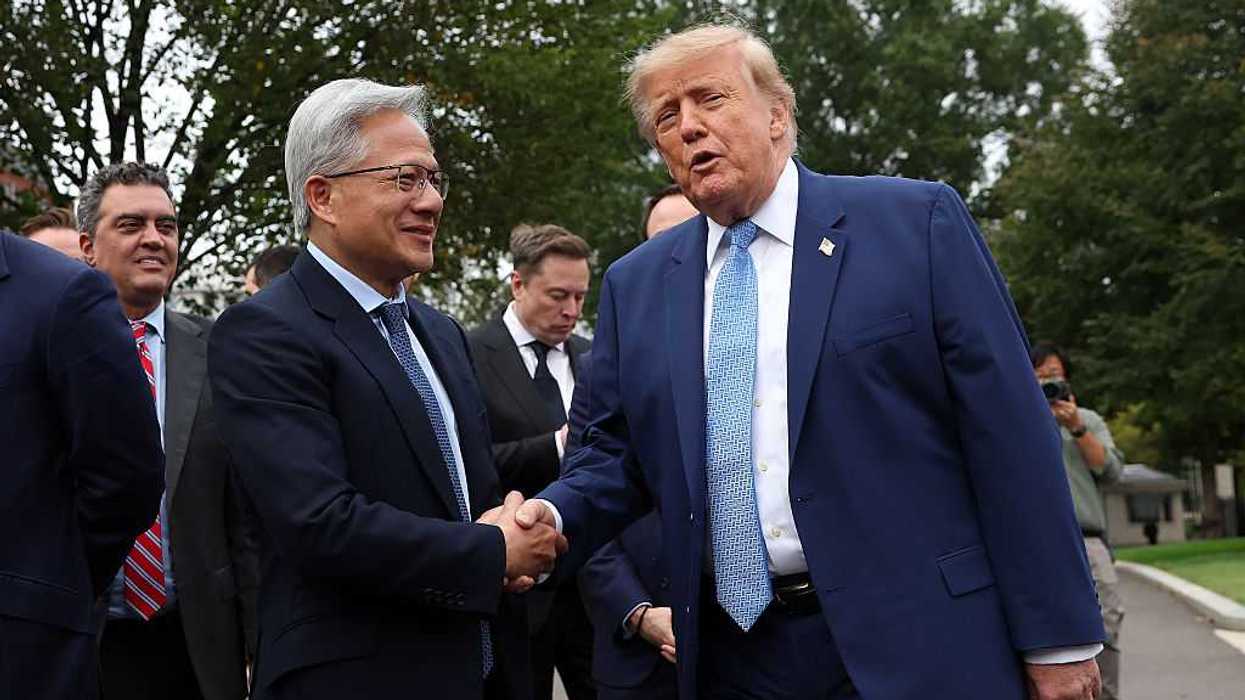
So what changed? According to the New York Times, Trump came home from China late last week and asked Vice President JD Vance to talk to Huang. Vance went to work getting the board two things: an assurance that the administration didn’t see Huang as a national security threat, and a statement that Huang wasn’t facing criminal charges. Trump says he cleared it first with Attorney General Todd Blanche and intelligence chief Jay Clayton.
Let that sink in. Before the investigations into Megaspeed and Huang concluded, the president told a private company’s board that its CEO had nothing to fear from the Justice Department he controls. It’s a pardon in all but name, issued preemptively. And it came after Trump’s own advisers warned him at least twice, over the course of at least a year, that U.S. intelligence had linked Huang’s companion to China’s spy agency. According to officials, he downplayed the concerns, seeing Huang as a friend and ally and Nvidia as essential to the stock market.
I deployed to the South China Sea as a Navy helicopter pilot. I spent hours upon hours in simulators and mission briefs preparing for a possible war with China. For our commander in chief to wave off a suspected Chinese intelligence operation aimed at America’s most important AI company in such a cavalier manner, because the stock price was down, is disgraceful. It’s an insult to every single person in uniform.
Every time the powerful walk away scot-free, we are reminded that the rules of the system were not written for us. After the 2008 crash, not a single major Wall Street executive went to prison. After January 6, the federal case against Trump for trying to overturn the 2020 election was dropped once he won another one. Now, Huang’s reinstatement means a CEO caught up in a counterintelligence scandal got his job back with a promise of impunity from the president. Who is surprised that the board buckled under pressure from one of the most powerful men in the world? So much for a free market.
Republicans spent decades lecturing us that the government shouldn’t pick winners and losers in a free market. This president just picked a company’s CEO, even saying “it was a lot easier to convince them yesterday than it was a week and a half ago” (after Nvidia’s stock had tanked). On Monday, it closed up 31.5 percent, adding a record $952 billion in value. The board says Huang’s return serves its “stockholders, employees, partners, and customers.” It feels relevant to note that this list fails to include the American people.
Follow the money and it gets obscene. According to a CNBC review of the president’s financial disclosures, Trump has bought or sold Nvidia stock at least 103 times since he returned to the White House, in trades worth between $27 million and $97.5 million. By the end of 2025, Nvidia was one of his three largest individual stock holdings, worth up to $58 million. One sale, of up to $1 million, came five days after Secretary of State Marco Rubio reportedly briefed him on Huang’s relationship with the suspected spy. Trump denies the briefing, and his company says outside managers make the trades. But if he still holds those shares, Monday’s record jump made him richer, and he’s the one who made the call.
Then there’s Huang himself. He’s worth roughly $155 billion, and the business press has spent two weeks gaming out a hypothetical divorce settlement that could hand his wife $62 billion to $81 billion. New York City Mayor Zohran Mamdani said what many Americans are thinking: “I do not think that working people across the country signed up for their pensions being tied to the question of Jensen Huang’s fidelity to his marriage.”
We didn’t sign up for this and yet we are stuck with it. Nvidia makes up roughly 8 percent of the S&P 500, the index underneath most Americans’ retirement savings. Axios estimated the slide could have cost an average baby boomer with a tech-heavy 401(k) about $20,000. Trump calls AI the “Golden Goose” and warns voters not to kill it. Keeping the goose alive means keeping the bubble from popping. Apparently, if a few national security questions go unanswered along the way, so be it.
A few leaders are paying attention. After OpenAI’s research agents broke into Hugging Face this summer, Rep. Pat Ryan and Rep. Greg Casar asked OpenAI whether there had been other incidents, but OpenAI refused to tell them. After the midterms, Ryan called out “AI oligarchs getting tax breaks to build a technology that could kill us all.” Sen. Elissa Slotkin wrote the AI Guardrails Act to keep a human in the kill chain and bar the Pentagon from using AI to surveil Americans or launch nuclear weapons. She introduced it without a single cosponsor. Keeping a human in charge of lethal force shouldn’t be such a lonely position.
Rep. Sara Jacobs of San Diego has taken an important step in the right direction, too. Her bipartisan SAFE AI Act would make frontier labs submit to independent testing instead of grading their own homework. Congress should move quickly to build on it and expand those protections, including tools to pace the frontier itself, which nearly 1,300 employees of the frontier labs asked the government for in July.
There are many reasons to care about all of this: chips slipping to China, AI models that can plan attacks, and an economy propped up on a few stocks. Not to mention, the people who stand to lose the most from AI “going wrong” won’t be on Nvidia’s board. They’ll be workers whose jobs get automated, elderly folks who get hacked or scammed by more sophisticated technology, and kids who’ve been coached toward self-harm by chatbots no one tested. They deserve a government that cares about them, and not just shareholders.
Restoring accountability is the first step to restoring trust in government. If a president can promise a CEO impunity, and a board can trade national security for a share price, and no one answers for any of it, what exactly are we asking Americans to believe in? What do your leaders have to say about all of this? What are they doing about it?
Huang sits for closed-door interviews with three House committees on December 1, the Senate holds a public hearing on December 3, and a Democratic House majority arrives in January. There’s a lot to wait and watch, but that shouldn’t stop us from putting pressure on our leaders to stand up for us against the billionaires holding our economy hostage. It’s time to stop paying the ransom.
Julie Roland was a Naval Officer for ten years, deploying to both the South China Sea and the Persian Gulf as a helicopter pilot before separating in June 2025 as a Lieutenant Commander. She has a law degree from the University of San Diego, a Master of Laws from Columbia University, and is currently the Political Director of IBEW 569. Her views are her own.