


Skip to content
Search

Latest Stories

Follow Us:
Top Stories

Ethics Complaint Targets DOJ Officials in Voter Data Cases

Retired judges and scholars allege DOJ lawyers pursued legally unsupported voter data lawsuits.

News

Ethics Complaint Targets DOJ Officials in Voter Data Cases
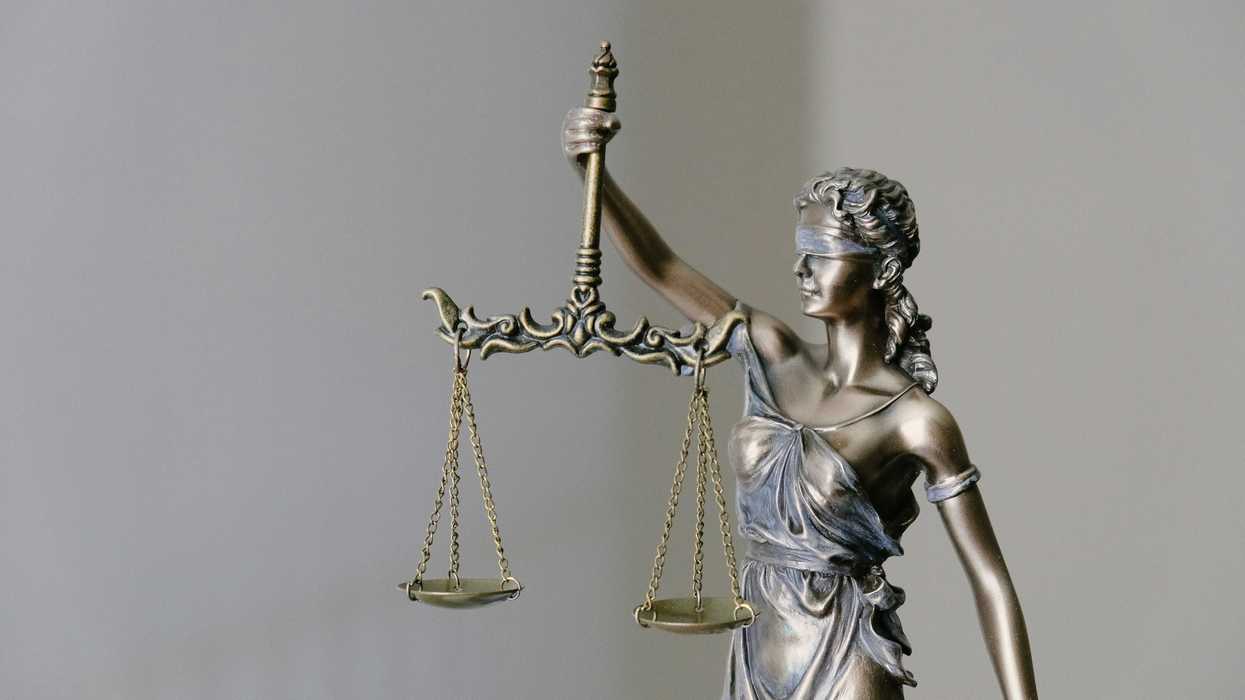
lady justice statue with scales and sword

Lawyers Defending American Democracy (LDAD), joined by 53 retired judges and scholars, has filed an ethics complaint with the State Bar of California against three senior Department of Justice officials: Harmeet Dhillon, the former Assistant Attorney General for the Civil Rights Division; Robert Keenan, Acting Deputy Assistant Attorney General for the Civil Rights Division; and Eric Neff, Acting Chief of the Voting Section.

The complaint alleges that Ms. Dhillon, Mr. Keenan, and Mr. Neff violated their professional and ethical obligations by pursuing lawsuits against 30 states and the District of Columbia that refused to provide DOJ with unredacted voter records containing millions of Americans' sensitive personal information, including Social Security numbers, driver's license numbers, addresses, and voting histories.


The complaint alleges that Ms. Dhillon, Mr. Keenan, and Mr. Neff violated their ethical duties, through their own conduct and through their management and supervision of other DOJ attorneys, by continuing to pursue claims that courts repeatedly rejected as legally unsupported. It also alleges that they failed to fulfill their obligations to pursue only legally meritorious claims, exercise candor toward the courts, and ensure that attorneys under their supervision complied with applicable professional responsibility rules.

As of October 23, 2026, DOJ has lost all 27 cases in which courts issued a ruling, as well as the first appellate decision addressing the DOJ’s demands for this voter information. Despite repeated defeats, DOJ continued to pursue the same baseless legal theories the courts rejected.

The complaint points to the first decision rejecting DOJ's demands, in January 2026, as an example of the legal and factual deficiencies in its claims. In United States v. Weber, U.S. District Judge David O. Carter found that DOJ had failed to establish a legitimate basis for demanding California's unredacted voter records. Judge Carter characterized DOJ’s request as “unprecedented and illegal” and questioned DOJ's stated purpose of investigating compliance with voter-registration laws, citing evidence that the government sought to assemble a centralized federal database containing sensitive information about millions of voters.

“Government lawyers have a special responsibility to uphold the rule of law, not simply advance the objectives of the officials they serve,” said Ellen Hornstein, former Senior Counsel at the U.S. Department of Agriculture and an LDAD volunteer who served as a principal author of the complaint. “When senior DOJ officials continue to pursue legal claims that courts across the country have repeatedly rejected, it raises serious questions about their commitment to those obligations. The duty of good faith and candor with judges is fundamental to our justice system. To do otherwise undermines public confidence in our elections and raises serious concerns about the Justice Department’s commitment to the rule of law.”

The complaint requests the State Bar of California to investigate the allegations and impose appropriate discipline.

The ethics complaint is available here.

Lawyers Defending American Democracy (LDAD) is a nonprofit, nonpartisan organization that mobilizes lawyers to protect democracy, the rule of law, and the justice system. LDAD remains a pioneer in the meticulous work of preparing and filing detailed ethics complaints with state bar disciplinary authorities, seeking to hold accountable attorneys who have violated the rules of professional responsibility in service of efforts to undermine core principles of our Constitution and the rule of law. LDAD frequently files in coalition with key partners, including renowned ethics practitioners, and seeks accountability only when the record, legally and factually, strongly supports the case that an investigation by state disciplinary authorities is warranted.

In 2026, LDAD participated in filing ethics complaints against former Attorney General Pamela Bondi, then Acting Attorney General Todd Blanche, the President's personal lawyer, Boris Epshteyn, Senior DOJ official Drew Ensign, United States Attorney Jeannine Pirro, and FBI agent and attorney Hugh Evans.

Lawyers Defending American Democracy (LDAD) is a nonpartisan 501(c)(3) organization composed of attorneys, law professors, former judges, and former government officials dedicated to preserving the rule of law, constitutional democracy, and the independence of the legal profession. LDAD's work includes filing amicus briefs, authoring Calls to Action, presenting public education programs, and encouraging lawyers and the public to speak out against threats to the rule of law and our democratic institutions. LDAD's nationwide Meeting the Moment initiative mobilizes lawyers across the country to engage with their communities in defense of constitutional democracy. For more information, visit www.ldad.org

Read More

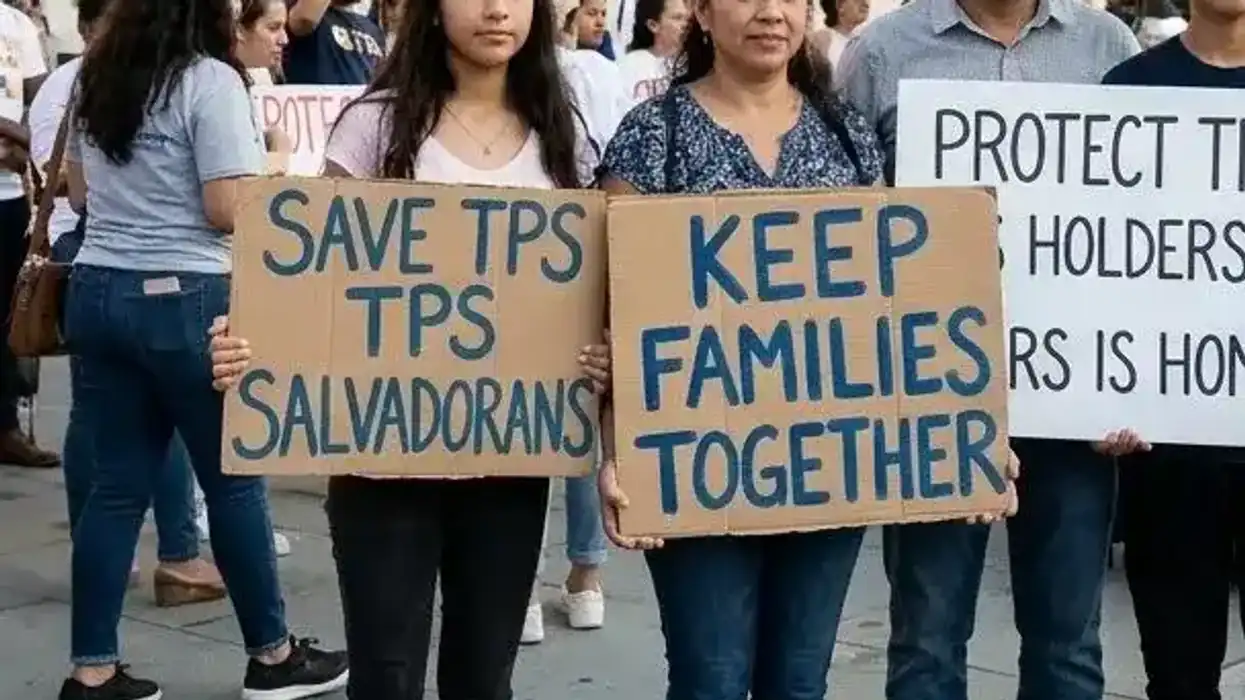
​People hold signs supporting Salvadoran community

People hold signs supporting Salvadoran community

Photo provided

Two Months in Limbo: Salvadoran TPS Holders Await Clarity on Their Future

WASHINGTON, D.C. — The Trump administration has quietly paused its plan to terminate Temporary Protected Status (TPS) for roughly 200,000 Salvadorans, opting instead to leave the program in an unresolved state of limbo past the September 9, 2026, expiration deadline.

- YouTube youtu.be

Keep Reading Show less
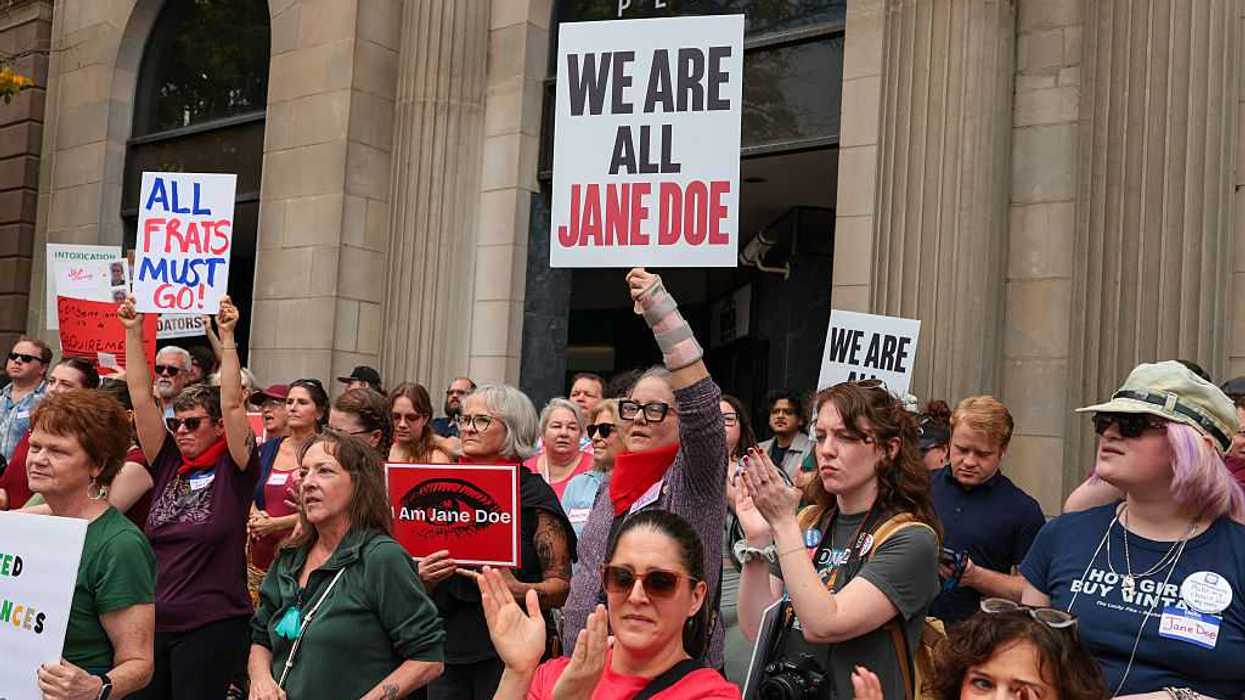
​Protesters listen to speakers at a rally in support of a former Cornell University student known as Jane Doe

Protesters listen to speakers at a rally in support of a former Cornell University student known as Jane Doe at the Ithaca Commons on October 13, 2026 in Ithaca, New York.

(Photo by Anna Moneymaker/Getty Images)

Sexual Violence Requires More Than Legal Accountability

In the wake of public attention to the Cornell fraternity alleged gang-rape, headlines resound with statements of concern and calls for greater accountability. These calls are not new. They have followed countless incidents of sexual violence, whether on a college campus, in connection with work, or within an intimate relationship. Despite decades of law and policy reform, sexual violence continues to run rampant. While law and policy reform are sorely needed, we will not see long-lasting change unless we address what accountability truly means. Our collective response should aim for a world where no one would ever think it was ok to commit, condone, or be a passive witness to sexual violence, never mind that it would be ok to send the kind of text messages that were allegedly exchanged at the Cornell fraternity where the rape allegedly took place.

As policymakers consider reform, a comprehensive approach to accountability should consider the known limitations of criminal and civil justice systems. Problems with the criminal legal system are legion, both within and beyond sexual violence cases. These include racially discriminatory application of laws criminalizing sexual violence, that, for example, have led to harsher punishment when the accused is a person of color and lesser punishment when the survivor is a person of color. Survivors continue to be doubted and subjected to biases and stereotypes, including that survivors lie about their experience, that they somehow invited the violence, or act with self-interest or ulterior motive when coming forward.

Keep Reading Show less
A gavel.

From the Gilded Age to Citizens United, discover how recent Supreme Court rulings empower mega-donors, reshape party spending, and impact American democracy.

Getty Images, David Talukdar

Supreme Court’s Campaign Finance Rulings Help the GOP

American elections have always been dominated by moneyed interests. For instance, during America’s last Gilded Age, in the presidential election of 1896, William McKinley, the Republican candidate, outspent his Democratic challenger by $3.5 million (roughly $140 million in today's dollars) to $400,000 (approximately $16 million today). McKinley went on to win the election with the help of robber baron J.P. Morgan and monopoly Standard Oil. As the example shows, powerful special interests have often translated their vast economic power into political influence. But recent court decisions threaten to permanently entrench the financial imbalance between the Republican and Democratic parties.

In this light, the Republican National Committee’s (RNC) decision to transfer more than $50 million to beleaguered congressional campaigns across the country must be judged. The impact of this massive infusion of cash into the otherwise struggling Senate campaigns cannot be overemphasized. On the other side, the Democratic National Committee (DNC) cannot match the GOP’s deep pockets filled by the likes of Elon Musk. The Republicans, even before this deluge of special interest money, enjoyed financial advantages. The money is coming at a particularly pivotal moment in the campaign as Republicans find themselves electorally underwater due to Trump’s unpopularity.

Keep Reading Show less
Close up of a judge hammering a gavel

Investigations, indictments, dismissals, convictions: what each means and the questions to ask before judging claims of political weaponization of the law.

Chris Collins/Getty Images

Just the Facts: Trump, DOJ and the Legal Process

The Fulcrum approaches news stories with an open mind and skepticism, presenting our readers with a broad spectrum of viewpoints through diligent research and critical thinking. As best we can, we remove personal bias from our reporting and seek a variety of perspectives in both our news gathering and selection of opinion pieces. However, before our readers can analyze varying viewpoints, they must have the facts.


The legal battles involving the Trump administration have become a constant feature of American politics and governance. Supporters often argue that many lawsuits and investigations are politically motivated attempts to block the administration's agenda. Critics contend that certain actions by the administration and the Department of Justice are themselves politically motivated or represent an improper use of government power.

Keep Reading Show less